All posts by Drew

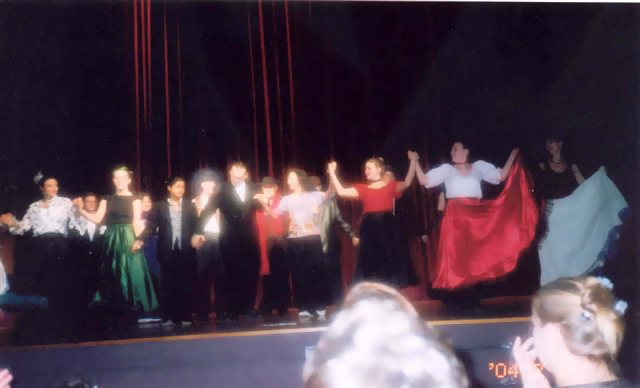
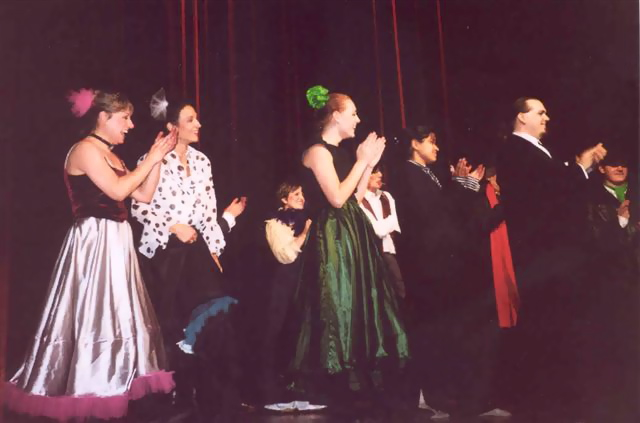
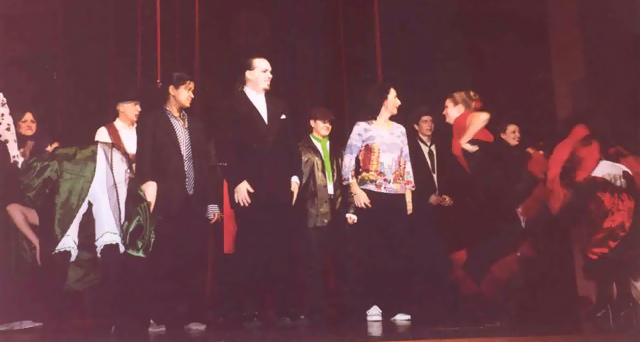
2012 – FOLLIES MOLIÈRE

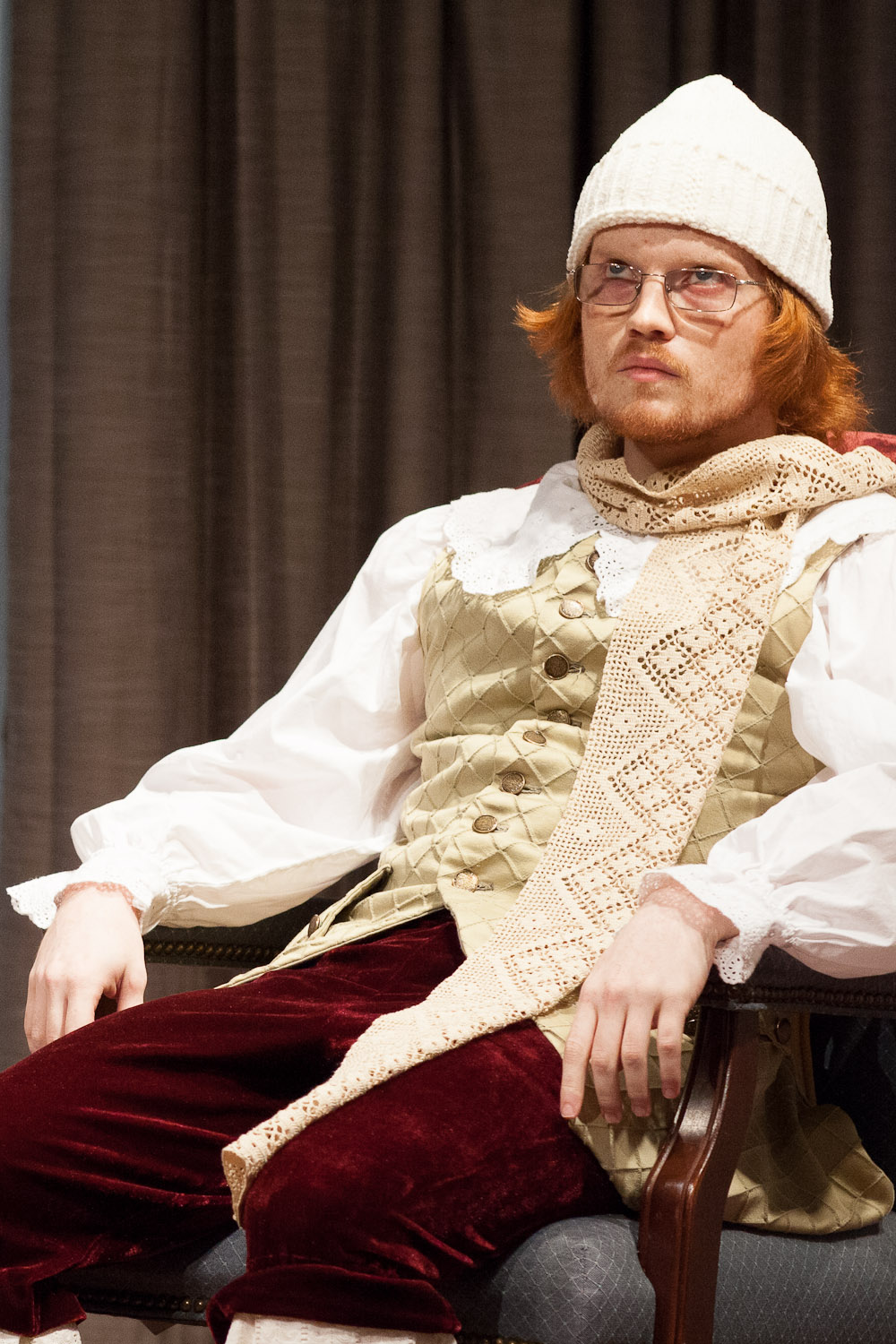
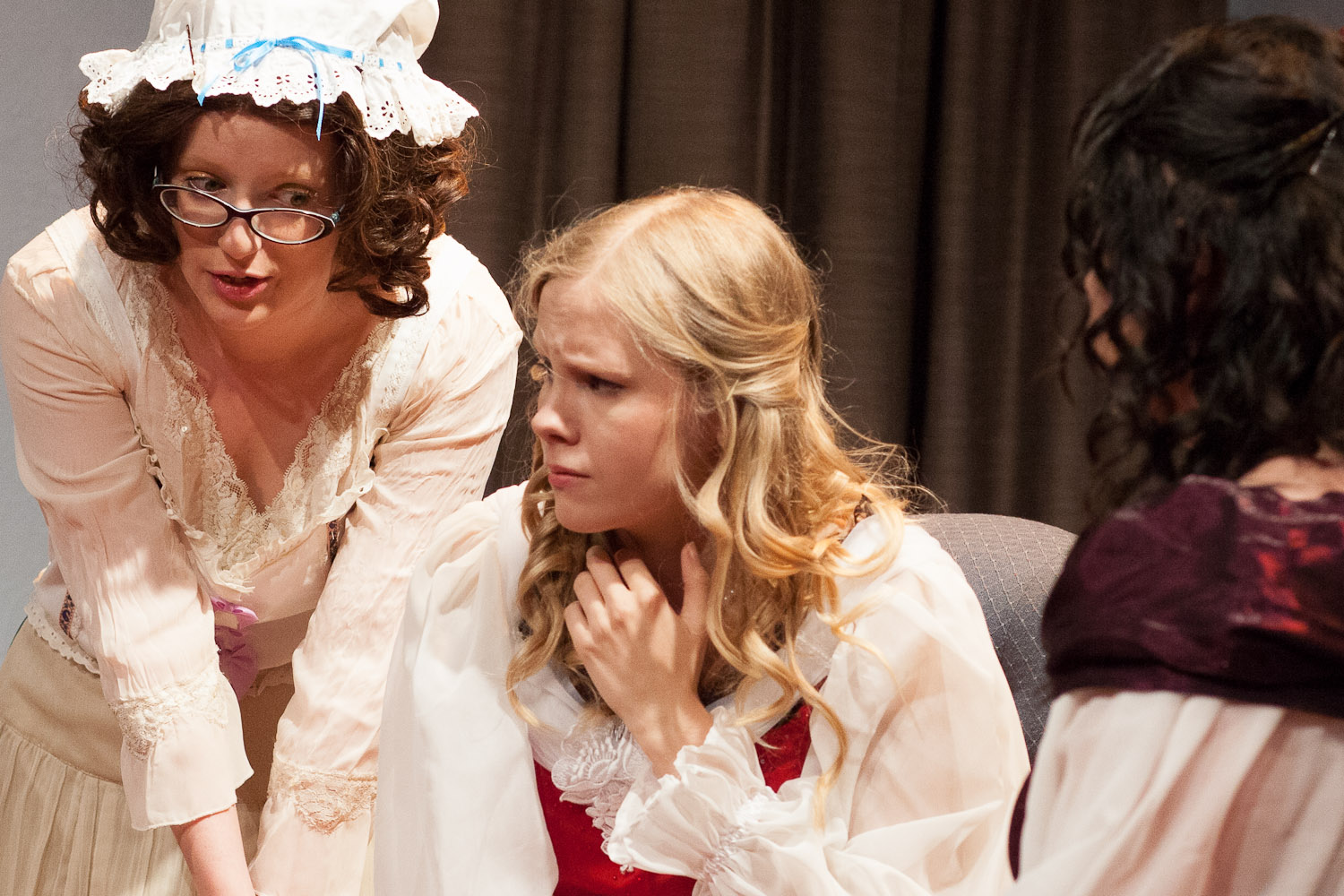
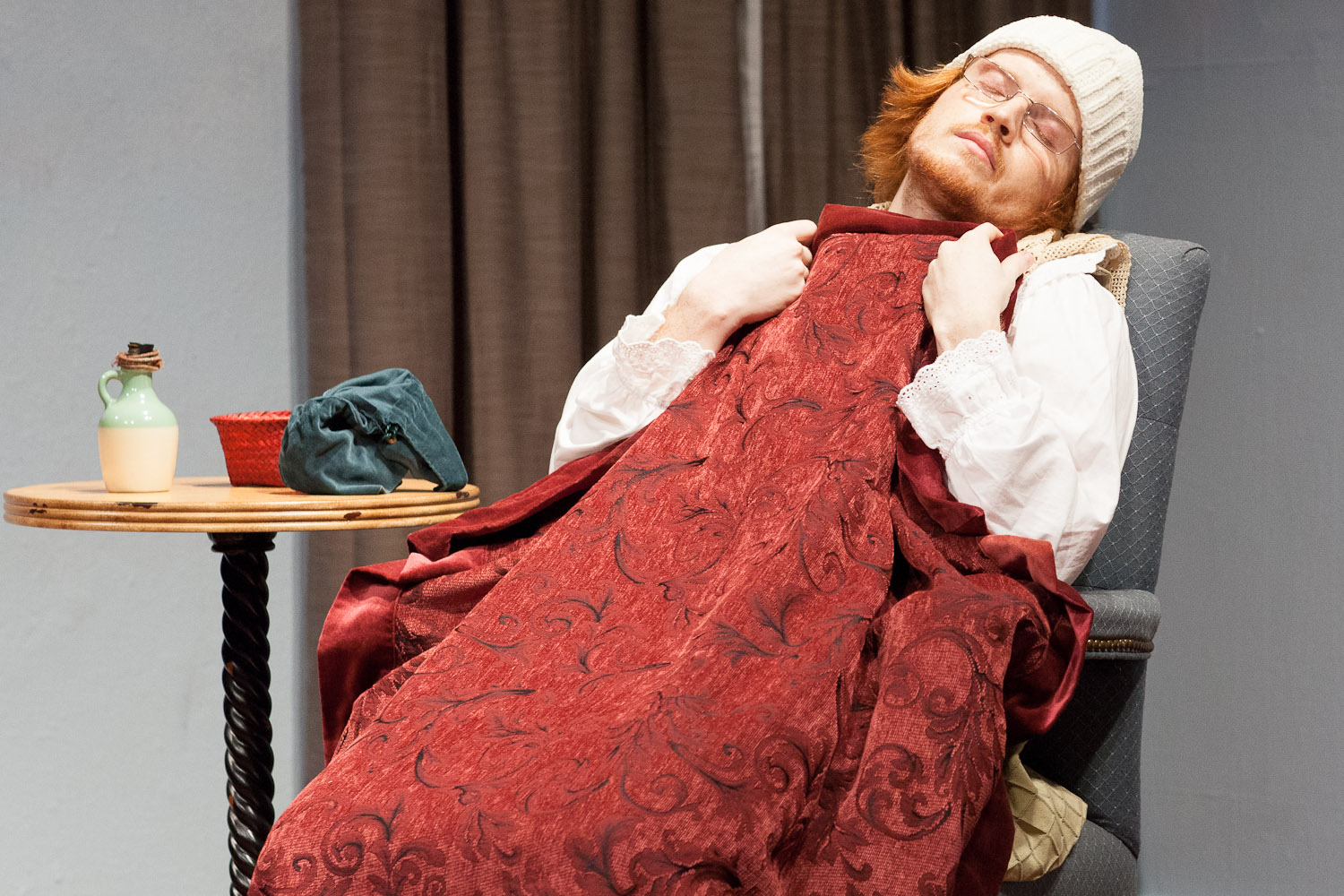
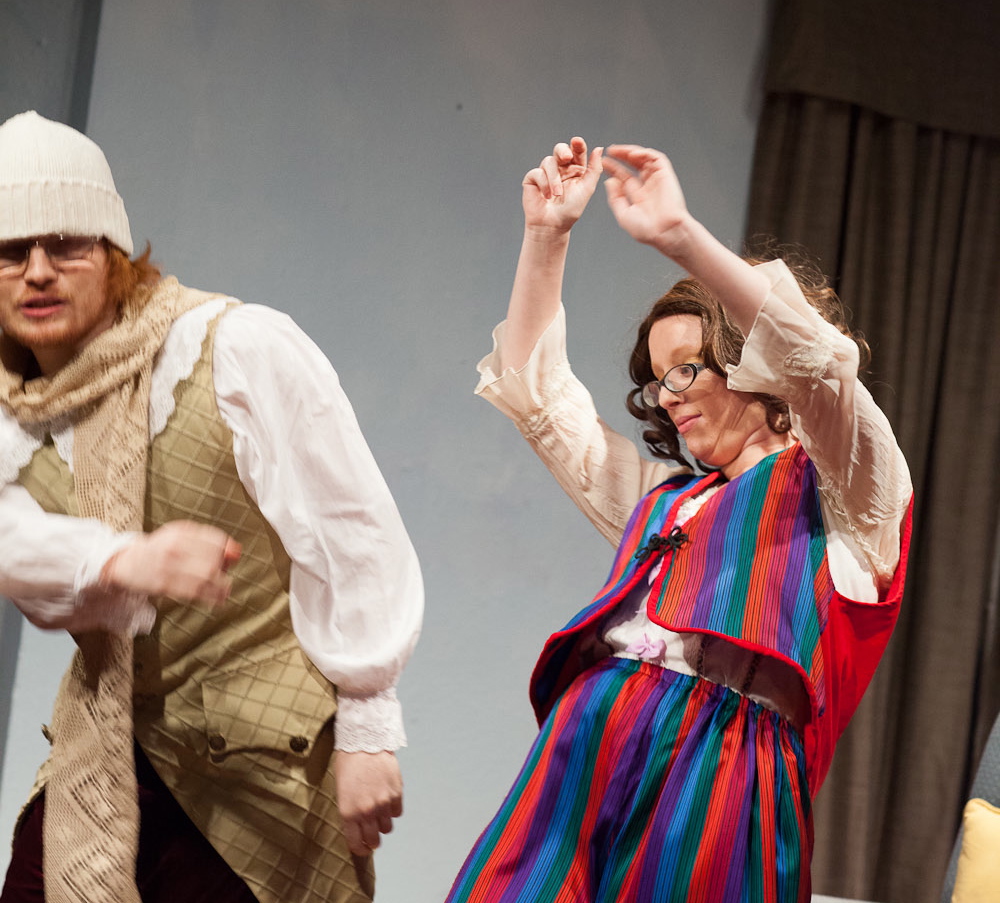
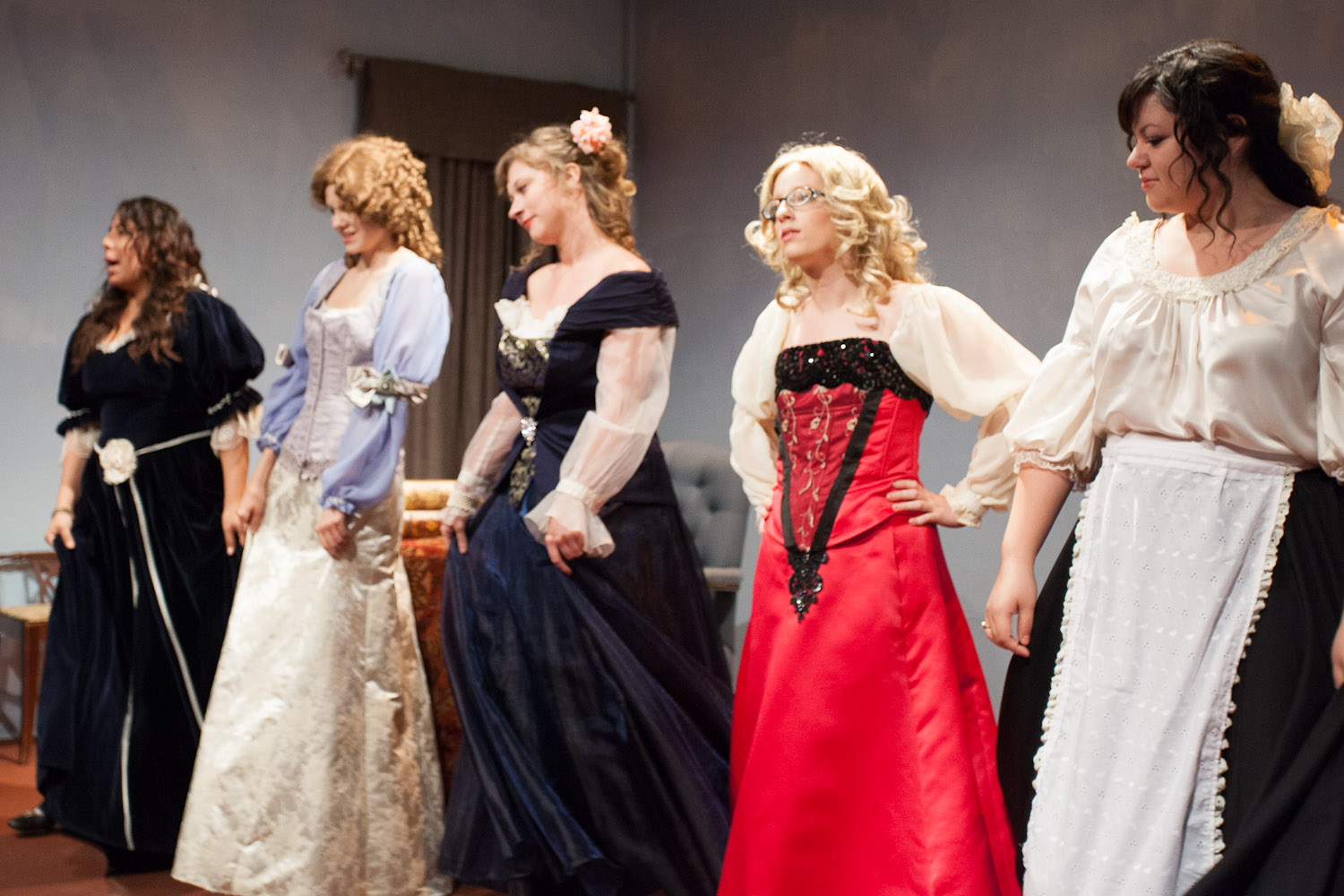
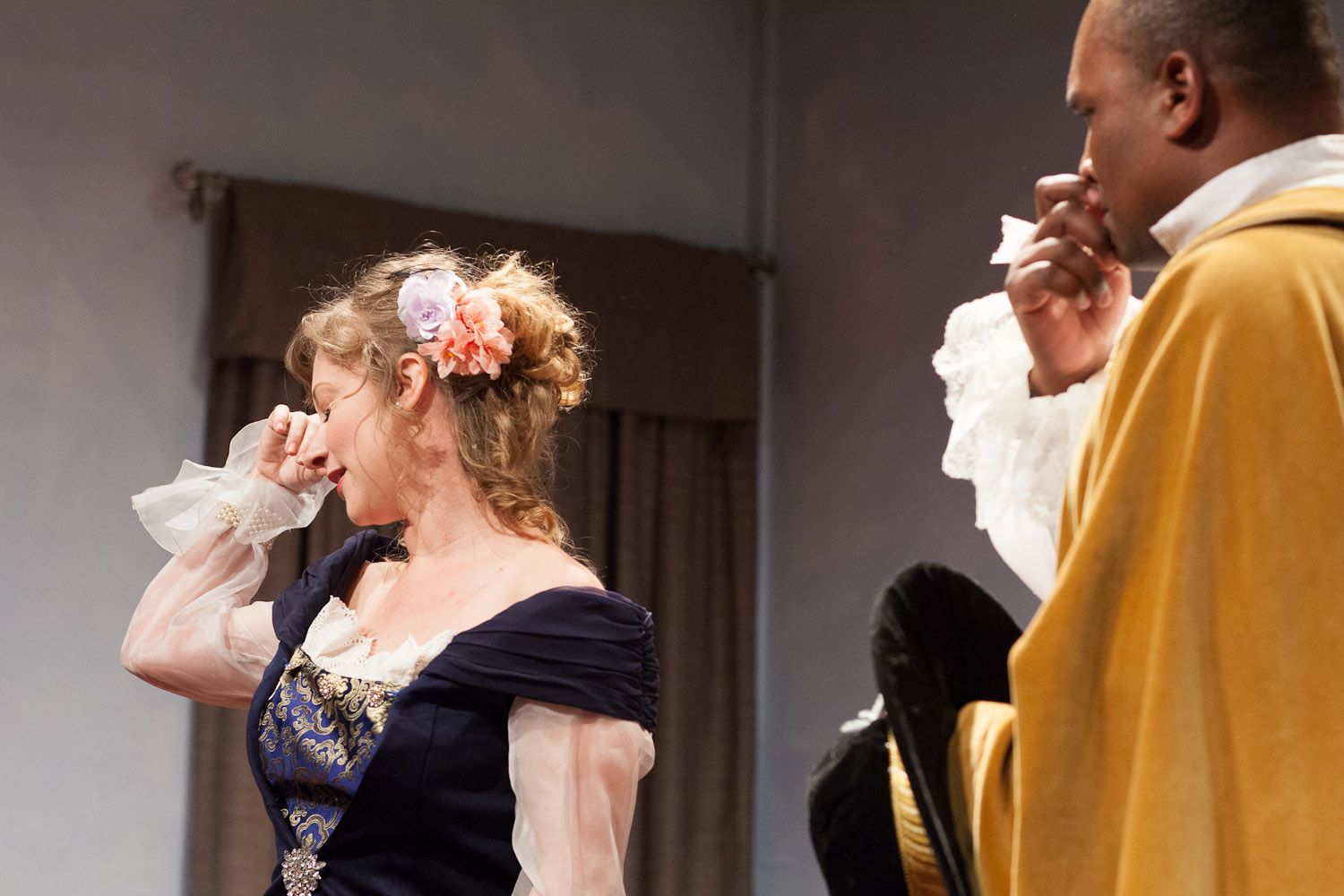
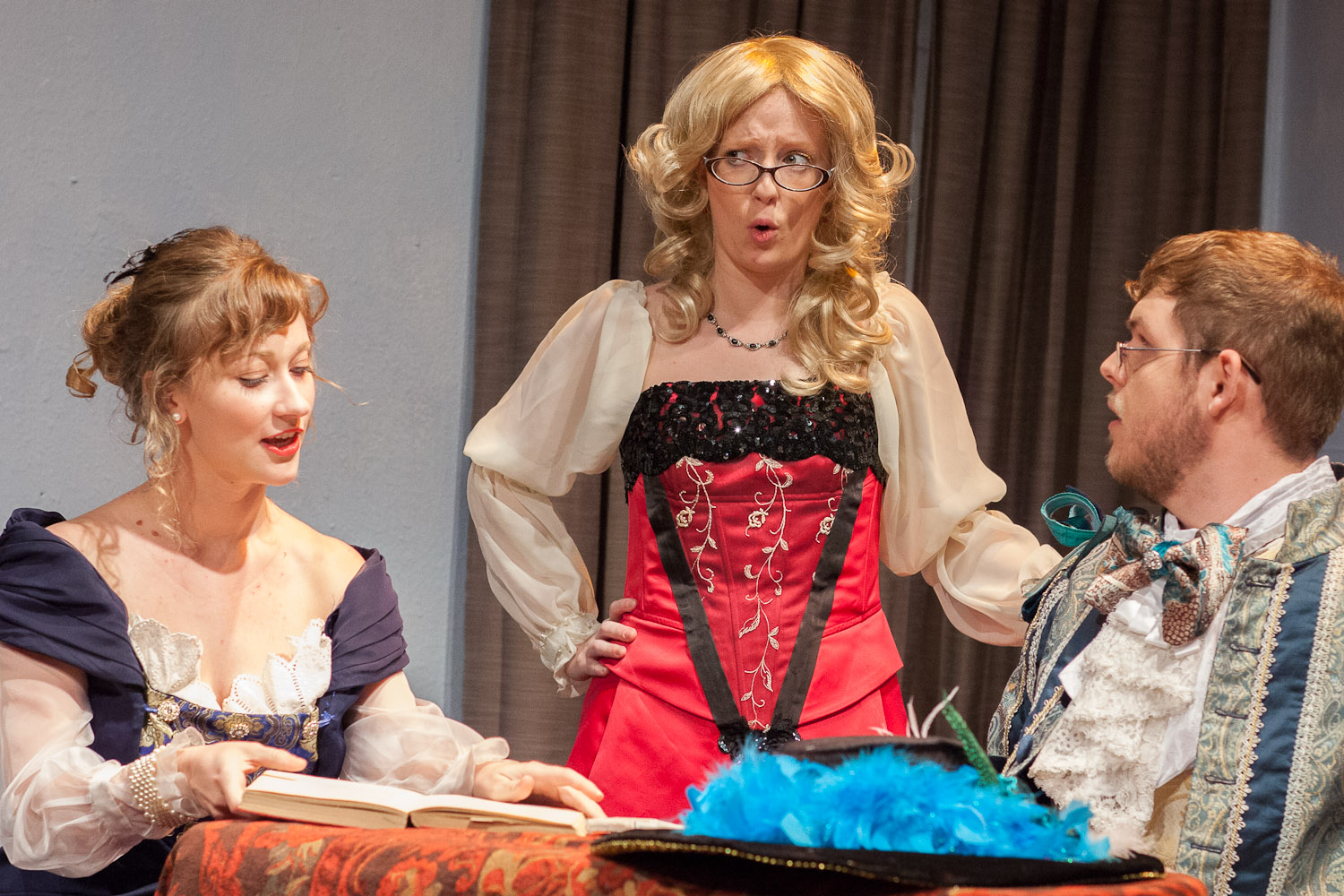
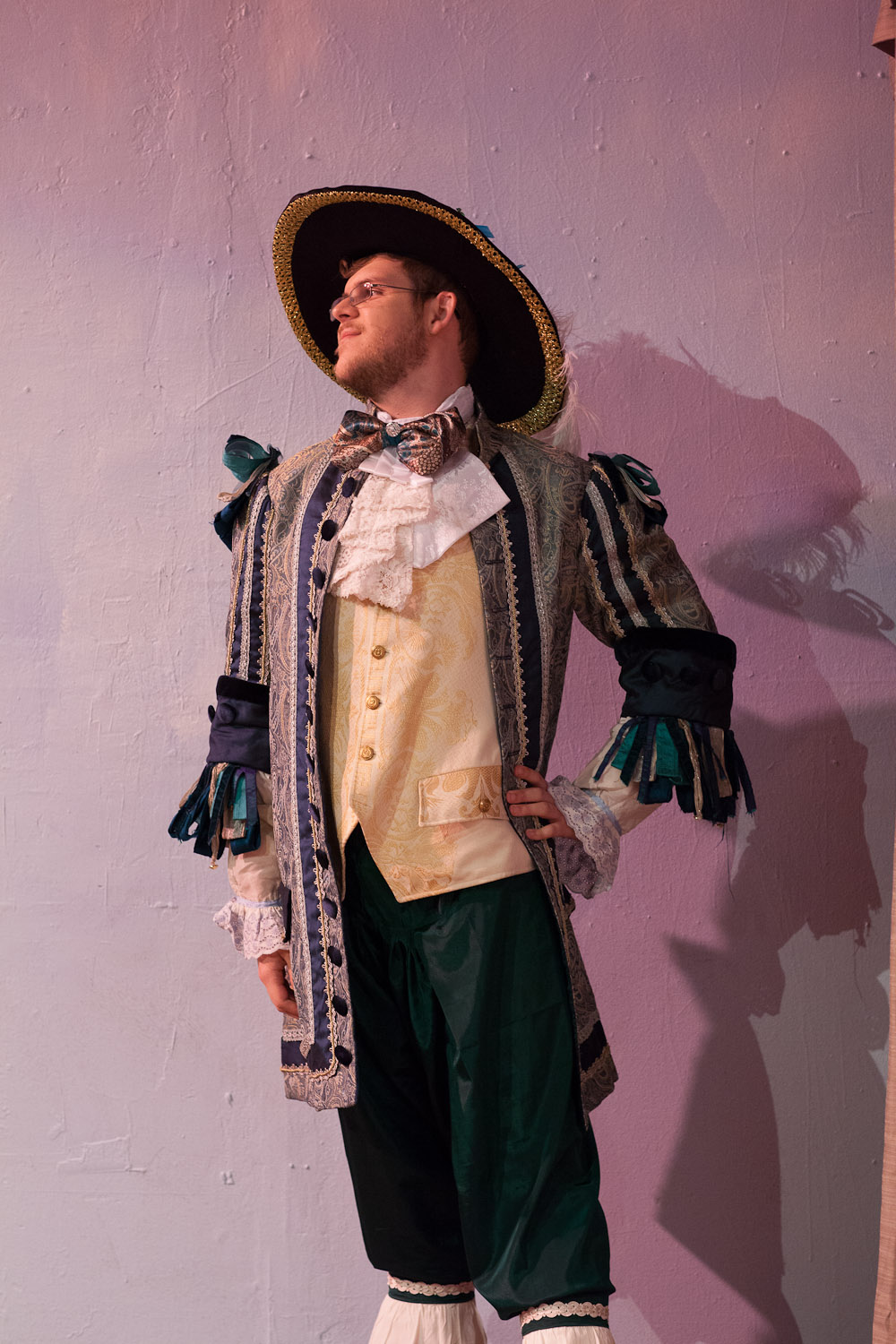
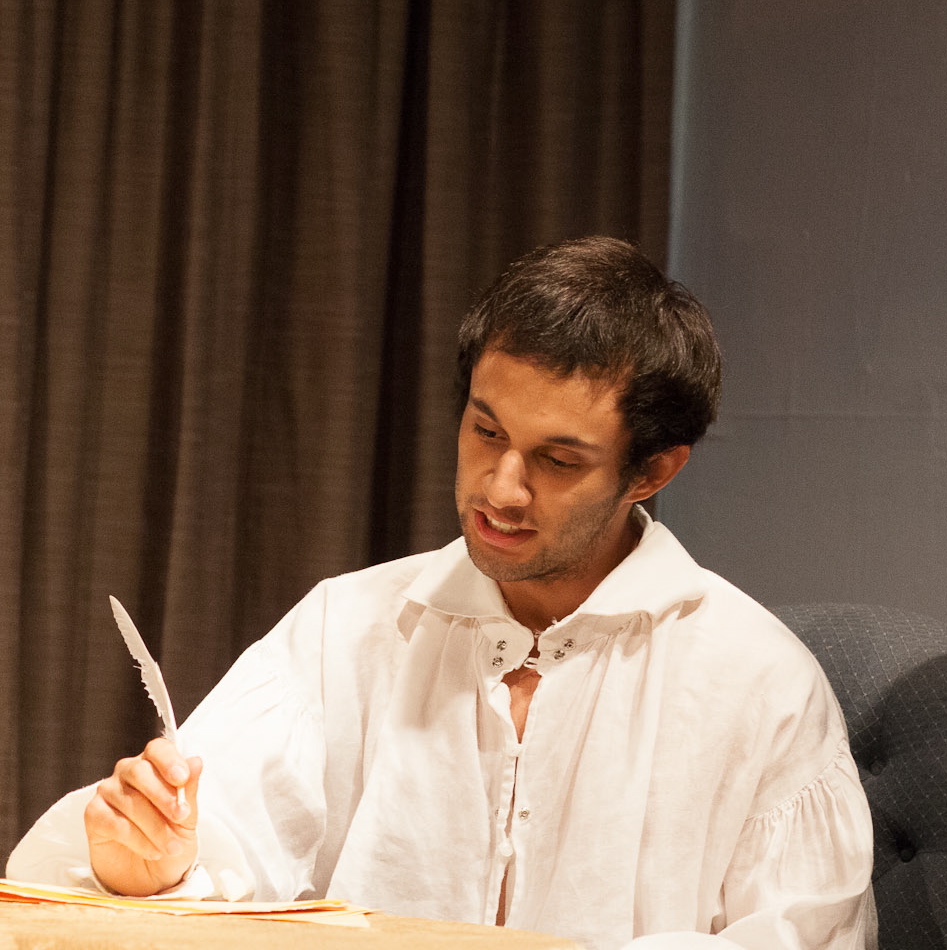
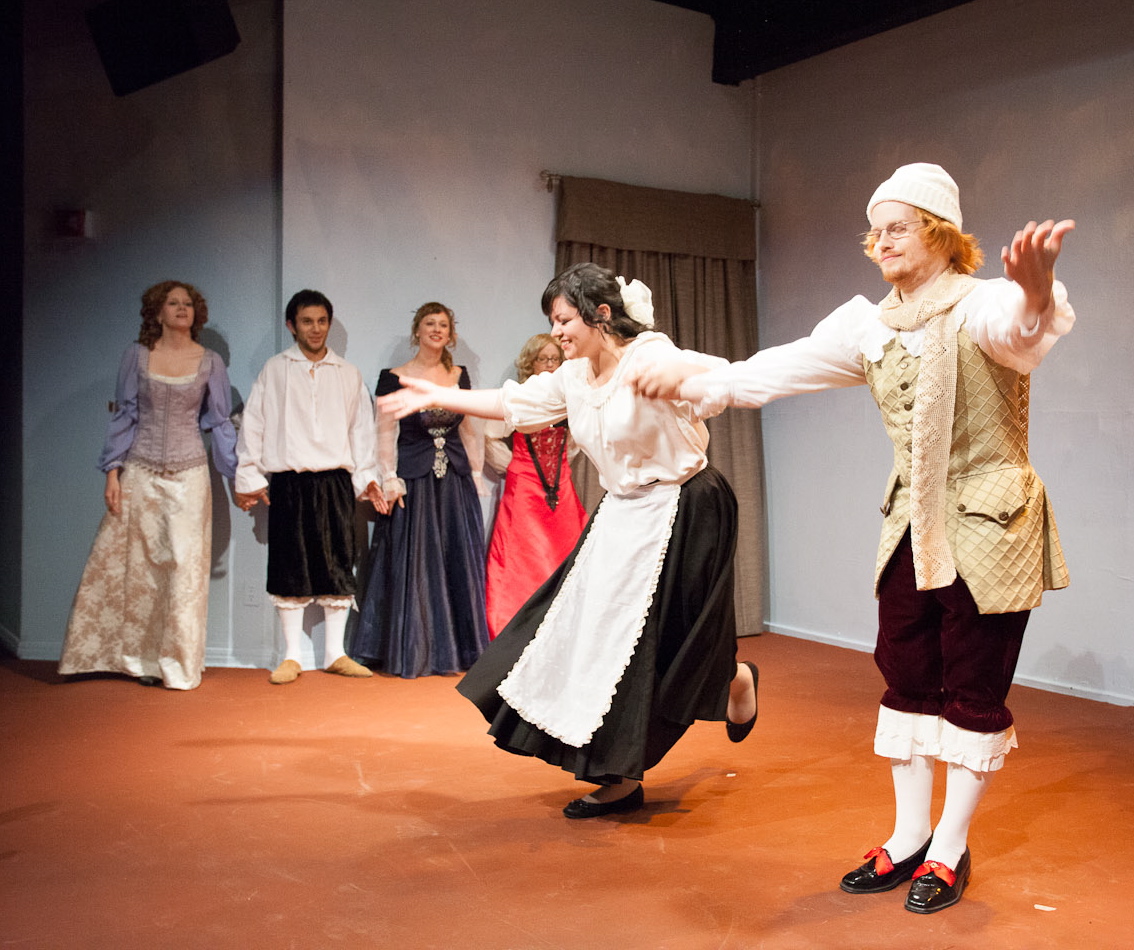
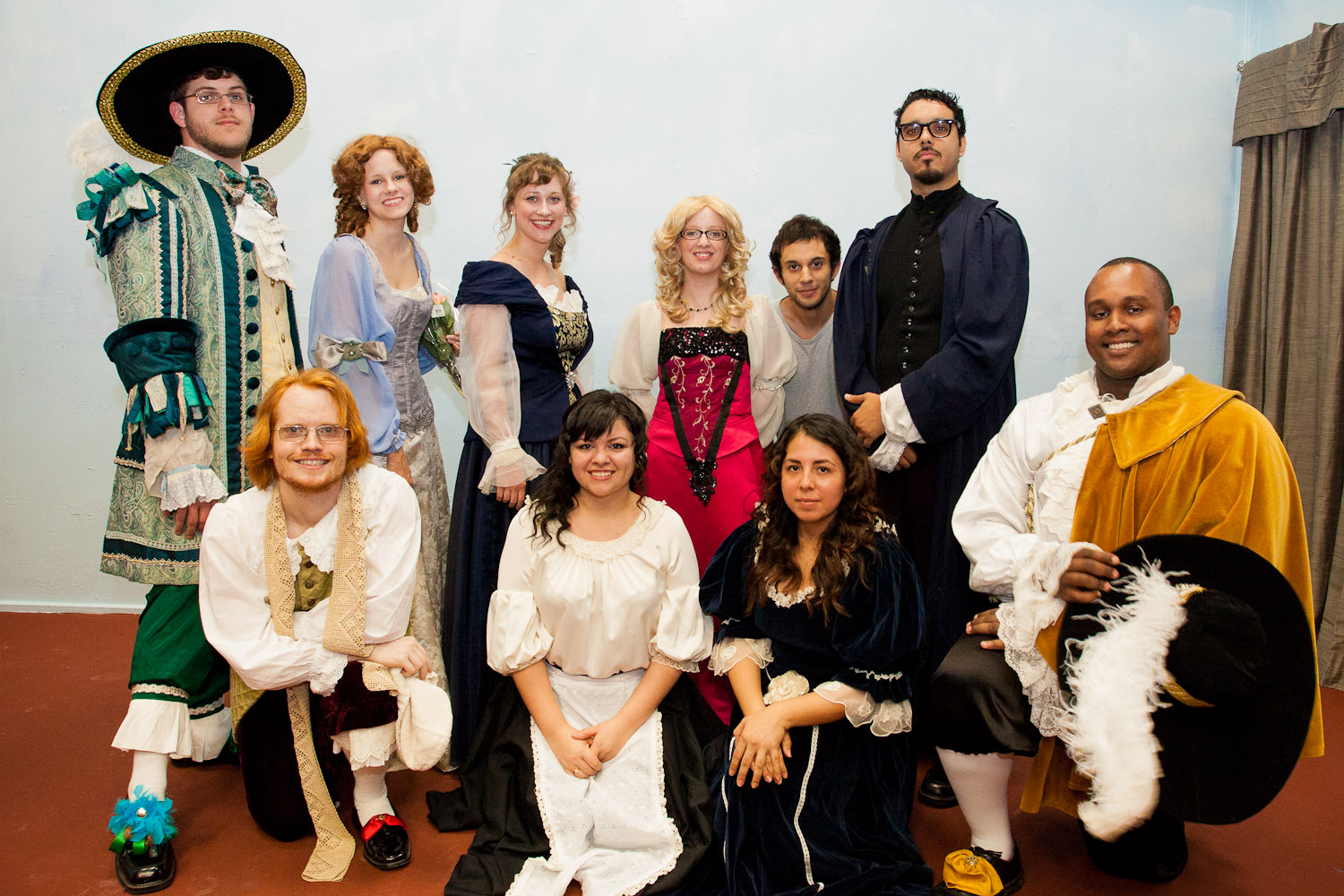
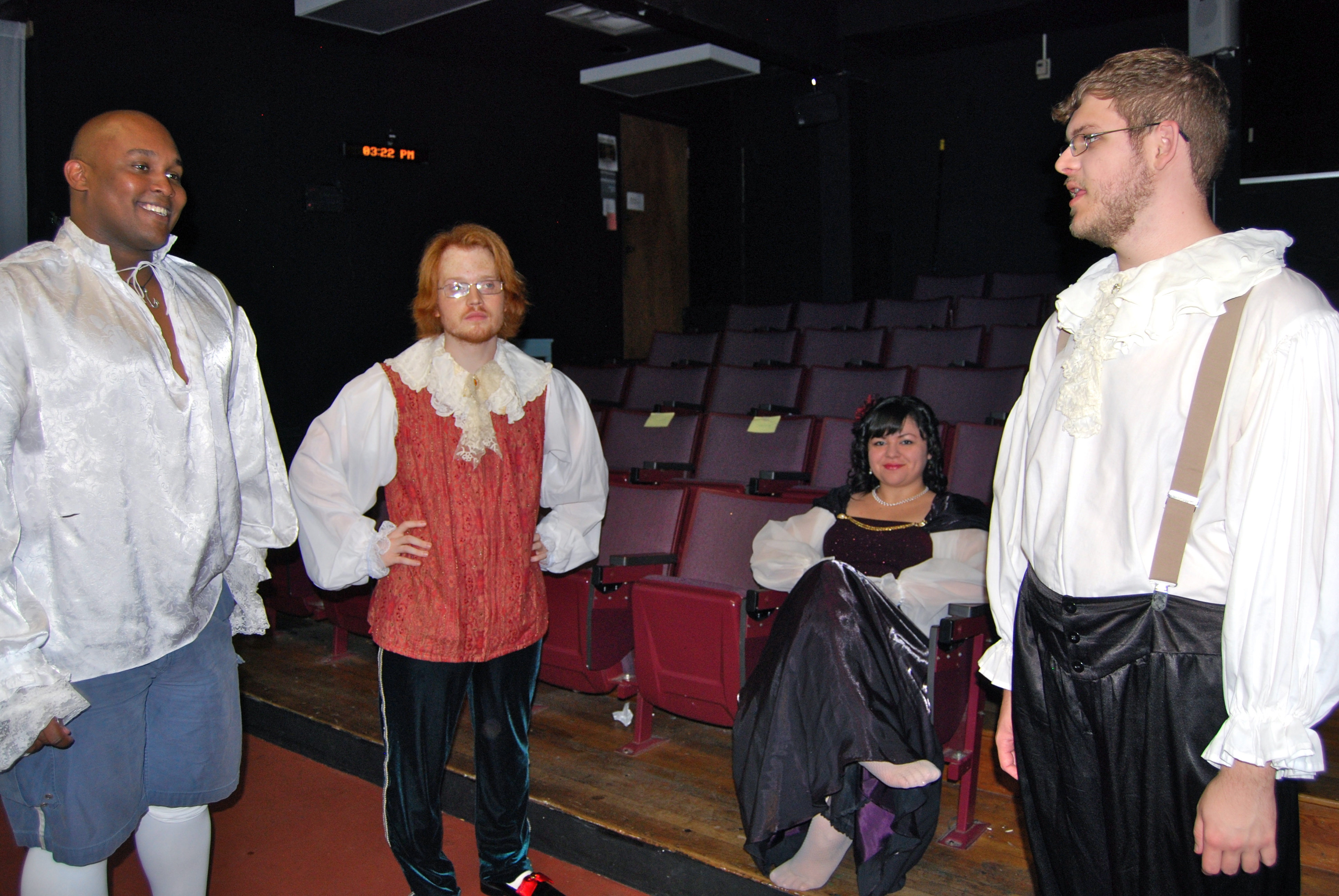
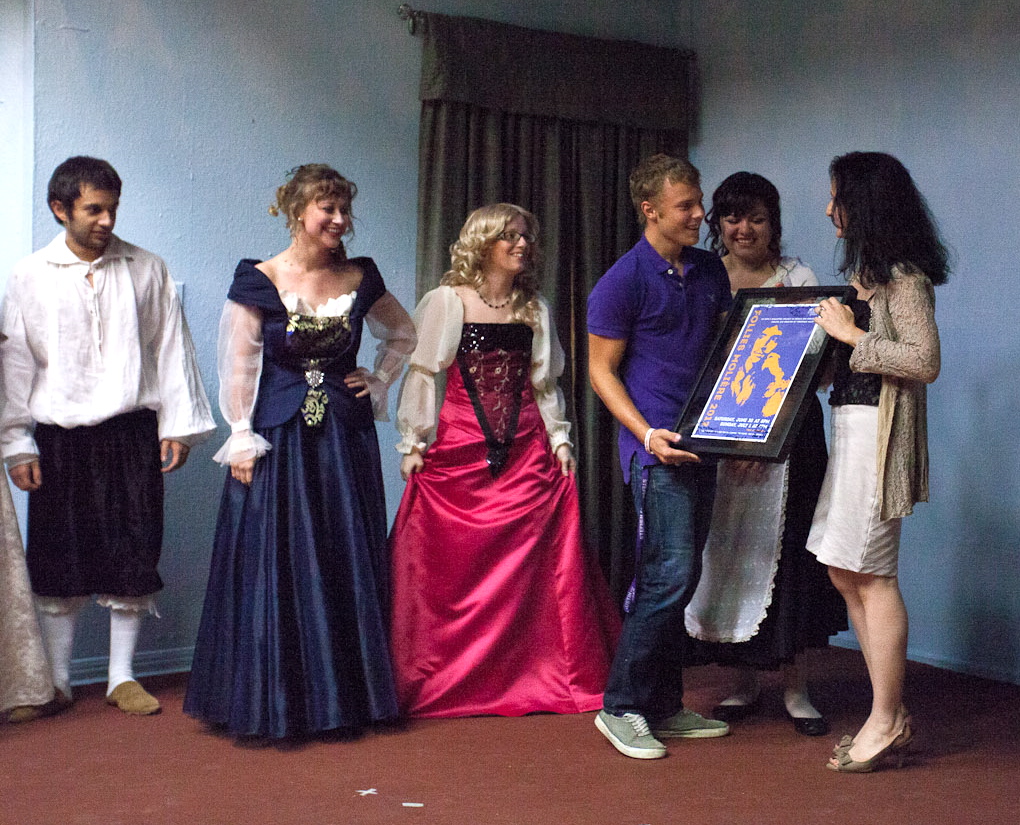
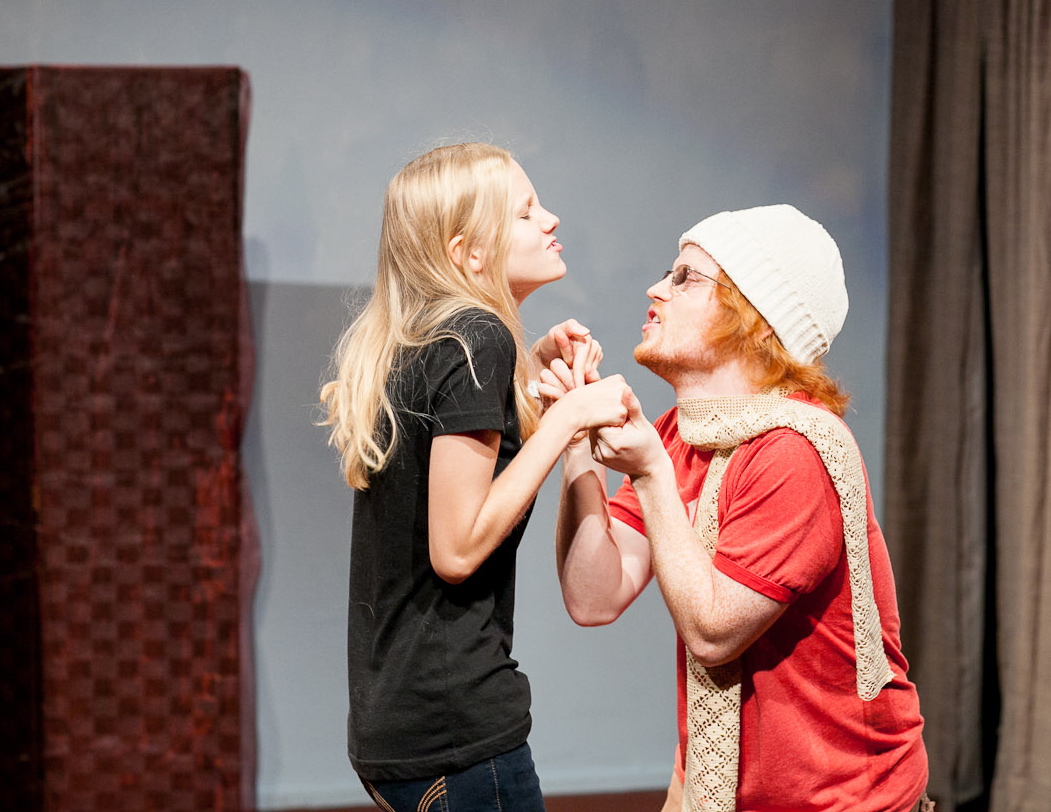
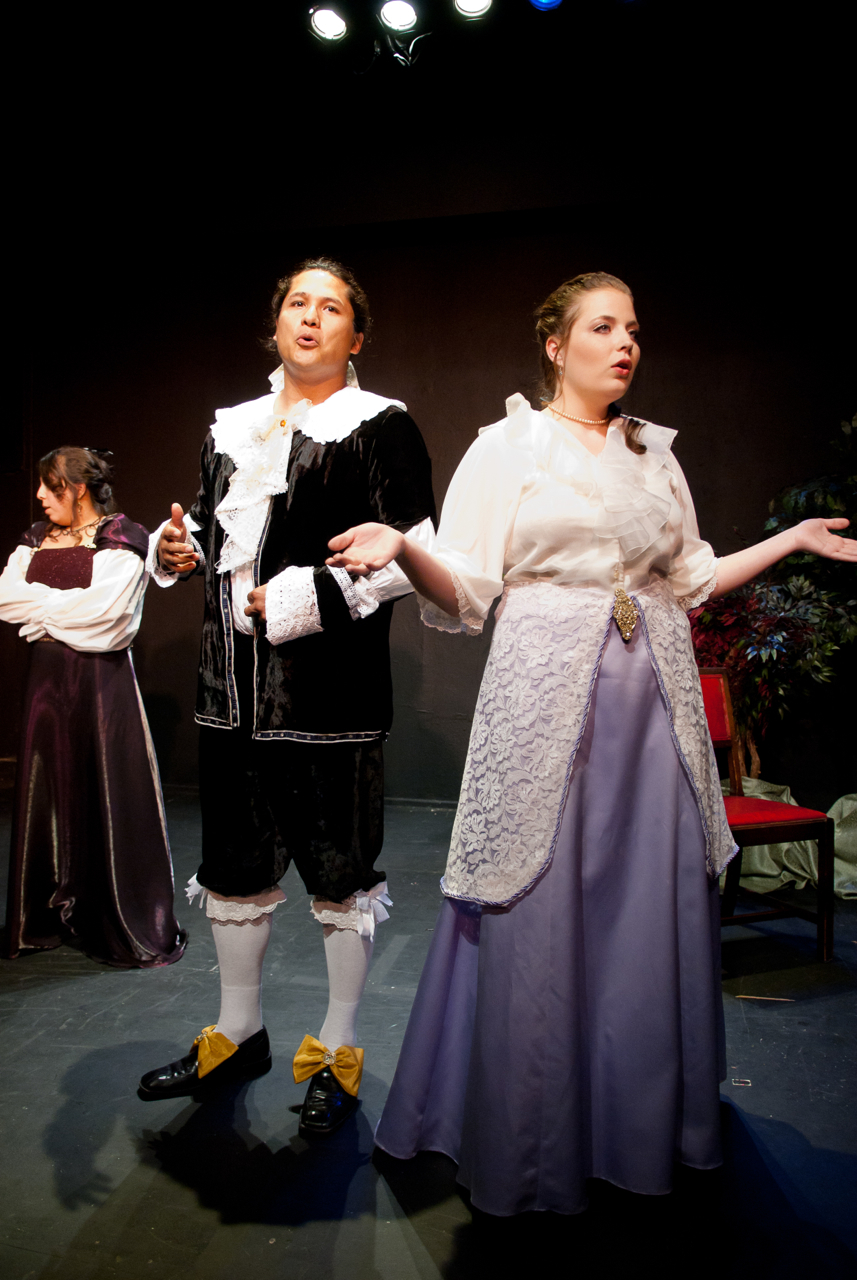
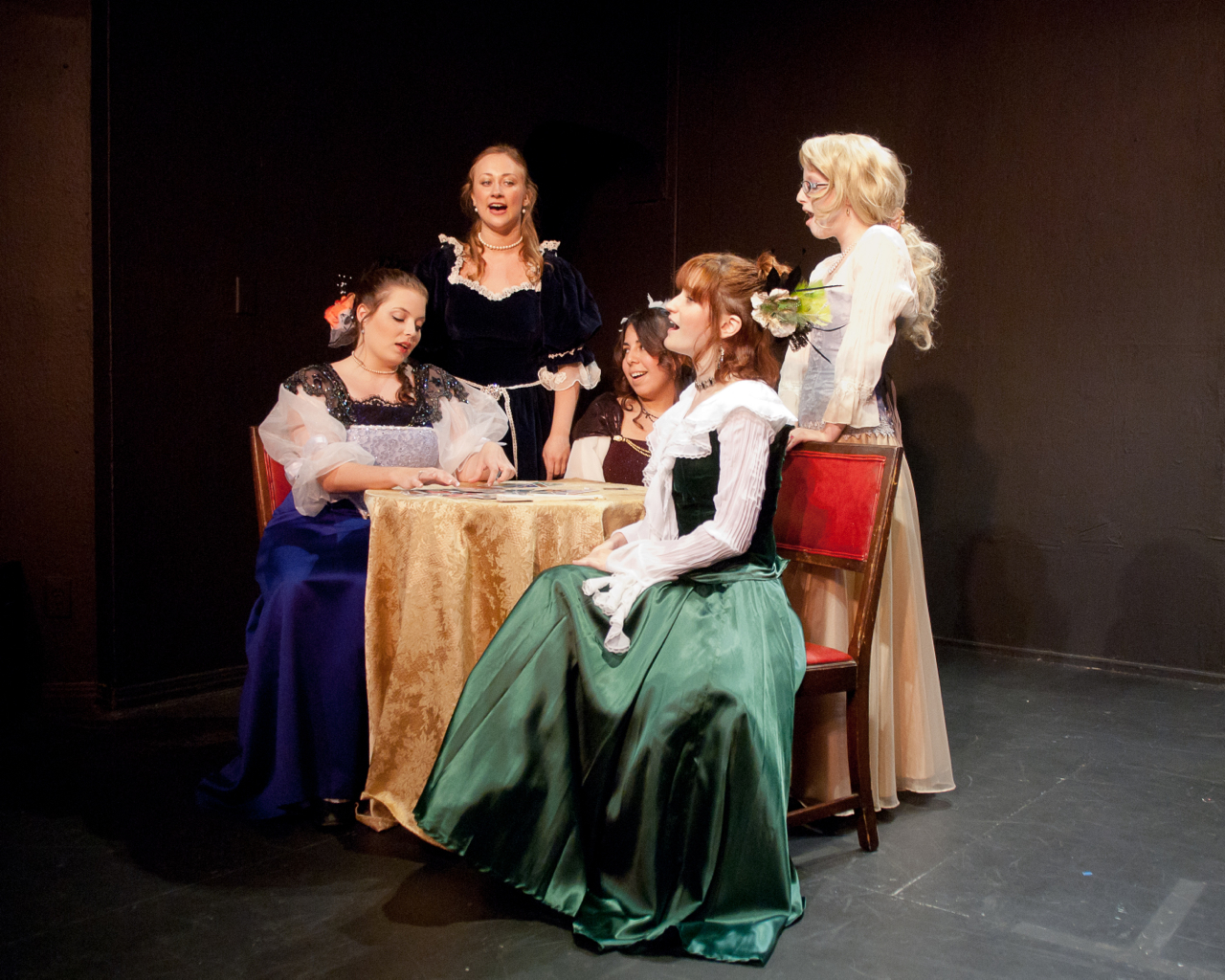
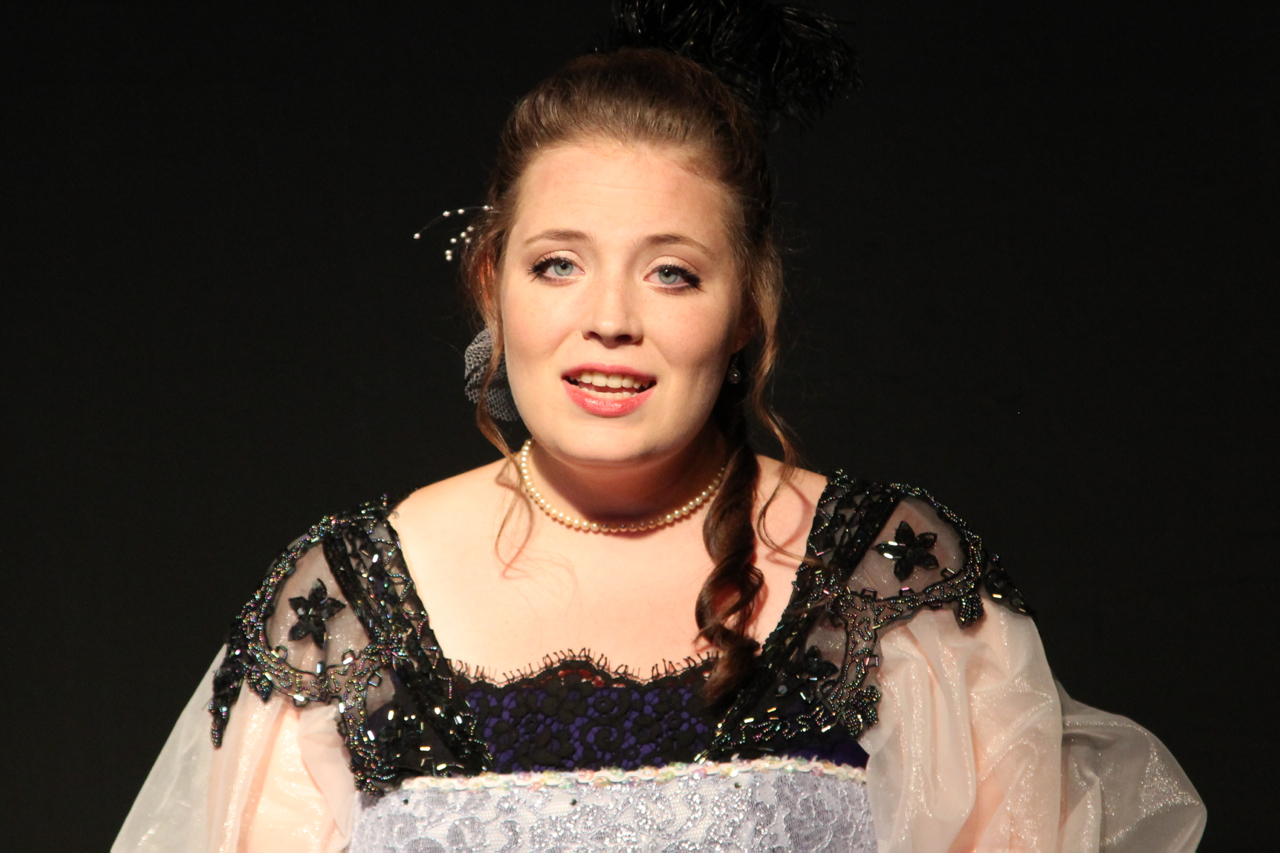
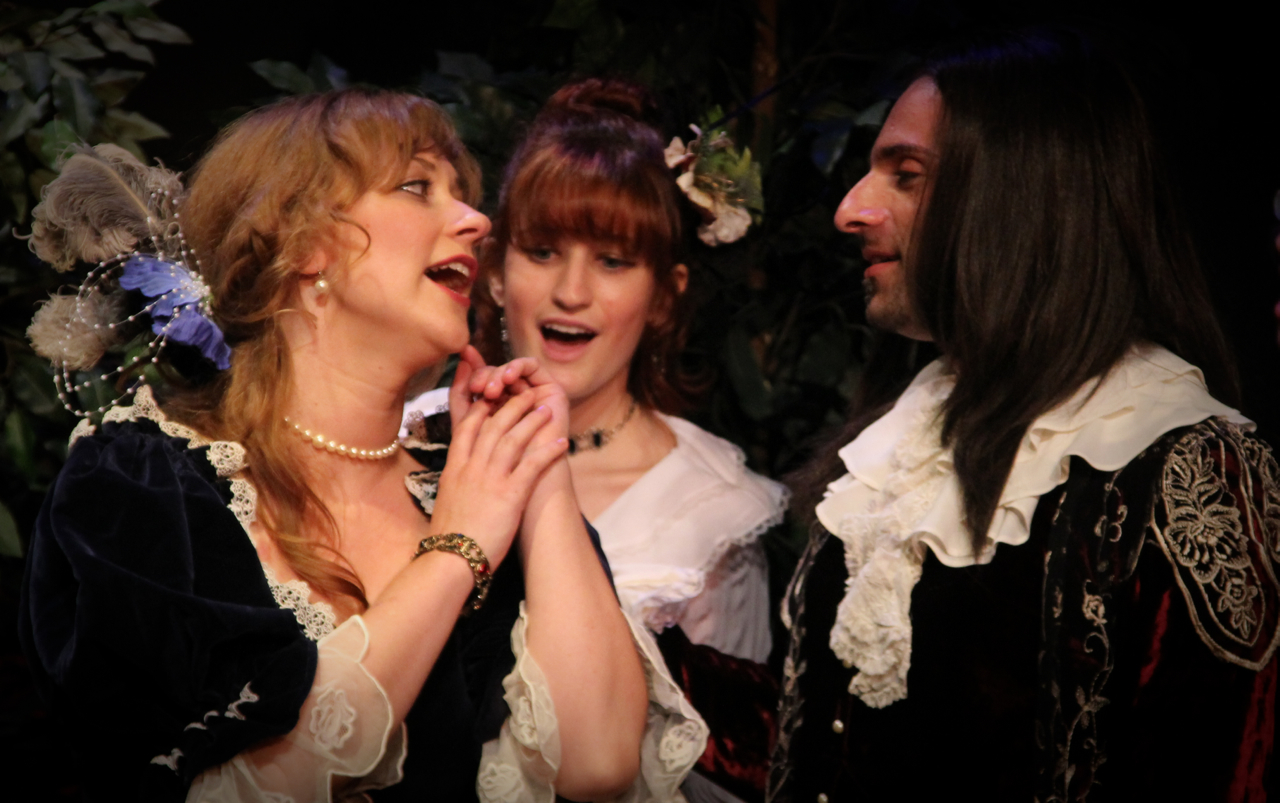
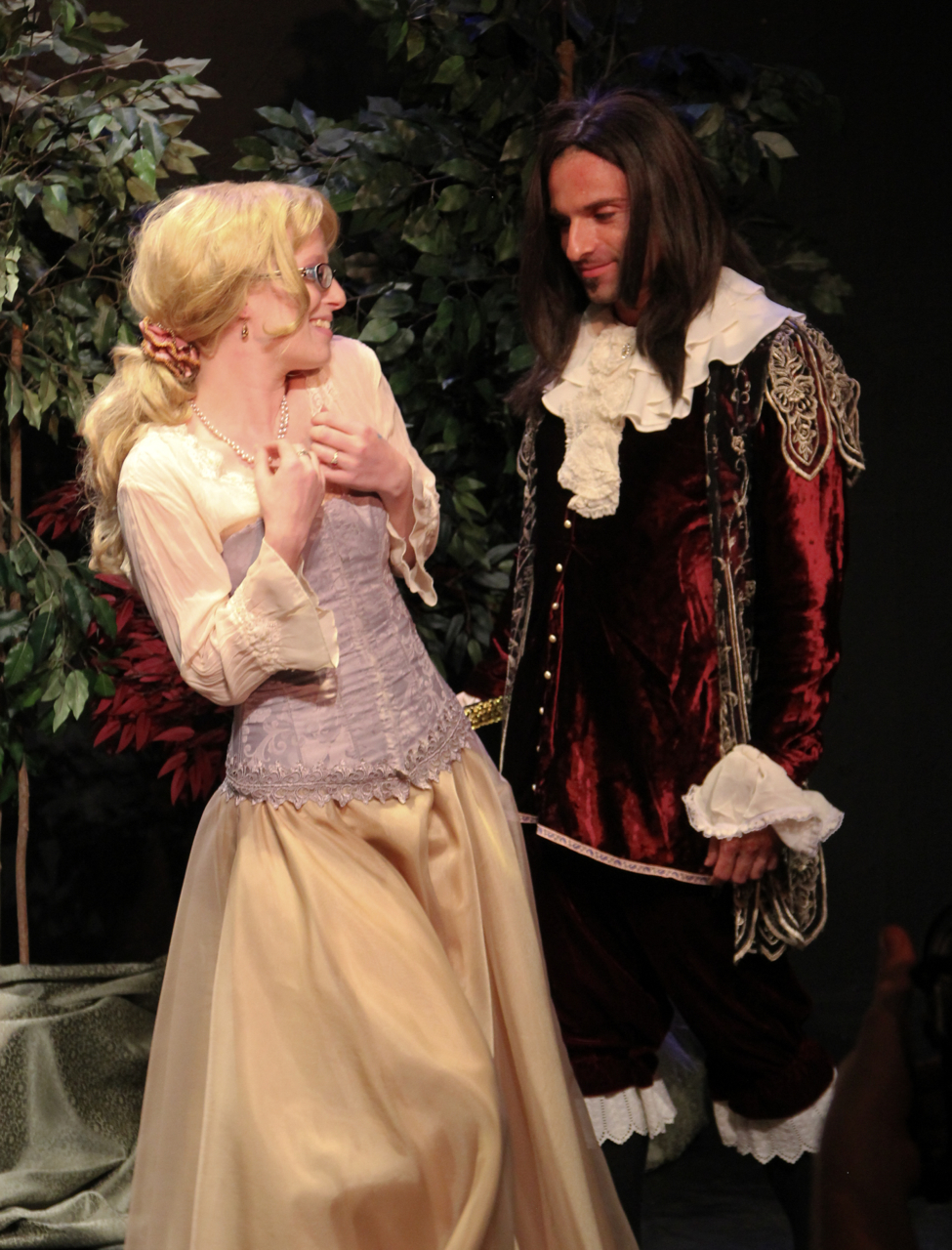
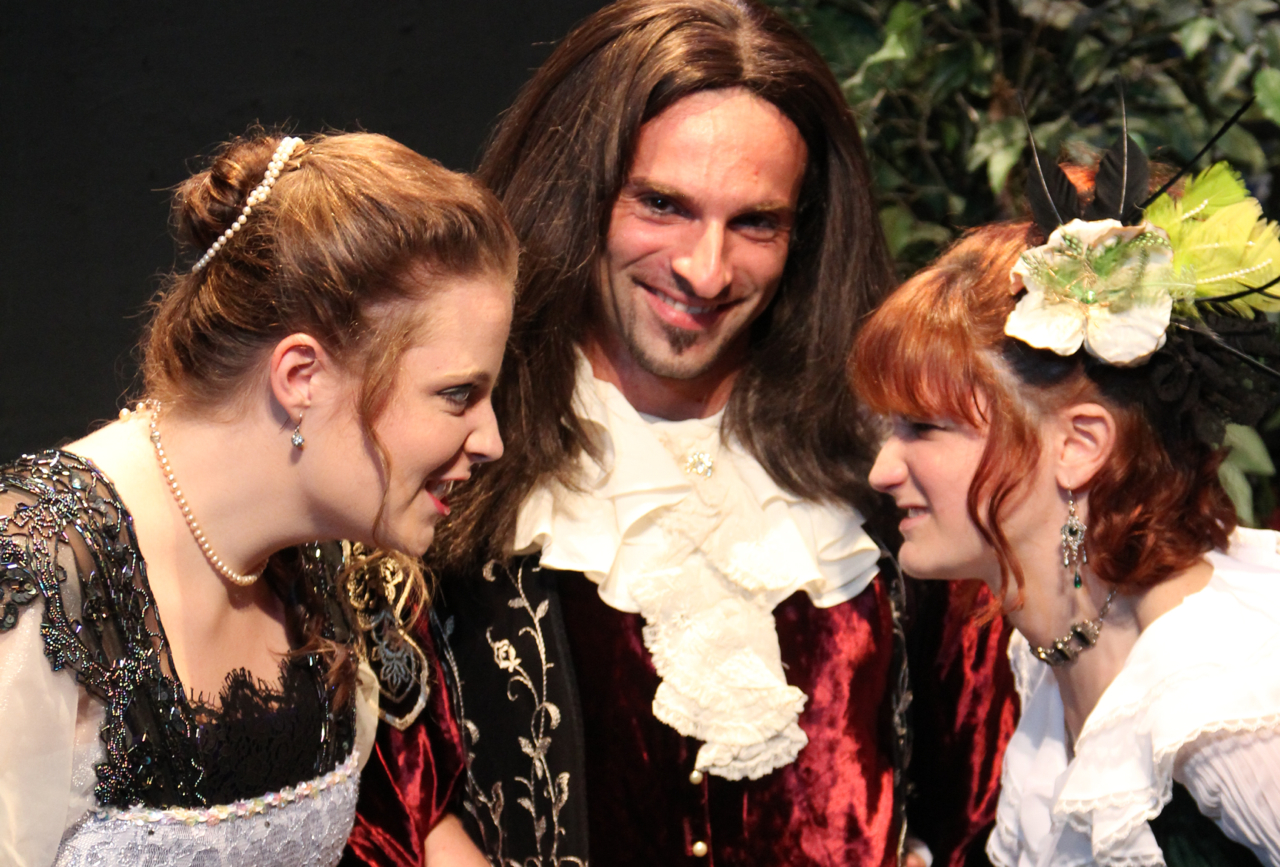
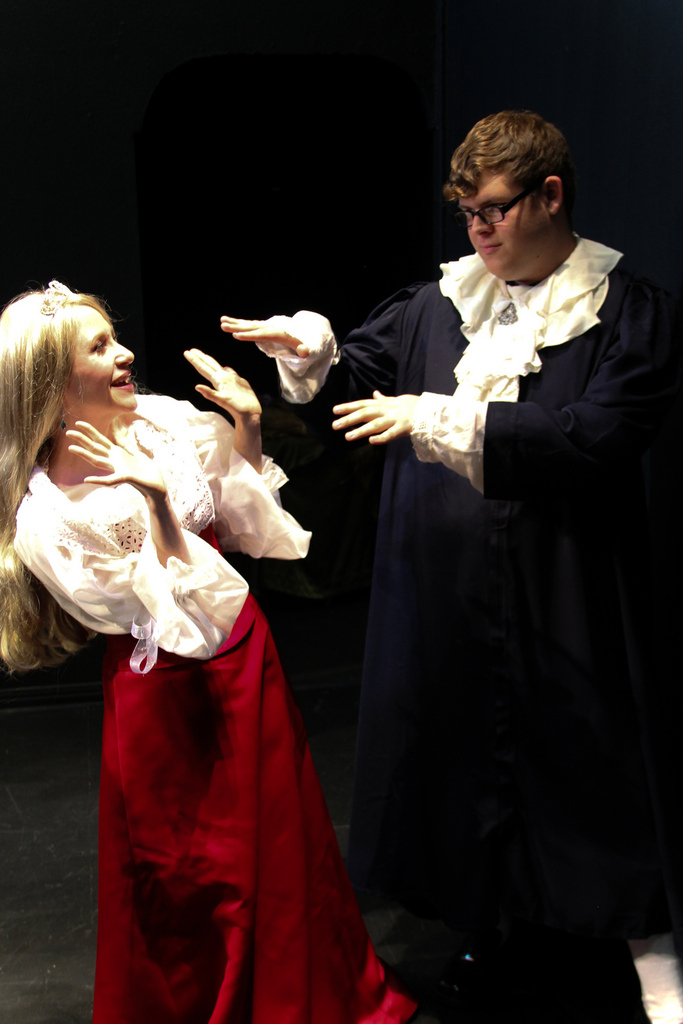
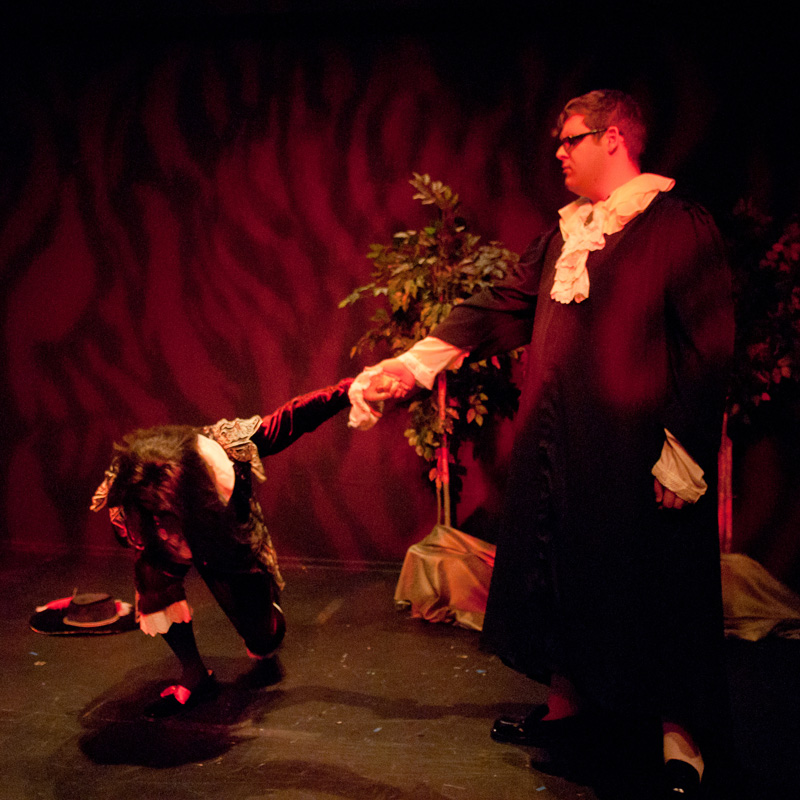
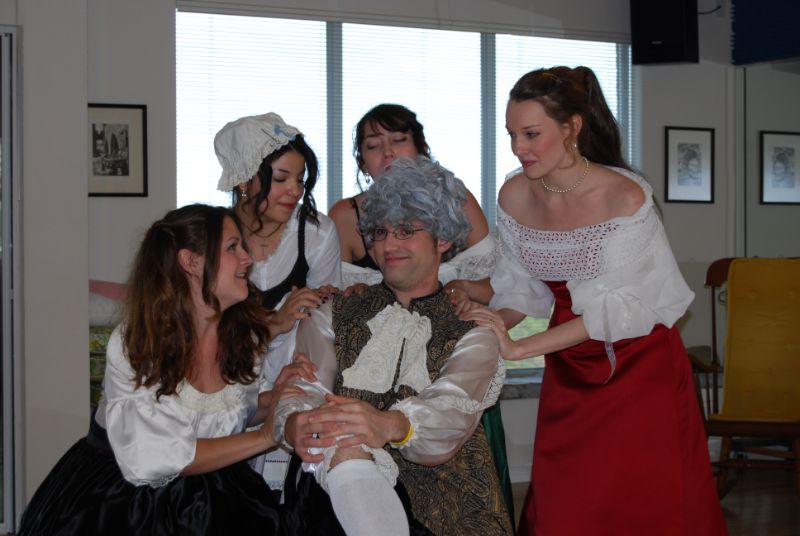
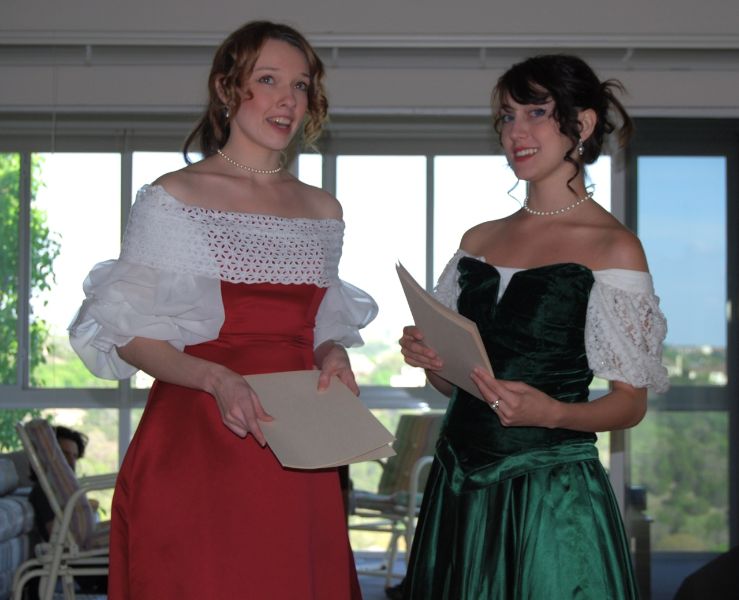
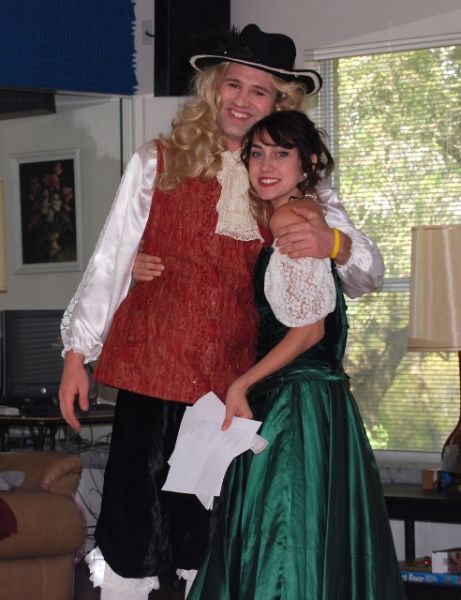
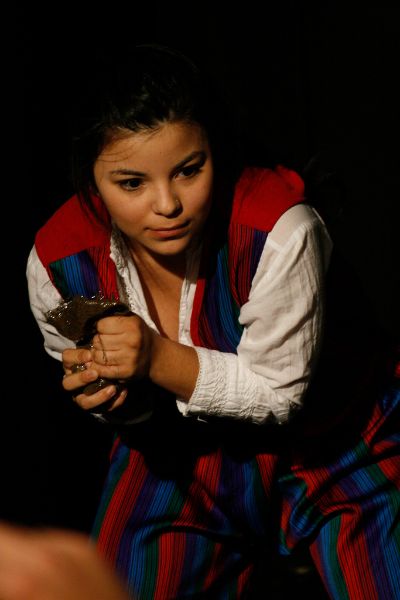
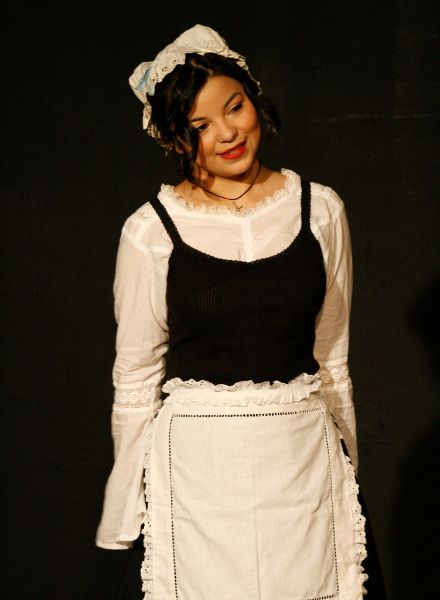
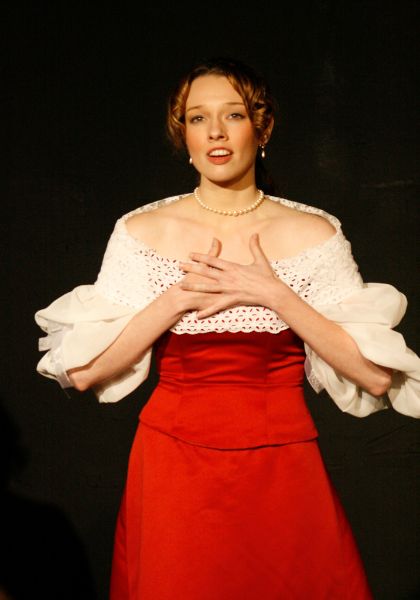
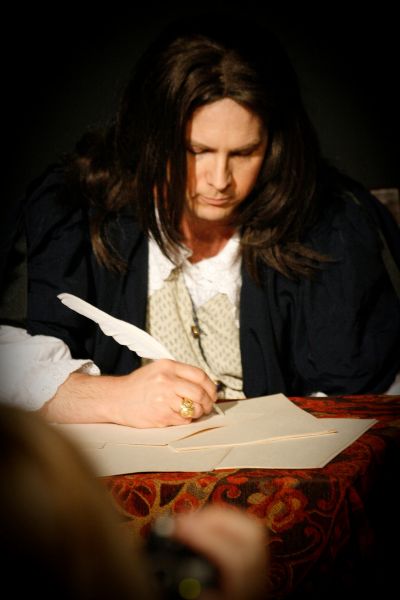
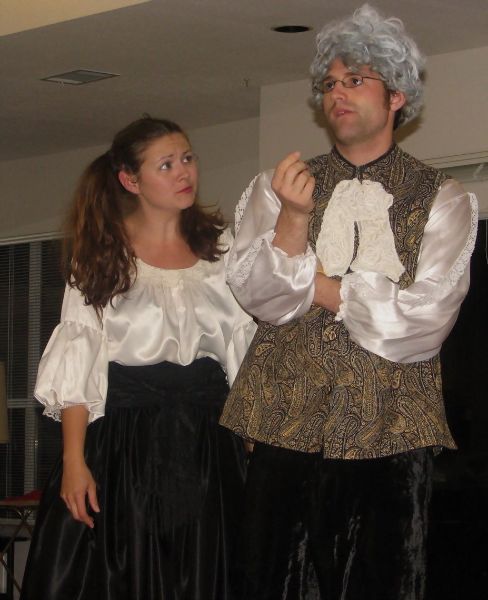
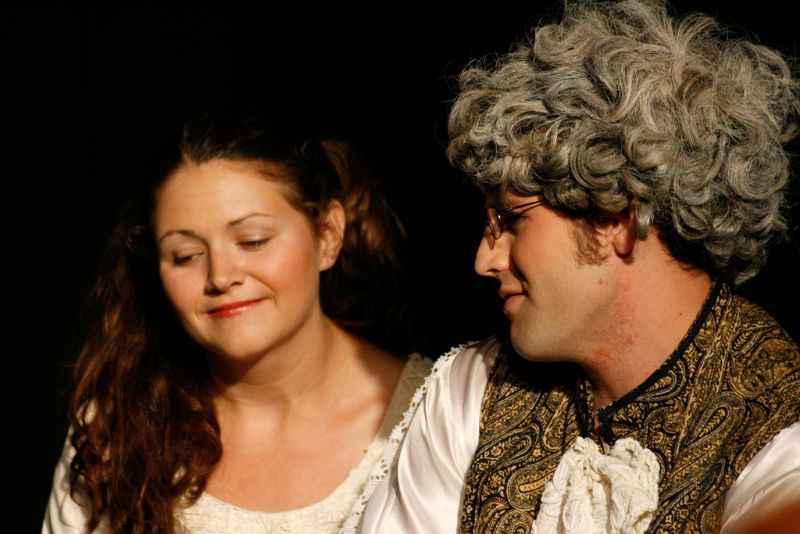
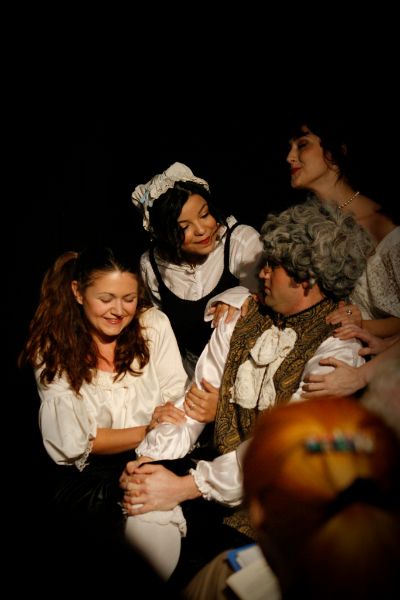
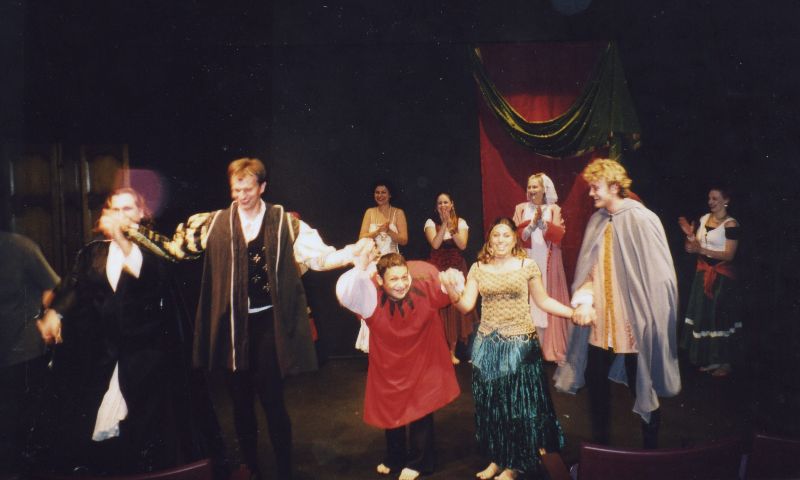
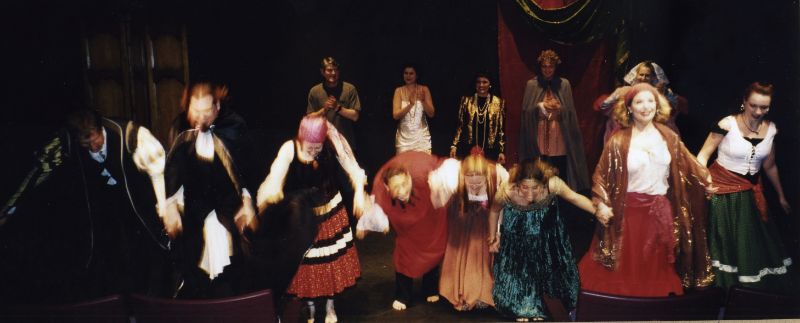
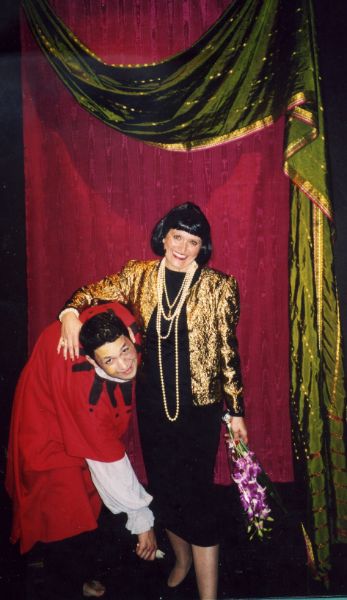
This year, to celebrate its 10 years of French cultural theater, illustre-stage pays homage to Molière with an all-Molière performance in 3 acts. Tartuffe, Le malade Imaginaire, Les Femmes Savantes, Scapin, and Molière himself participate to the mix. The show is divided into 3 “acts”:

Act I – Tartuffe or The Impostor.

Act II – Le malade Imaginaire

Act III – Nuit d’Inspiration

The three acts are independent and as in all illustre-stage performances, the actors speak some French and some English so everyone in the audience can follow the stories.

LE CAST

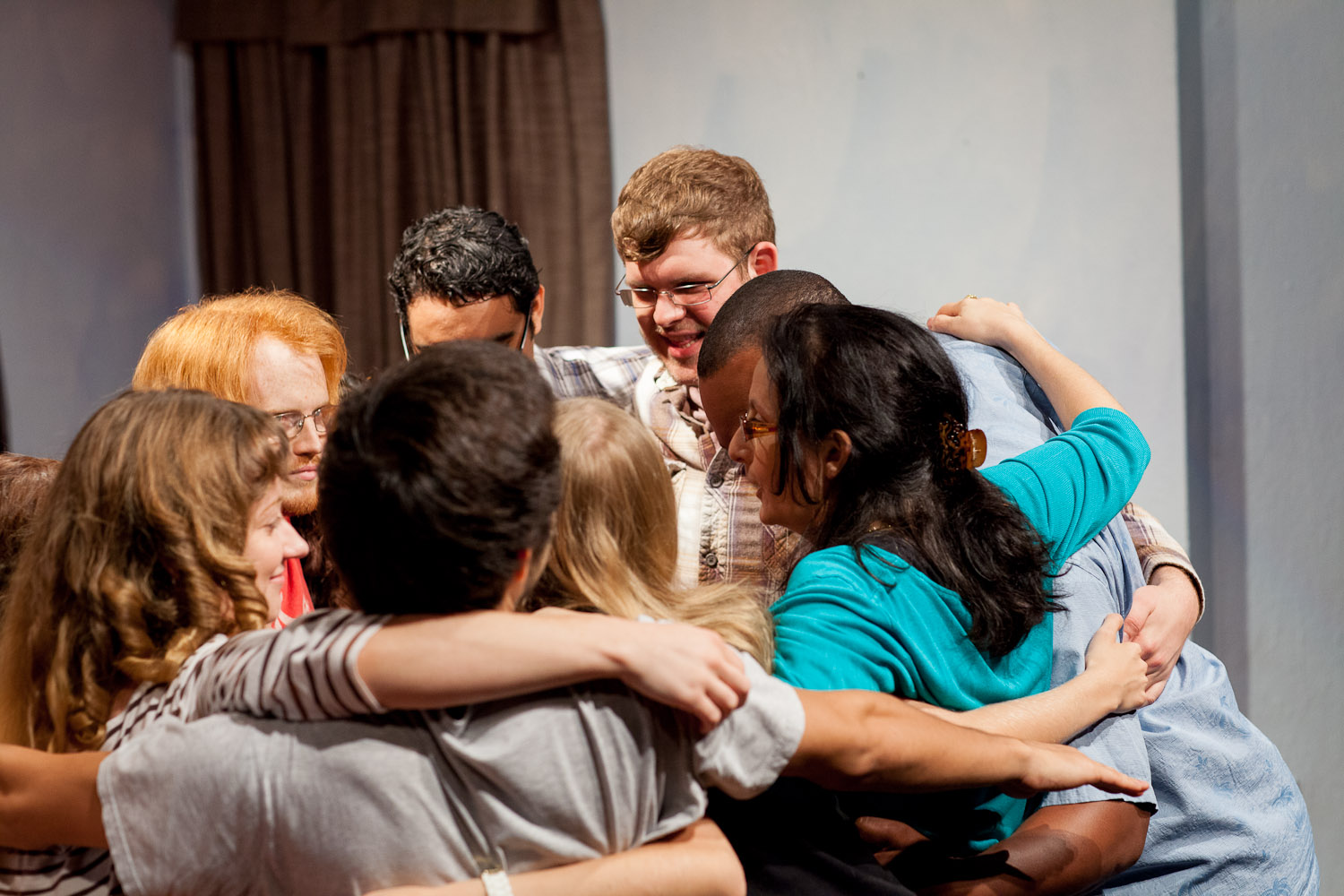
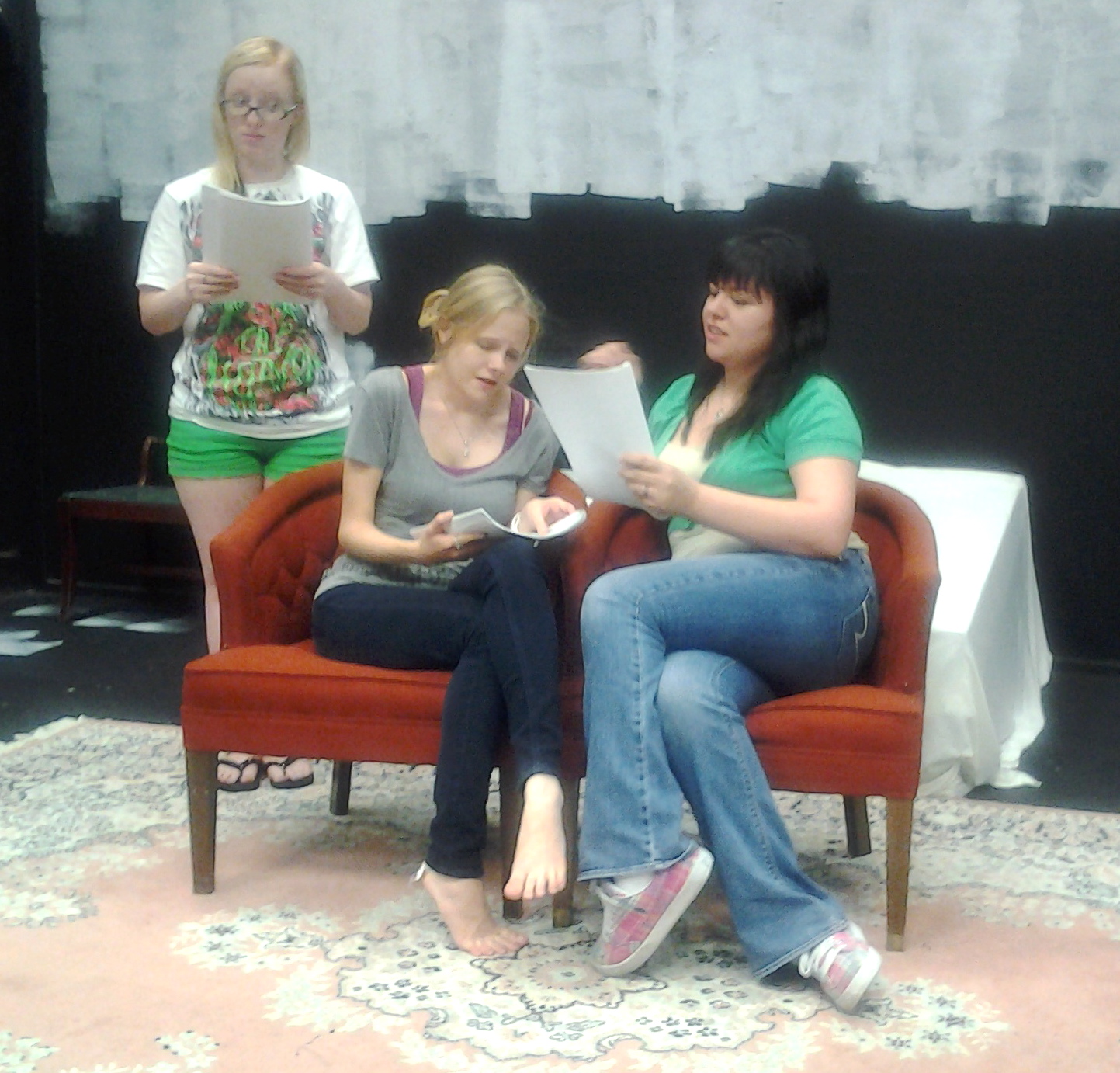
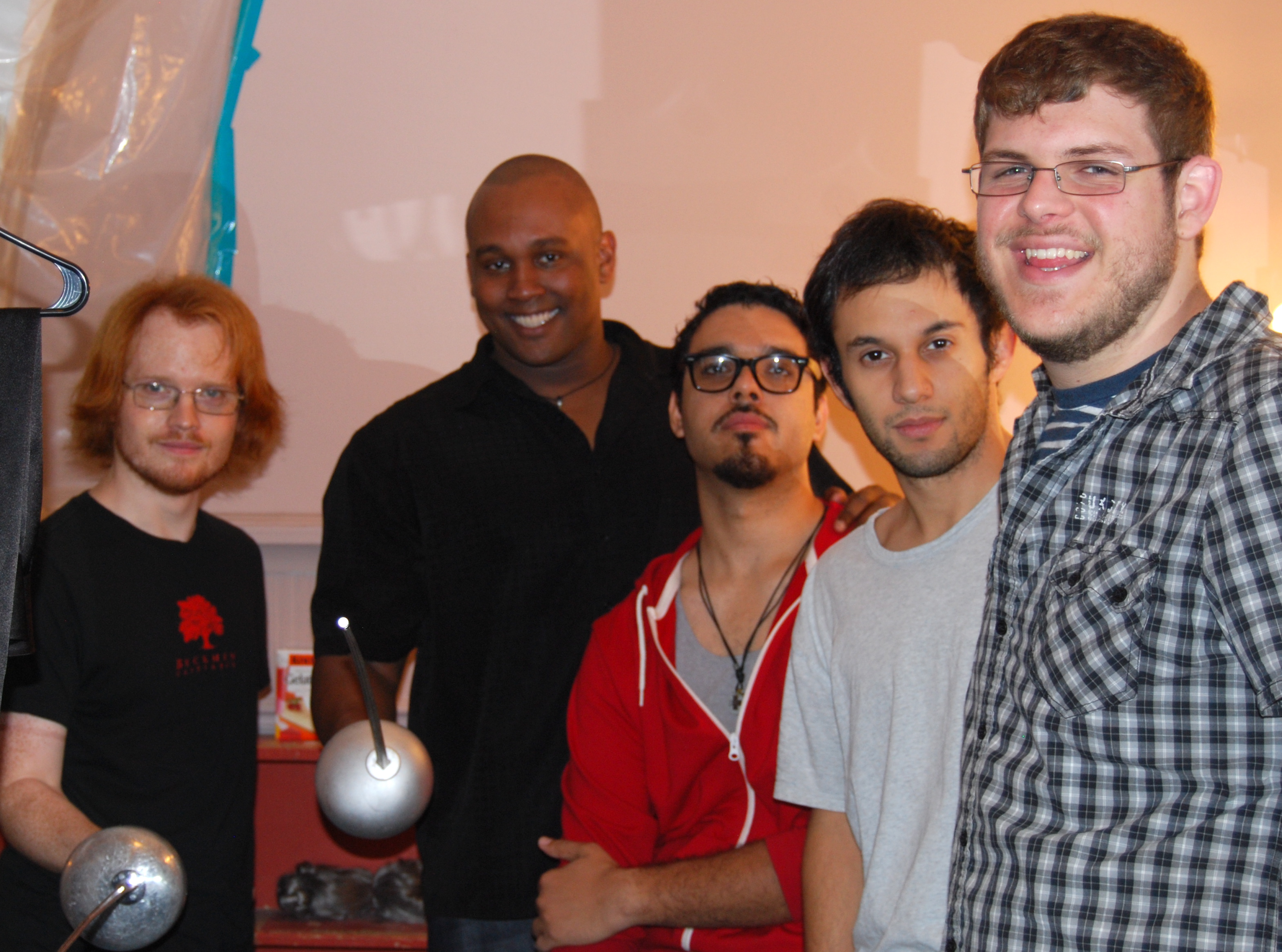
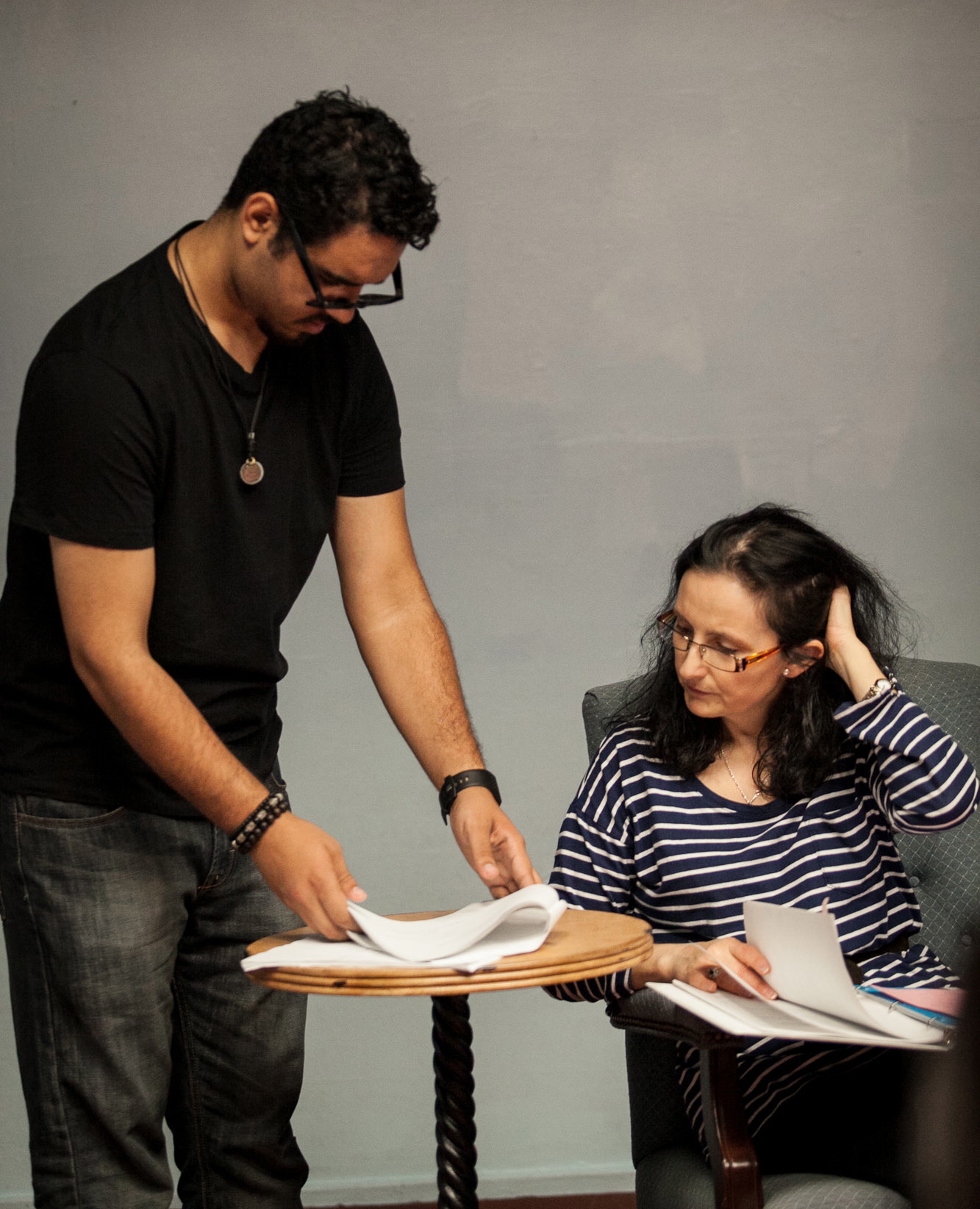
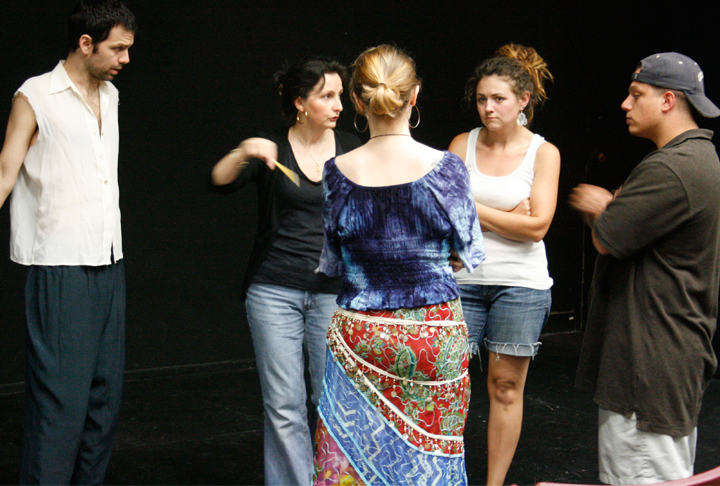
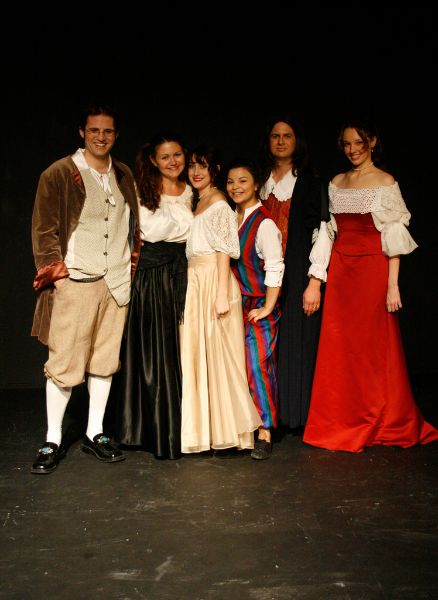
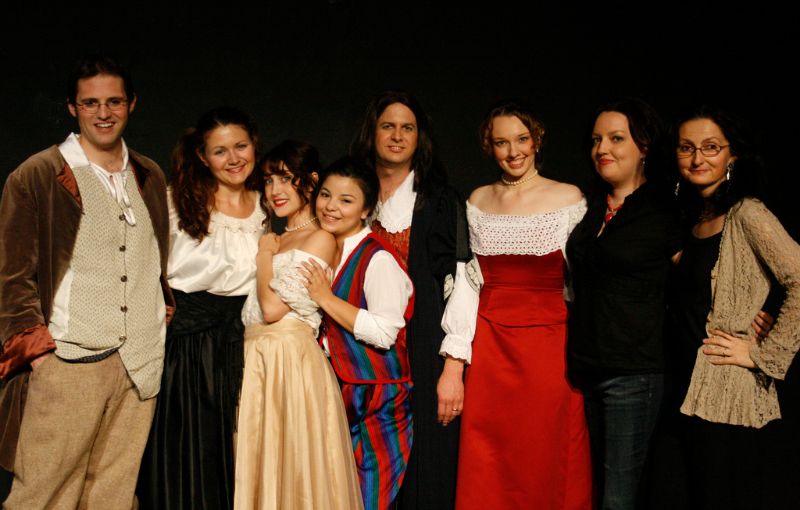
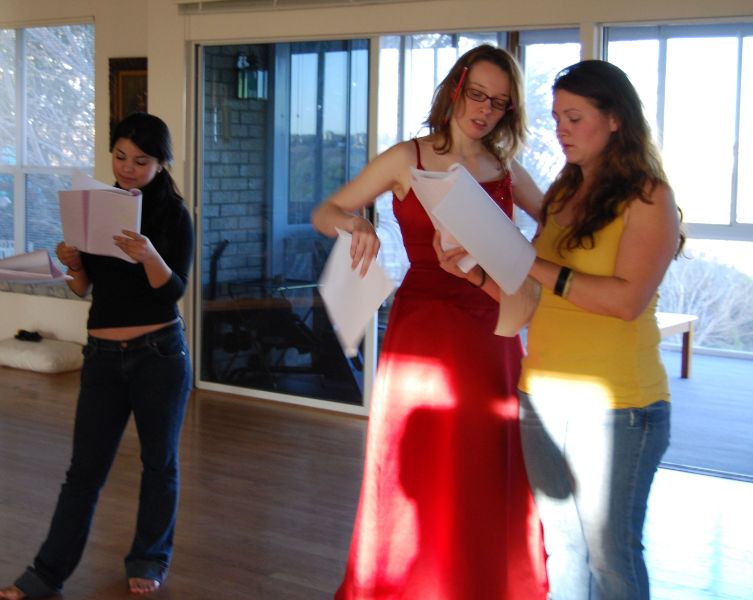
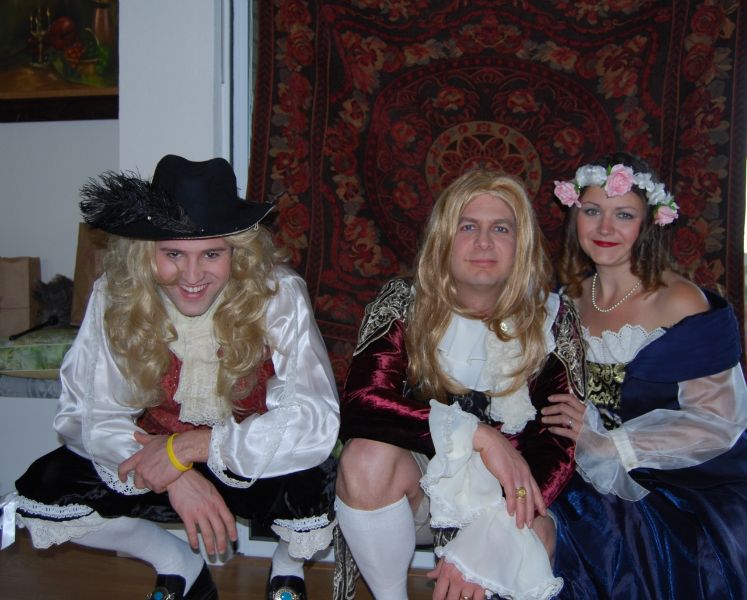
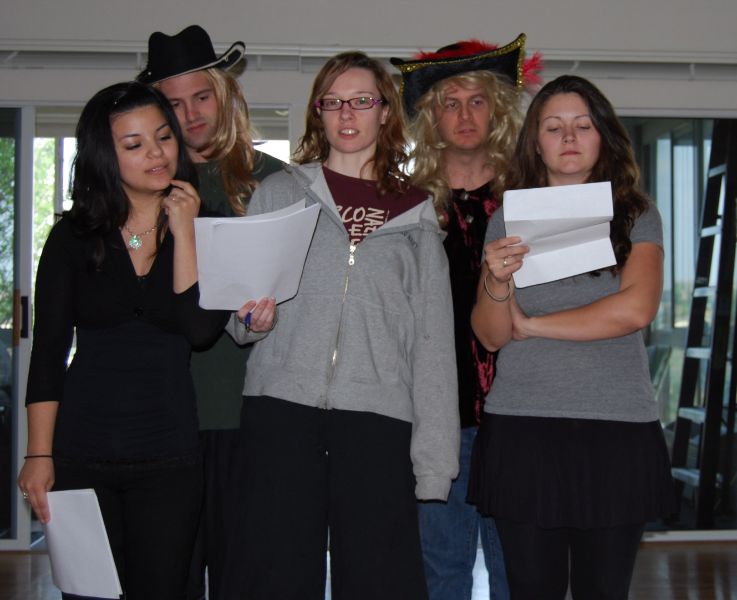
This year, several actors from the last show had already volunteered to participate again. They brought with them a few new recruits, plus students from the French Club, and my classes. Most of them had two parts.

Carolina Davila – ACC student – French 3 – (Elmire & Armande Béjart)
Coulter Woodson – ACC student – French 3 – (Orgon & l’Emplumé)
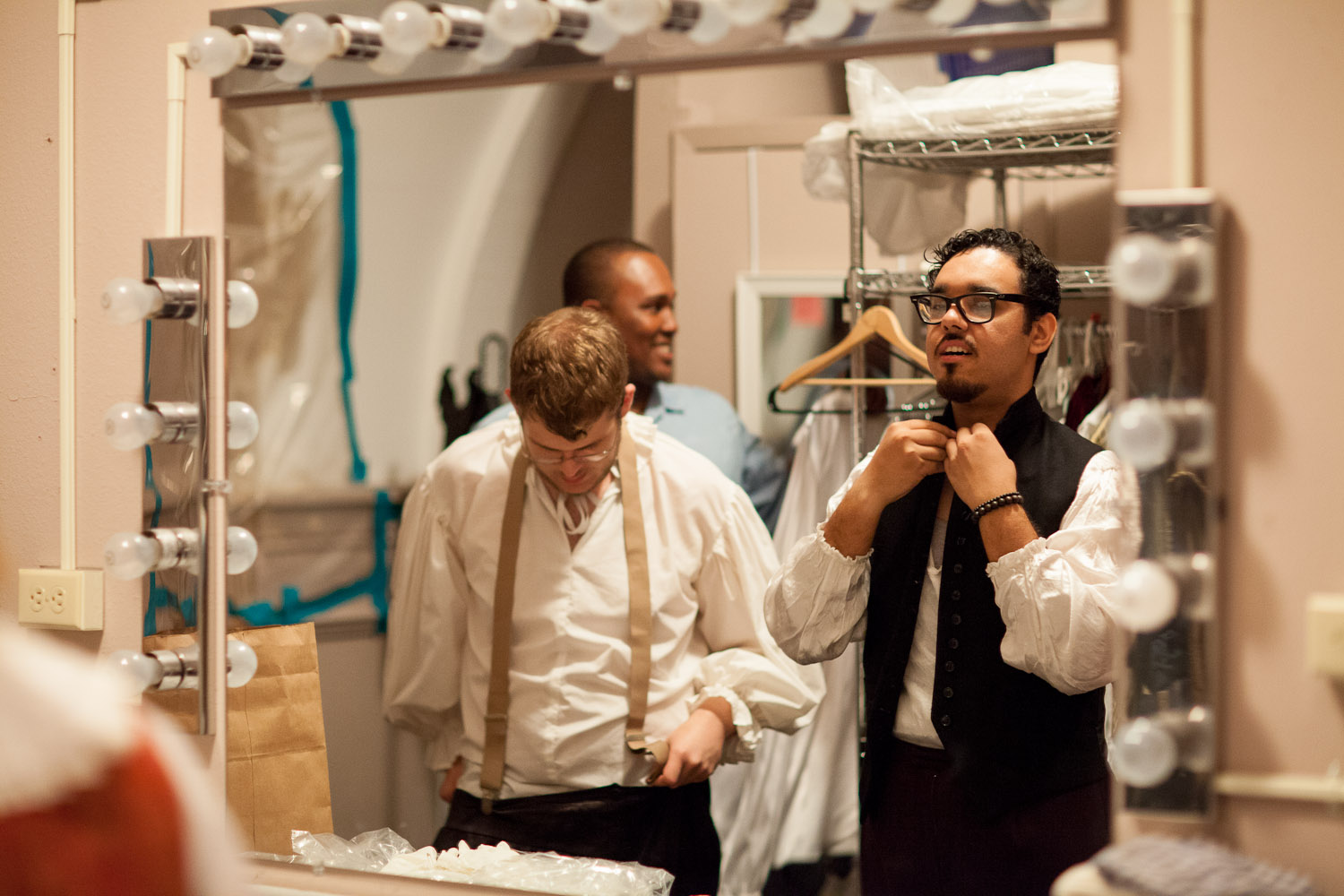
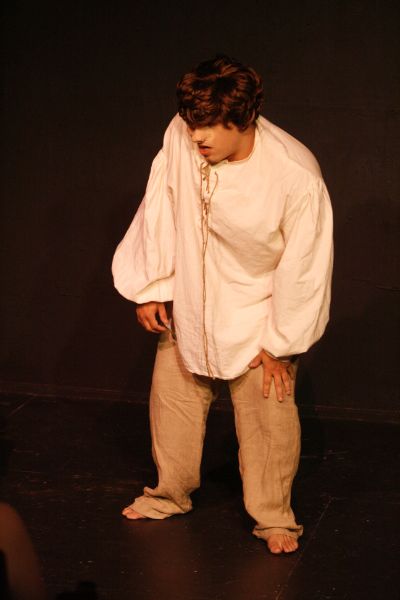
Emanuel “Manny” Irizarry – aspiring actor/artist – (Tartuffe)
Gabriel Cesar Najera – ACC student – French 3 – (Molière)
Gabriela Sanchez – French 4 – Texas State student – (la mère & Martine)
Jared Lucas Jones – U.T. graduate – (le maître d’armes & le Malade Imaginaire)
Kayleigh Etie – ACC student – French 2 – (Toinette/Scapin & Armande)
Kurt Dixon – ACC student – French 1 – (Valère)
Nathalie Szostak – ACC student – French 4 – (Dorine & Bélise)
Roxanne Rohmann – ACC student – French 3 – (Angélique & Henriette)

SON ET LUMIÈRE
(sound and lights)
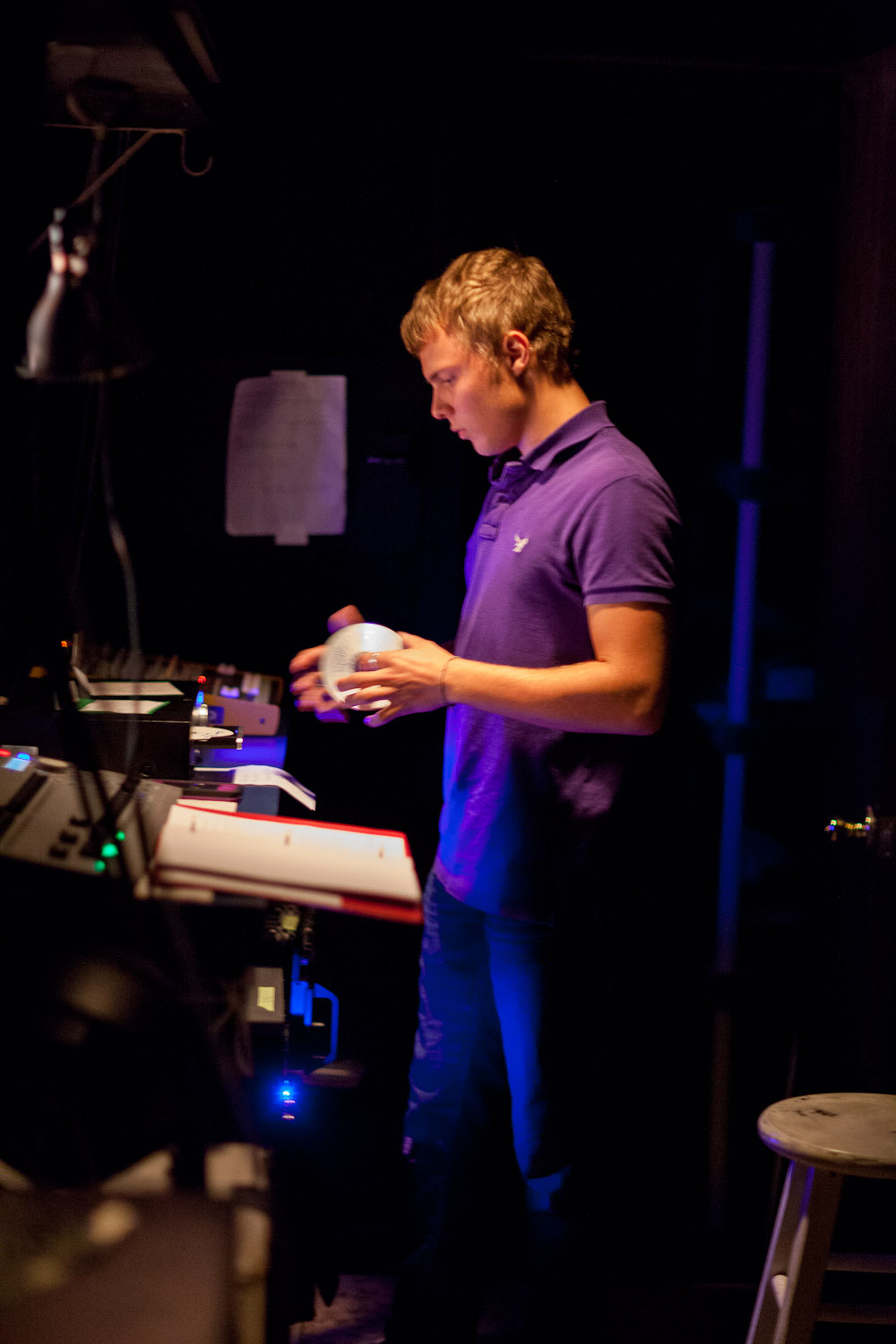
Troy Carrico – Stephen F. Austin State University – freshman

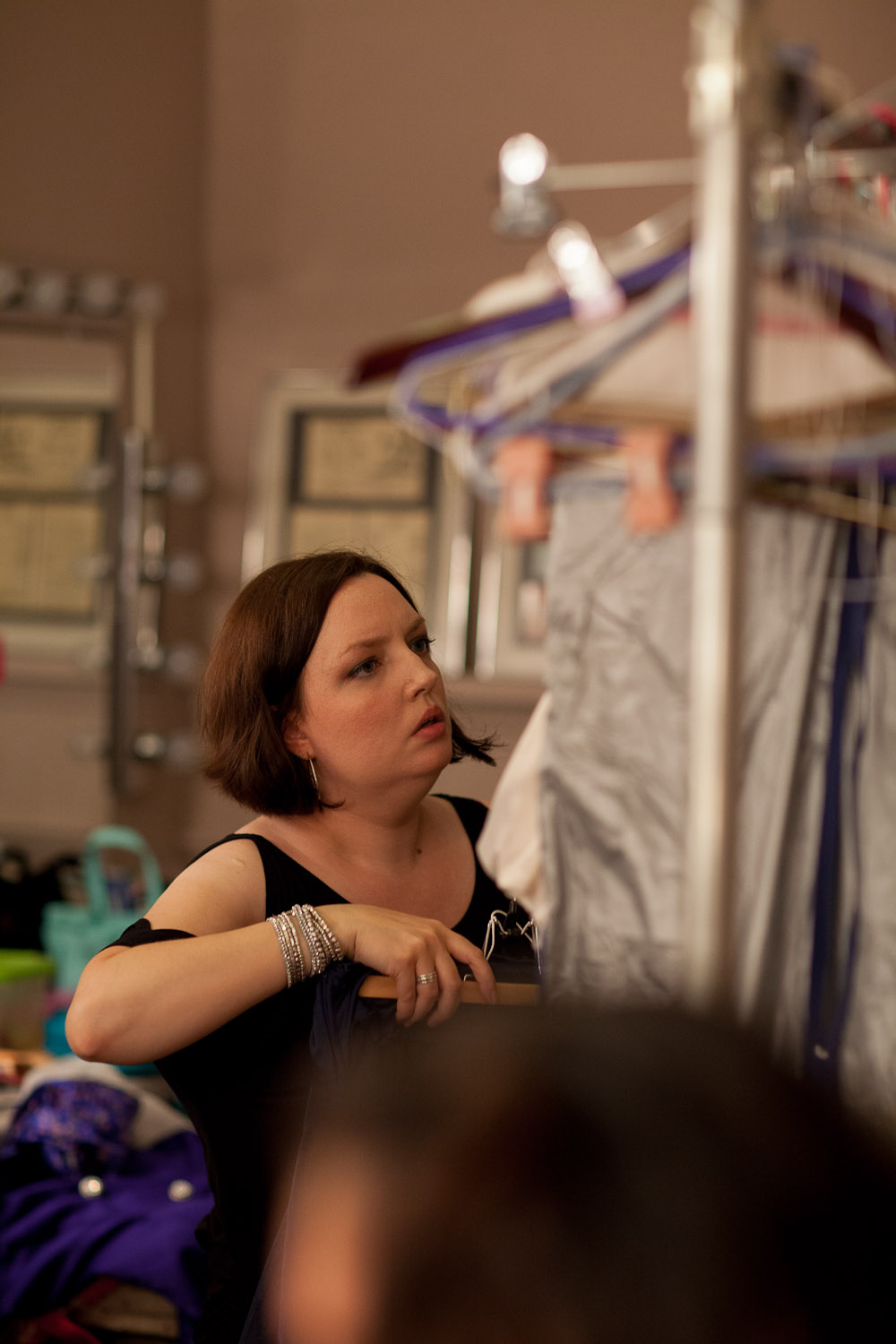
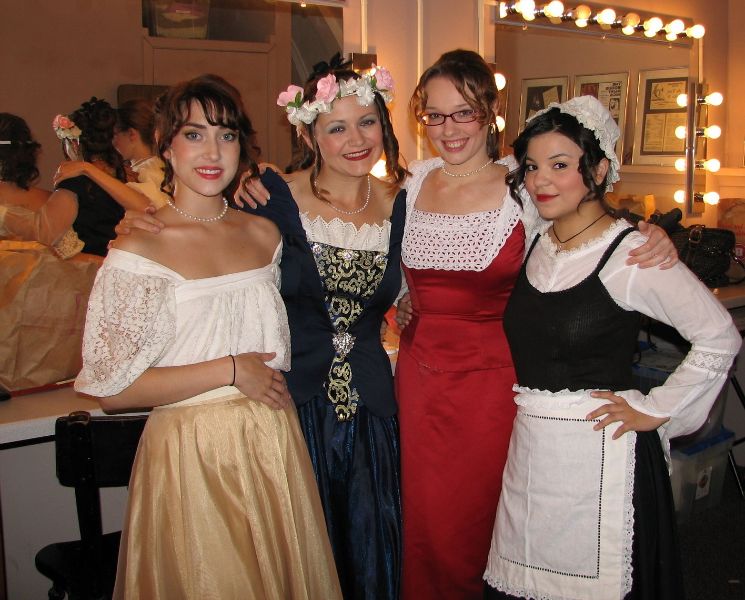
LES COSTUMES
(costume designer)
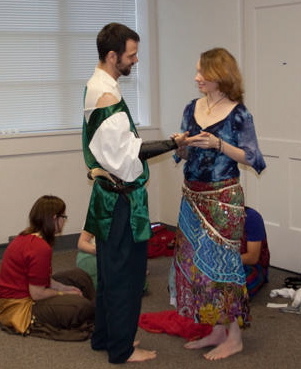
Molly Lynch – Former ACC student – French 4

PHOTOGRAPHIE (photography)
Julio Chacòn – French 3
Estrella Gutierrez – French 1

ARRANGEMENTS MUSICAUX
(music editing)
Troy Carrico

CRÉÉ ET MIS EN SCÈNE PAR
(created and directed by)
Véronique Mazet, Ph.D

ACTE I – TARTUFFE

Le scandale du monde est ce qui fait l’offense,
Et ce n’est pas pécher que pécher en silence.

(To create a public scandal is what’s wicked;
To sin in private is not a sin.)

Tartuffe, Act IV, sc. v

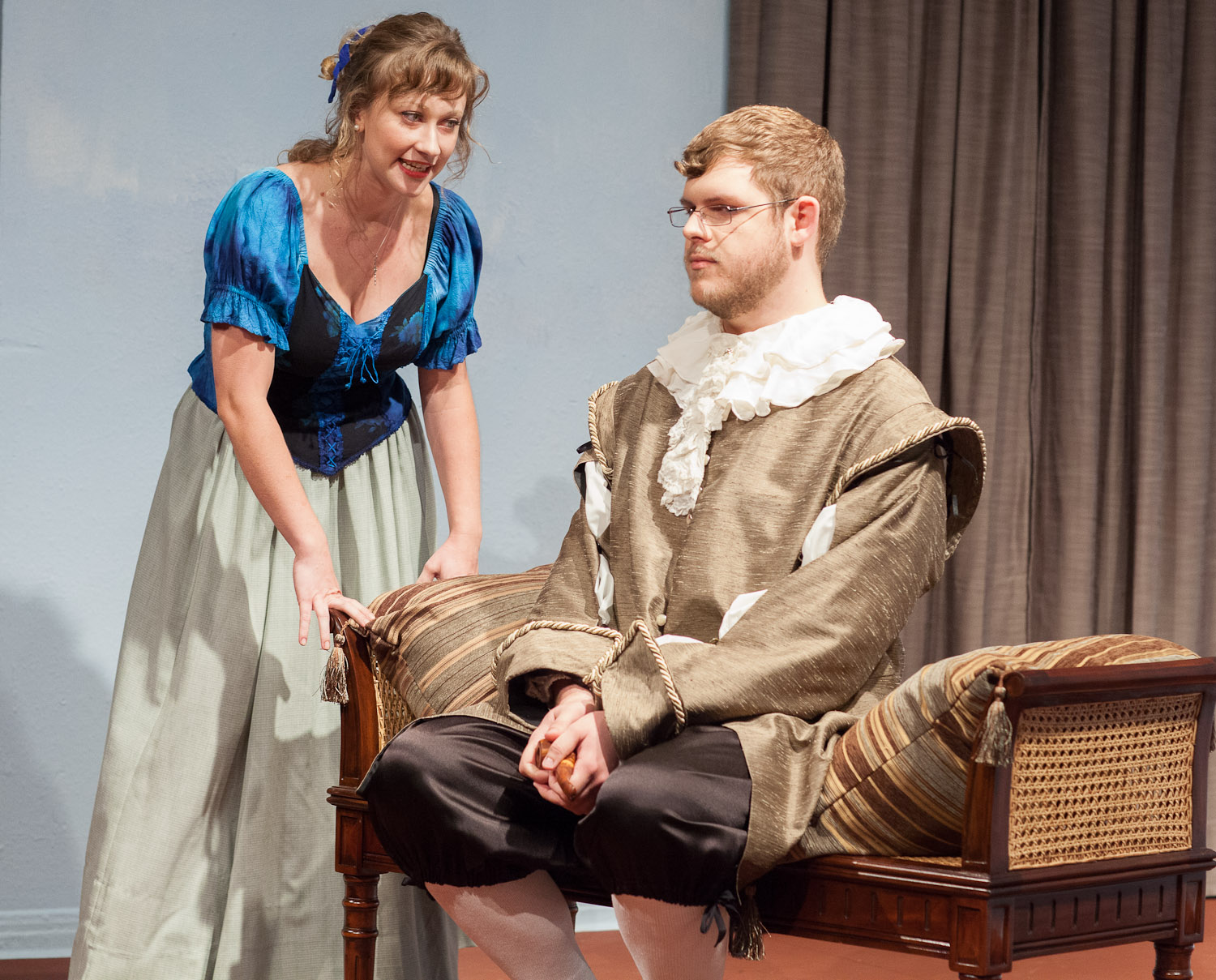
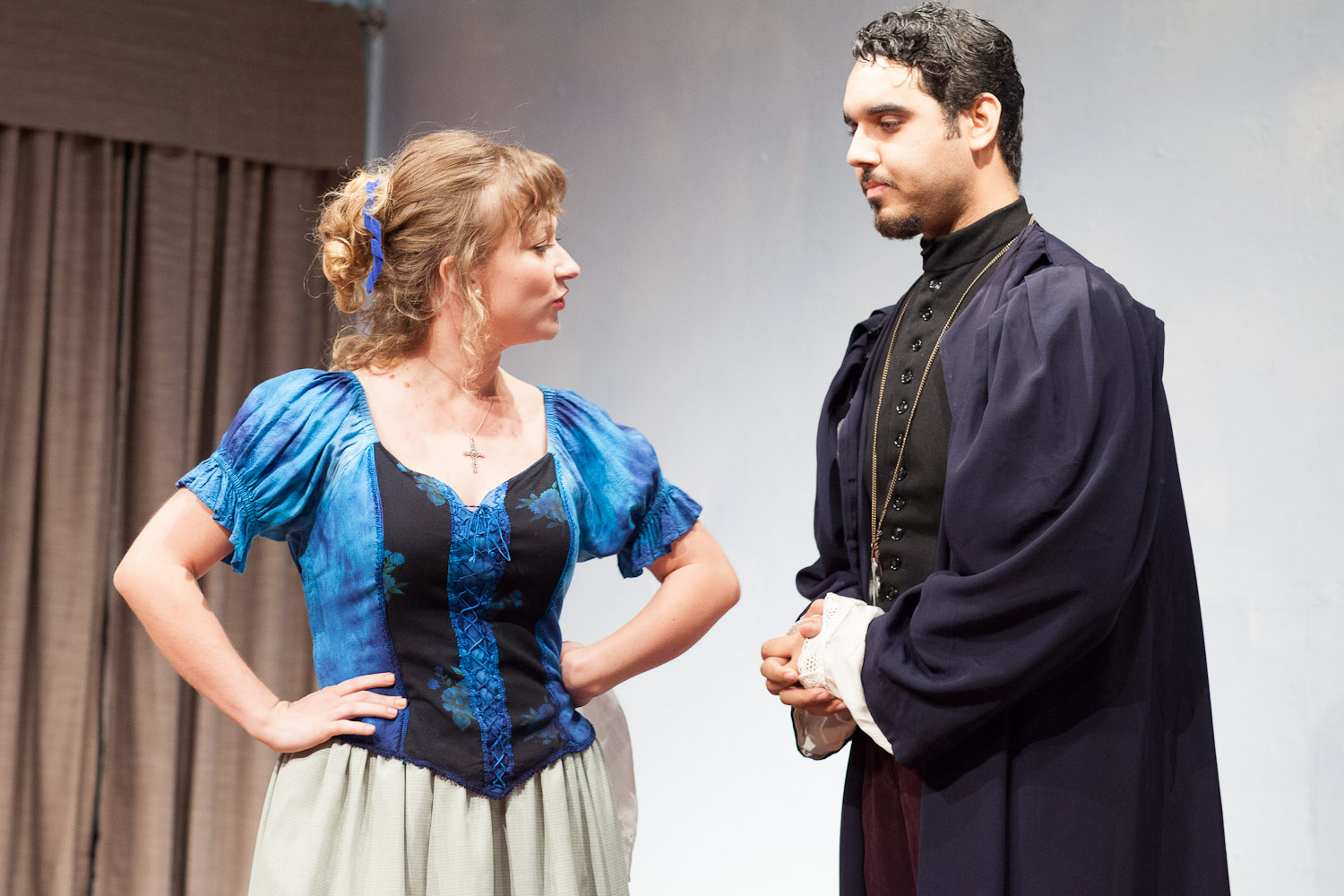
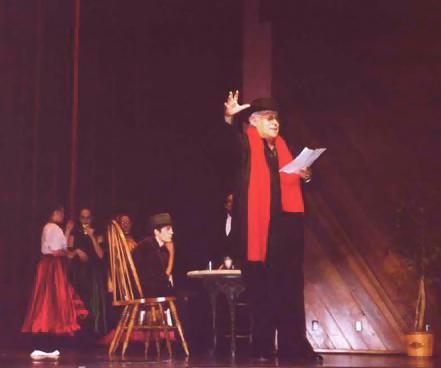
For our first Act, a grand villain takes the stage. It is the Act of Tartuffe. Tartuffe is an impostor, a villain who poses as a “dévôt”, a pious man of true great Christian humility. Under this guise he sets out to obtain favors from the rich Orgon, who is besotted with him and his seemingly Christian ways. Comfortably entrenched in Orgon’s home now, Tartuffe has set his sights on beautiful Elmire, Orgon’s wife. Our condensed version of this “grande comédie” focuses on this aspect of Tartuffe’s evil and dishonest endeavors.

ACTE II – LE MALADE IMAGINAIRE

Presque tous les hommes meurent de leurs remèdes, et non pas de leurs maladies.
(Nearly all men die of their remedies, and not of their illnesses.)
Le Malade Imaginaire, Act III, sc. iii

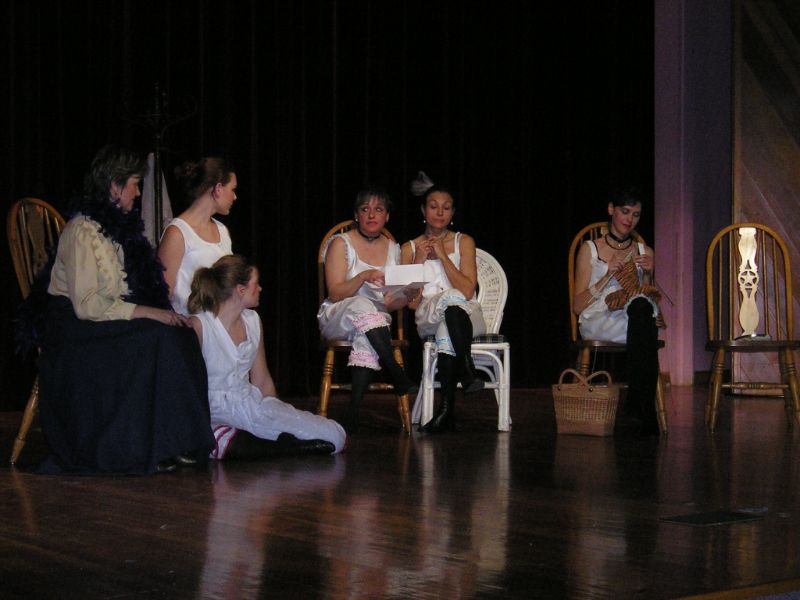
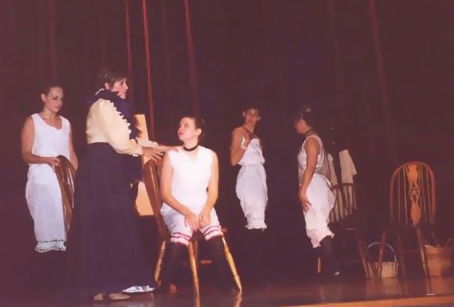
Argan, the master of the house thinks that he is very ill. To treat himself properly, he takes numerous potions lavishly provided by his doctor and his sidekick, the apothecary, in cahoots to milk him “comme il faut”. Argan feels so medically needy, that he has decided to marry his daughter Angélique to the doctor’s son, himself a quack to be, in order to secure the services of a doctor in the family. Horrified at the thought, Angélique begs her mother to intervene. With the help of Toinette their crafty little maid, the three women devise a ruse to bamboozle Argan back to his senses and prevent this preposterous marriage.

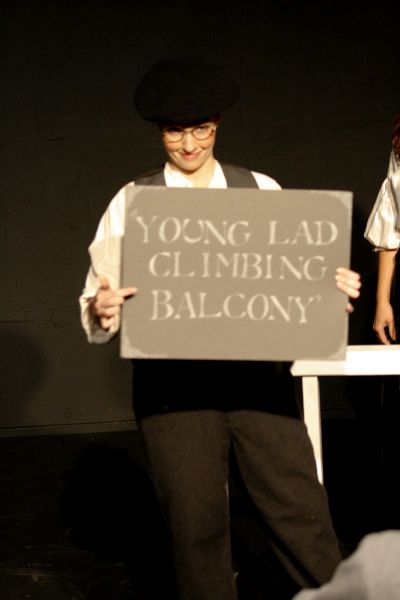
For this act I borrowed another figure from the Molière repertory, Scapin, the infamous grand-schemer. Under that disguise, Toinette the maid undertakes to tell her master a “Turkish tale” that will take Argan back to the reality of fatherly love.

“Mais que diable allait-elle faire dans cette galère?”

The actual play Le Malade Imaginaire is a big buffoonery of long black robes and colorful Turkish garb. However it occupies a special place in the hearts of all French theater lovers, because Molière died while playing Argan. It was the fourth performance of the play, on the tenth of February 1673.

ACTE III – “NUIT D’INSPIRATION”

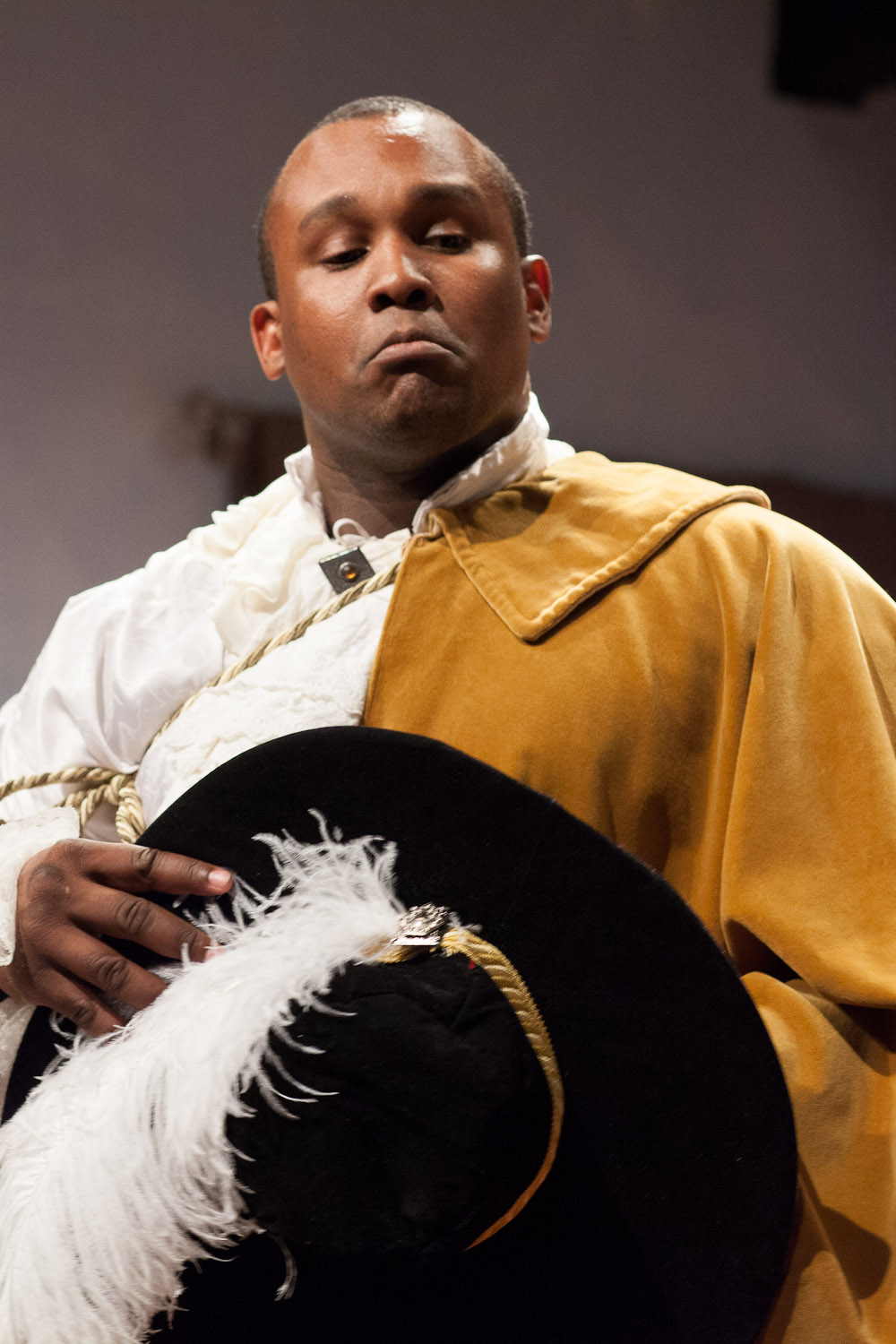
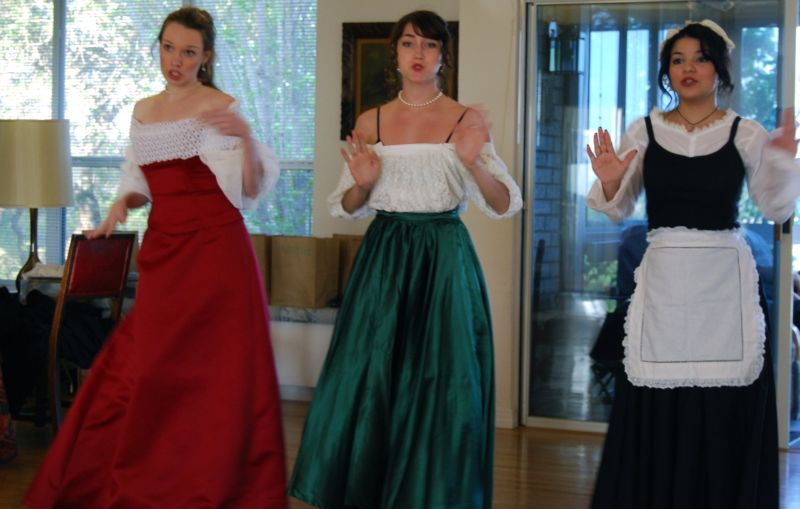
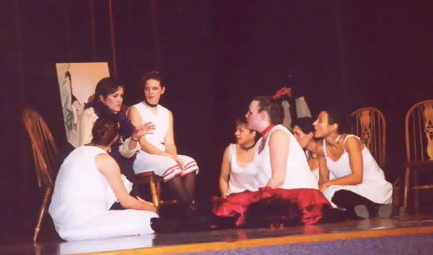
This act is a mash up of two plays: Les Femmes Savantes, and Le Bourgeois Gentilhomme, with a surprise appearance by Molière himself, caught the throes of the creative process. Thankfully, with the help of his wife Armande his inspiration returns and from his quill will rise a bookish femme savante who despises earthly matters such as love and marriage; her sister, sweet and practical Henriette; a self-deluded coquette, Bélise; a sharp-tongued servant who talks in double negatives, and a magnificent buffoon, the extravagant Monsieur L’Emplumé (the feathered up man), inspired by Monsiseur Jourdain from Le Bourgeois Gentilhomme.

Un sot savant est sot plus qu’un sot ignorant.
(A learned fool is more foolish than an ignorant one.)
Les Femmes Savantes, Act IV, sc. iii

2011 – Literary Follies
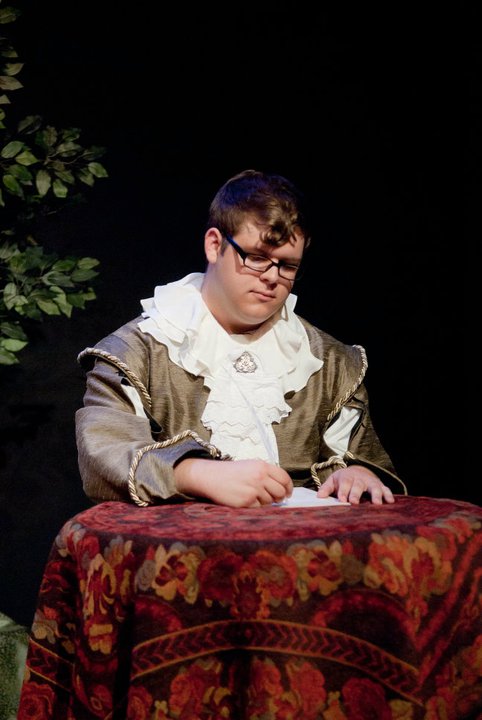
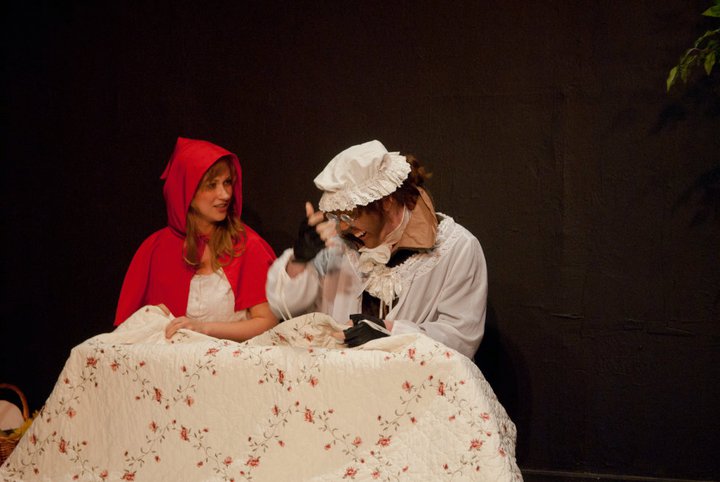
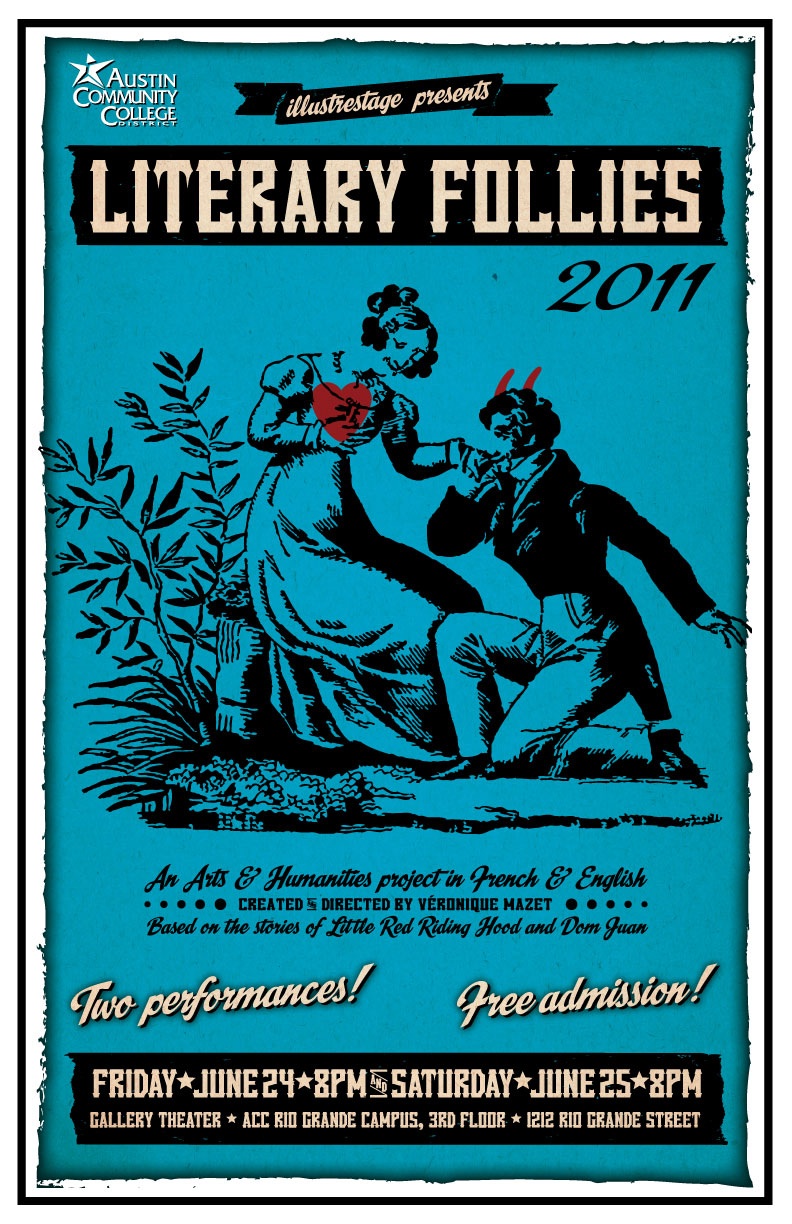
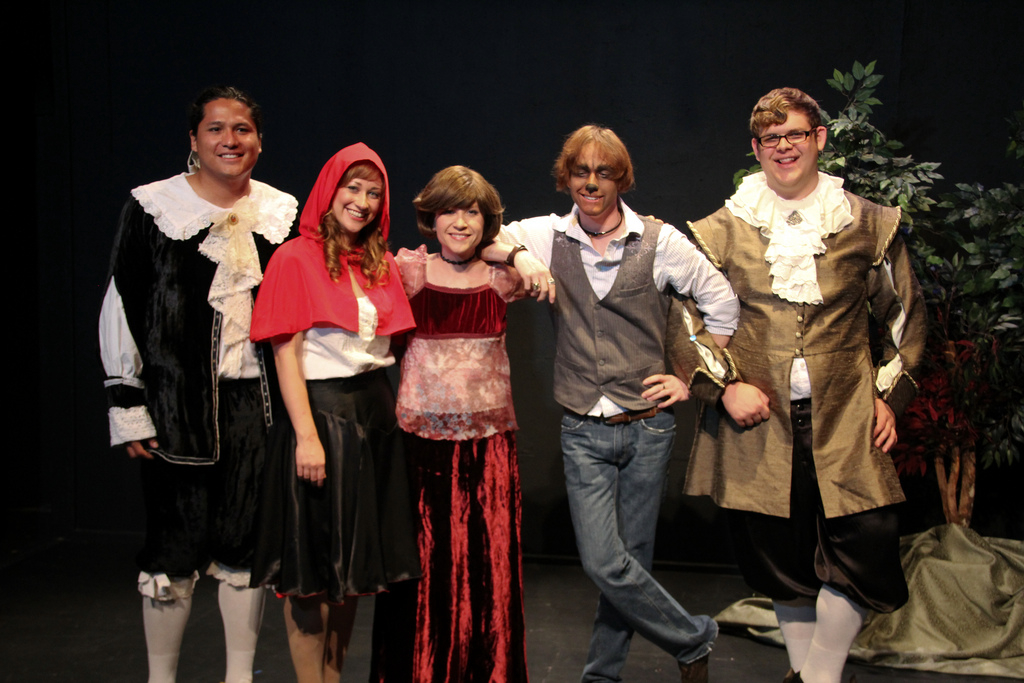
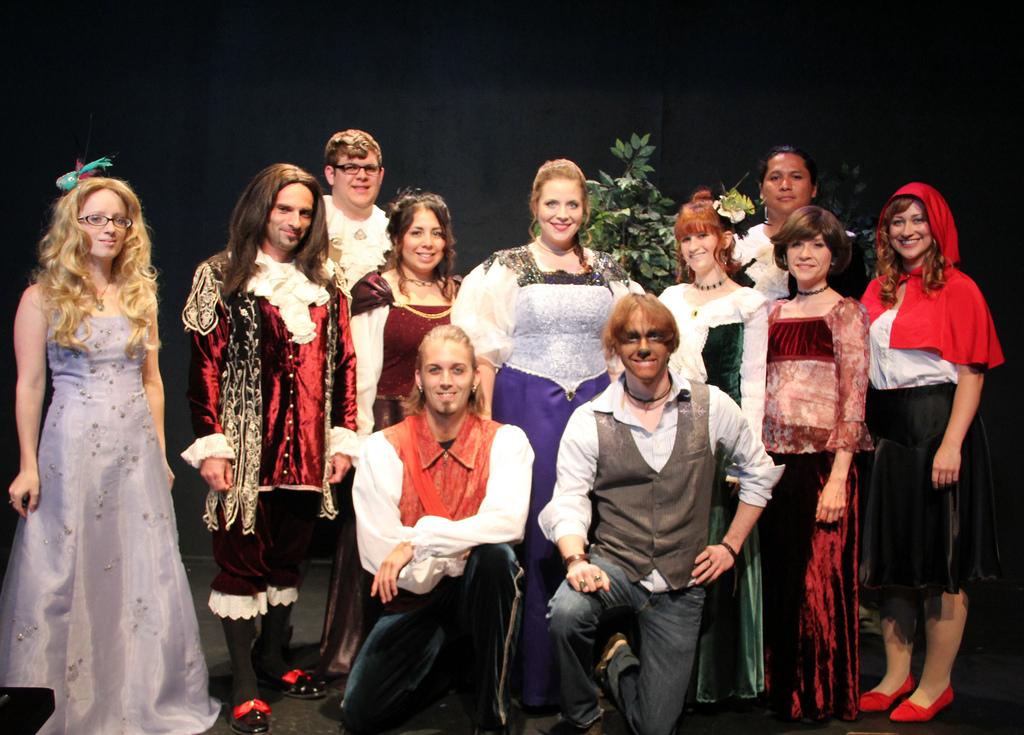
With Follies 2011, illustrestage presents unusual tales of seduction, with a fairy, and a final surprise. These stories have been in my stack of “candidates” for several years but I never thought of presenting Le Petit Chaperon Rouge and Dom Juan in the same spectacle. I really wanted to do Dom Juan because I had a great song to include in it (you’ll see!)… but showcasing some fairies in the show was irresistible! After rereading many fairy tales I had to conclude that I might have aimed too high. How do you turn a couple of cute mice into dashing horses on our little stage? How do you have a character spit out frogs and snakes or pearls and rubies? At Dreamworks or on Broadway, sure. But this is just illustrestage at the Gallery Theater on our kind of budget, so let’s rethink this. Let’s have just one fairy, but it’ll be a singing one; and a prince, and maybe a princes…or not. And to avoid using special effects because we can’t afford them, they will all be out of work! And I started writing. It was a lot less painful than I had thought, and my first audience (Nathalie) actually laughed a lot. Encouraging. The cast was slowly emerging from my classes and the French club mainly. Based on the number of guys and girls that came forward, I was able to start casting and finish the script accordingly. By mid April we started looking into costumes… Follies 2011 was definitely on its way.

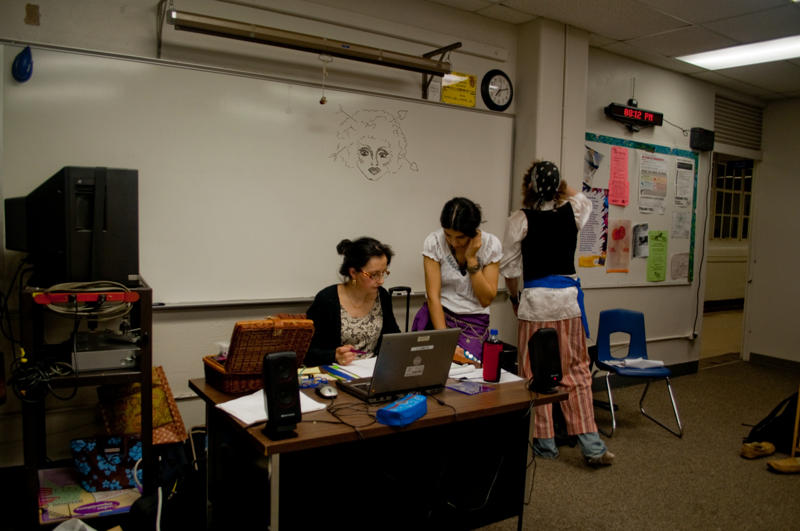
We rehearsed one evening a week in a classroom at NRG until the end of the Spring semester, then on May 25, we started weekly rehearsals in this lovely Gallery theater. Et voilà.

The Cast

Adriana Ray – ACC Student, French 3
Amelia Boldrick – ACC/TX State, French 4
Ash-Blaize – ACC Student, French 4
Carolina Davila – ACC Student, French 1
Coulter Woodson – ACC Student, French 1
Holly Carrico – ACC Student, French 2
Julio Chacón – Former ACC Student, French 3
Kayleigh Etie – ACC Student, French 1
Marla Rosner – U.T. French Major
Morgan Oliver Trigg – ACC/UT Student, French 4
Nathalie Szostak – ACC Student, French 4
Raphaël Colantonio – francophone

The Crew

Troy Carrico – Bowie High School, 12th grade
Molly Lynch – Former ACC Student, French 4
Ash Blaize – music editor

Created and Directed by Véronique Mazet

Students Speak

“This was my second time performing with IllustreStage, and my experiences just keep getting better! Having a real stage to rehearse on made all the difference in the world. Also, I know that having an actual budget available for costumes and set pieces added more visual interest to our performance this year. I can only imagine that the next production will be even better, both for the performers and the audience. I loved being a part of presenting French culture to a wider audience. As a student in Texas State’s International Studies department, I’m fascinated by cultural exchange, and I passionately believe in the importance of mutual respect and understanding in an increasingly interconnected world.”
—Amelia

“From first reading the skeleton script in March to watching our cast make the stories come alive onstage, our play has simply been one of the most rewarding experiences for me. At the beginning, most of us know maybe one or two people in the cast, but after rehearsing the same scenes together countless times (with some frustration and a lot of laughter), we became a very close knit cast. And that is the magic in illustre-stage. Rehearsing in a classroom for the first several weeks was adequate, but moving to the real stage gave us a much clearer picture of how things would look, not to mention the huge advantage of being able to leave props and costumes in the dressing rooms. In the seven years I have been studying French, I never thought that French and living in Texas could be so compatible! I hope to one day inspire the same sort of drive in students. This project is something else I can add to my French activities, but more than that it is a memory I will keep forever and I can’t wait for next year.”
—Nathalie

“I took French just to avoid reading subtitles on French movies, but never thought that it would lead me to participate on a French/English play. I have to admit that in the beginning I was doubting that the play would succeed since most of us participating were not actors. Now, I can say that persistence and help from Dr. Mazet (coach) to non-actors like myself can bring out a good quality production. Being able to practice on the performing stage was a big plus as it helped me get used to the lights and the space I had to move around. I want to thank my fellow actors and coach for the fantastic experience I had in this production.”
—Julio Chacón

“For me it was a great experience. My first acting experience in fact. And it totally made me want to do more acting in the future. Sign me up for next year.”
—iRaf

“I had a wonderful time being a part of this production. The cast and crew were great to work with. I learned so many things about the people involved and their love for the French culture. Working in this bilingual production was not as easy as it may seem. I was a French 1 student and had a lot of trouble with the pronunciations but I came through with the help of Mme Mazet. Enfin!”
—Carolina

“I had such a great time being a part of literary follies 2011. I am so greatful to have been included. I really feel like the whole experience was benificial to my area of study. I gained a lot more performance experience from this opportunity. Not only that but working with everyone I met through the play was the biggest highlight. I can’t wait to do it again!”
—Kayleigh – la fée

Audience Response

“One of the great pleasures of my academic year is Veronique Mazet’s annual production of her French Literary Follies. It brings me such great pleasure to see first semester French students and fourth semester students and friends from the community all coming together to celebrate the French language and culture in Veronique’s inventive combinations of literature and song. These productions are a gift to our students and to the community.”
—Lyman Grant, Dean of Arts and Humanities, Austin Community College

“I want to let you know that I really enjoyed the show this year. I have seen them all each year except one, and I think they get better and better. The mixture of French literature with elements from modern life and music was really well done. The use of both French and English also worked well so that everyone could understand. I was entertained from beginning to end, and my twelve-year-old son who accompanied me really enjoyed it too. Congratulations to you for having having created and directed it, and to the actors for their excellent performances.”
—John McMinn, professor of French and Spanish

“Beau spectacle! Félicitations et bravo!! My husband and I attended your show on Friday and truly enjoyed it. The music and dance numbers were fun and lighthearted. The dialogue was witty and well-performed. The actors had a wonderful, playful vibe to them and put the audience at ease from the start. It was really a room full of people coming together to have fun, and smart way to sneak some real French history and literature into our brains, too!”
—Heather Bonikowski, French professor, ACC

“Salut, Veronique! Thanks so much for inviting me to this year’s production. I was really impressed with the writing and acting, and I was pleasantly surprised to learn it also included singing and dancing! What a wonderful experience. I was especially glad to see that Amelia Boldrick, one of my former students, was part of the production. Bravo!”
—Betty Clough, French teacher

“I had the privilege of seeing the Literary Follies, which is no doubt to me the best production that Veronique Mazet has brought to the Gallery Theatre at the Rio Grande campus of Austin Community College.

Véronique wrote the entire script using a fairy out of work to transition the production from the real story of Little Red Riding Hood (Petit chaperon rouge) by Charles Perrault, beloved storyteller from the Sun King, Louis XIV, era, and the Moliere play Dom Juan. This was quite a tour de force, and the scene between the fairy and Scanarelle/Prince Charming was new and exciting for me, who has read Perrault and loved his work, and studied the work of Jean Baptiste Poquelin, Moliere.

The addition of new lyrics to former popular songs was a surprising and fresh addition to the well-thought-out background music.

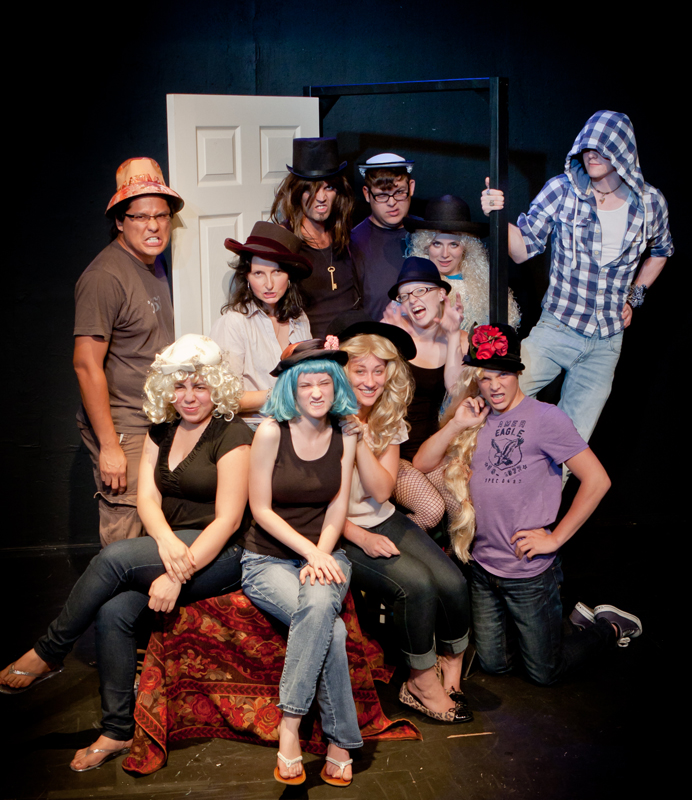
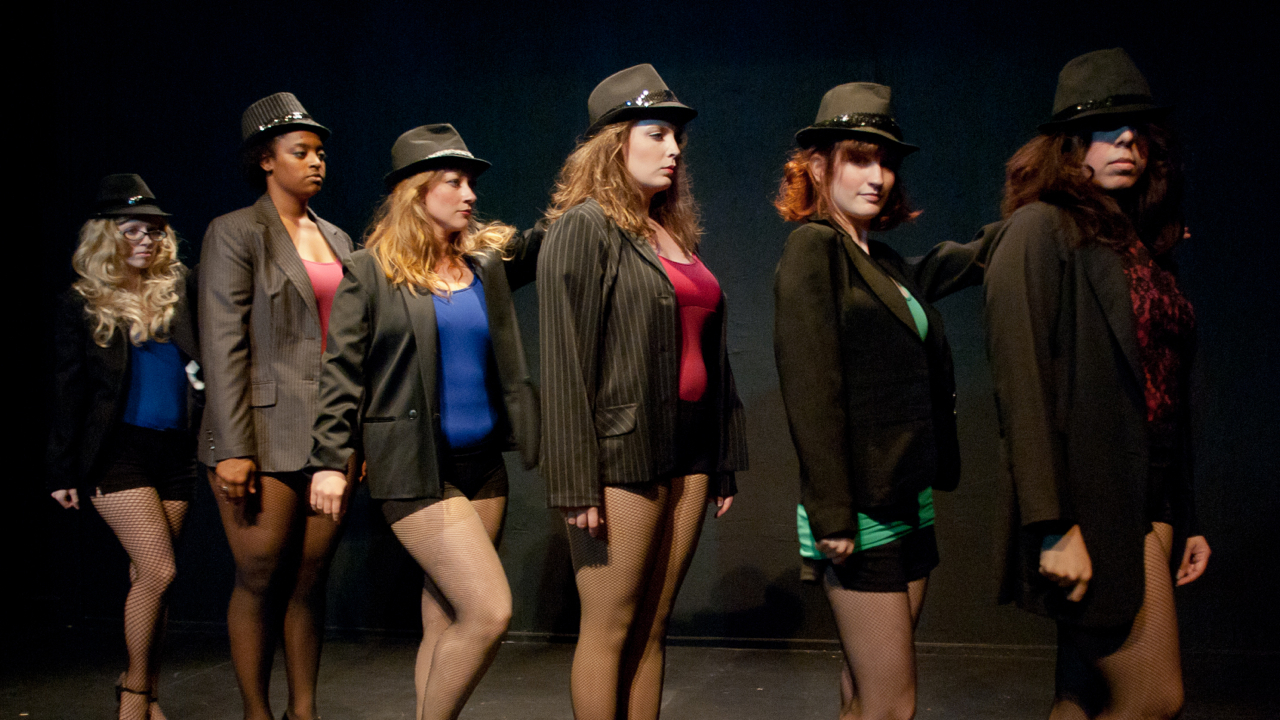
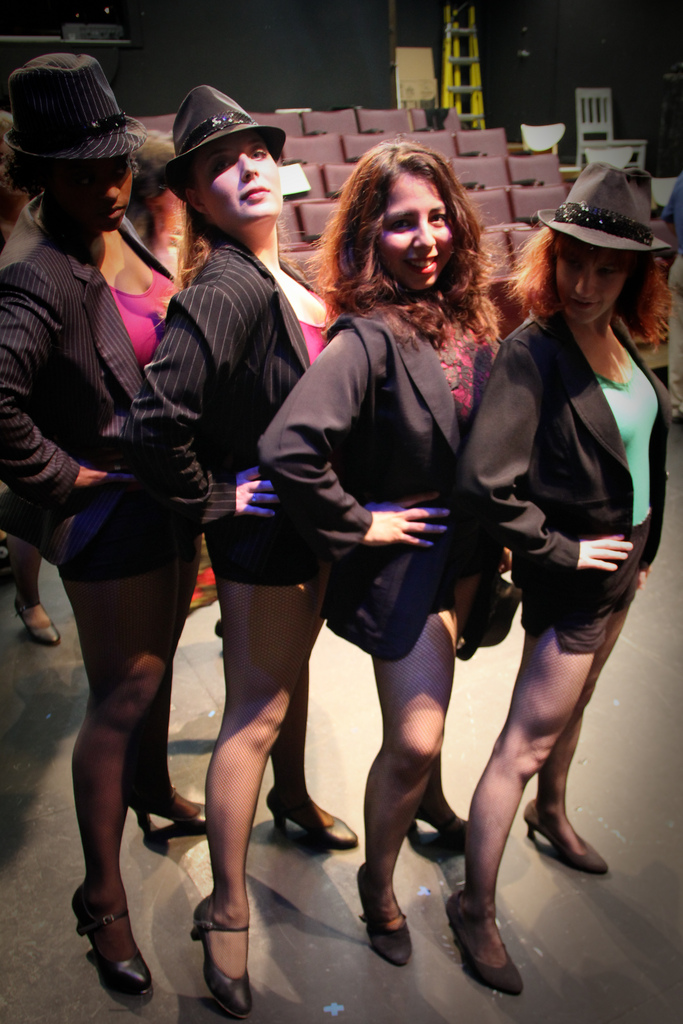
The hit of the evening, however, was the chorus line of the women in all the roles. They came to the stage with a “Guys and Dolls” look, complete with hats, short shorts, and stacked heels. The theme, ‘he (any Don Juan) gets his in the end (Dom Juan dies in the flames of Hell)’ was sung in French and English. What a wow.

Of course, the attraction to any production of Véronique’s is the weaving of French and English, so any audience can easily understand the meaning behind the acting.”
—Helen Gant Guillory, Adjunct Professor, ACC, Retired.

“Hello Mme Mazet,

I wanted to let you and the cast know that you all did a great job with Literary Follies! I had a lot of fun at the play on Saturday. I found it interesting and very funny, especially the scenes and songs from the Fairy and Prince Charming. The costumes were beautiful, and they really represented the period well.

Thank you for letting me know the show times! I have been having French withdraws since May 15th because my work schedule did not permit me to take French over the Summer, and I had to resort to taking Spanish I to try and fill the niche. It is not working. Spanish doesn’t come close to the aesthetic sounds of French.

My love of the French language began in 1989. I am from Northern Vermont, my elementary school made it mandatory to learn Québécois from 3rd Grade through 6th Grade. I continued on in high school taking French I-V under Melissa Warner at U-32 High School. Now, 12 years later, I took French I and II here at ACC. Unfortunately, I will not be able to continue onto French III this fall. I am transferring to Trinidad State Junior College in Alamosa, CO to finish my AAS degree in Manufacturing Technology. Trinidad State Junior College does not offer French courses, so I will have to wait until I move back to Vermont to complete my BA degree in French.”
—Tyler Guyett

“Literary Follies was a fantastically done! Just as promised, the play did a great job of incorporating French and English so that non-French speakers and fluent French speakers alike understood and enjoyed the play. I liked that the script didn’t simply repeat the same thing in the two languages, but creatively rephrased or re-summarized what was said so that the whole audience would understand. Jokes in both French and English were incredibly witty and the French accents and acting were both done really well. Looking forward to the next production! Great job and keep up the good work.”
—Bilingual spectator

“Madame Mazet,

Le spectacle était spectaculaire! Catherine et moi, nous nous sommes biens amusés. Bravo! J’éspere que vous allez nous inviter à le prochain spectacle.”
—Votre ancienne étudiente, Anne Gentry

“My niece (13), nephew (11), mom and I can’t stop raving about how wonderful the play was. My niece, Anna, said it was the best play she’d ever seen. My nephew would like Veronique to move to his town and run the drama department at his middle school in Blanco. My mom said she now loves plays, and that the music, dialogue and acting were excellent. I loved the singing, dancing and acting, too, especially because I was there at the beginning. Everyone was superb! Veronique is a genius at bringing Moliere and Perrault to life in a funny, entertaining, dramatic and extremely memorable way through wonderful actors, dancers and singers. Molly did a splendid job of costuming everyone.”
—Mary Hopkins

COMMENTS TABLE

“So fun! Still laughing.”

“Thank you for the performance. Somehow Dom Juan and Red Riding Hood made a good combination (with some tap dancing in between). I enjoyed the music and the costumes were great, as always.”

“Thanks for a great evening.”

“I loved it! Definitely a wonderful surprise!”

“Extremely awesome.”

“What wonderful songs and performances.”

“it’s da bomb!”

“Funny fairy. Excellent Don Juan. Spendid Red Hood. Bravo to all.”

“I enjoyed it very much. Lots of creative twists and turns. Congratulations.”

“Great performances! Best show I’ve ever seen from students.”

“The show was very clever and funny. Loved it. Great job all!!!”

“Haven’t had such a great laugh in a long while. Thank you.”

“Great show. The fairy was awesome and the guy who works for Don Juan = awesome. Songs = great choices too.”

“I can’t wait for the next!”

“Amazing singing. I give it a 10 out of 10.”

ADDITIONAL RESOURCES

Molière and Dom Juan
Charles Perrault
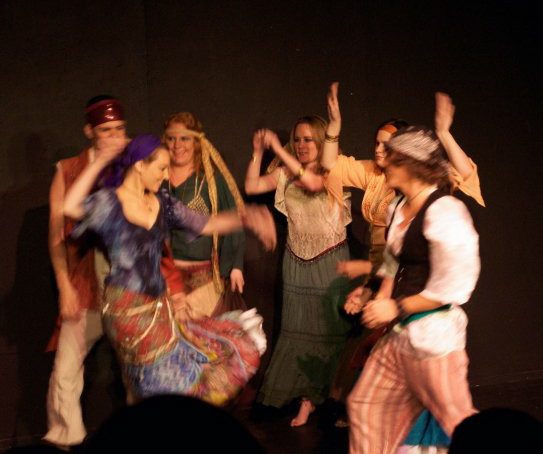
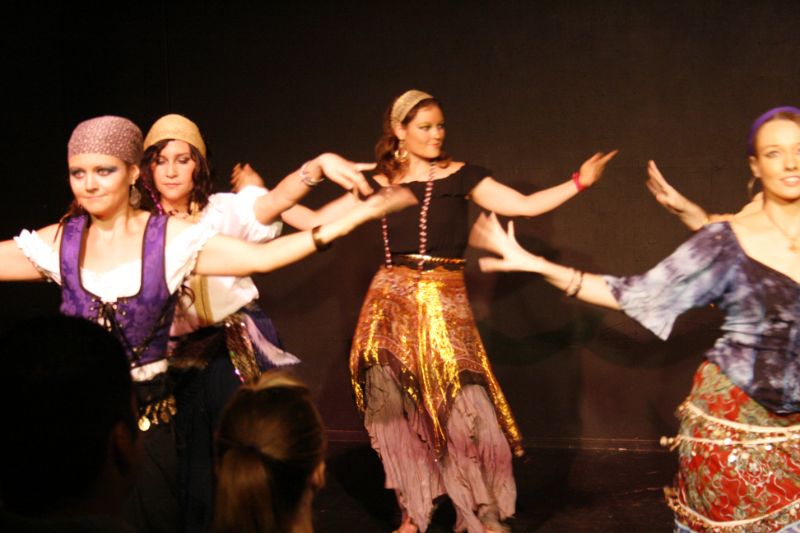
2010 – Notre-Dame De Paris

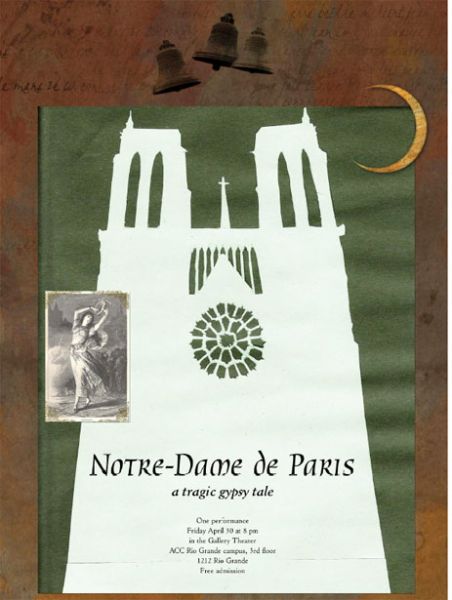
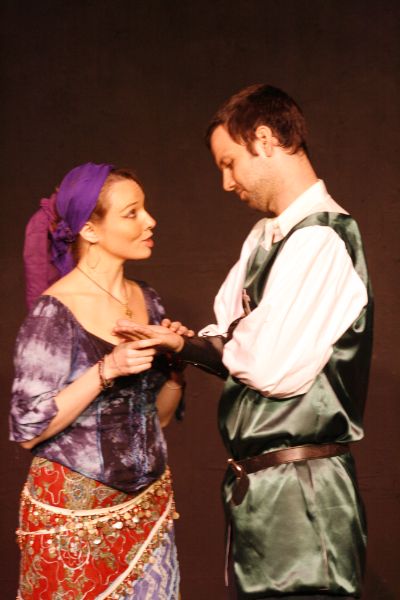
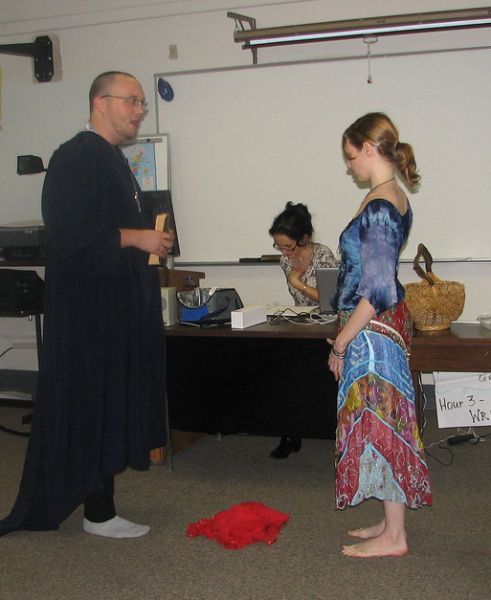
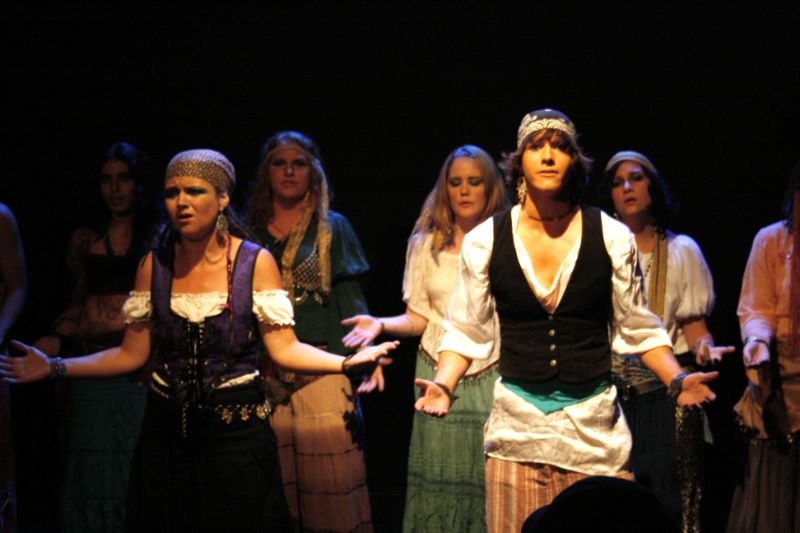
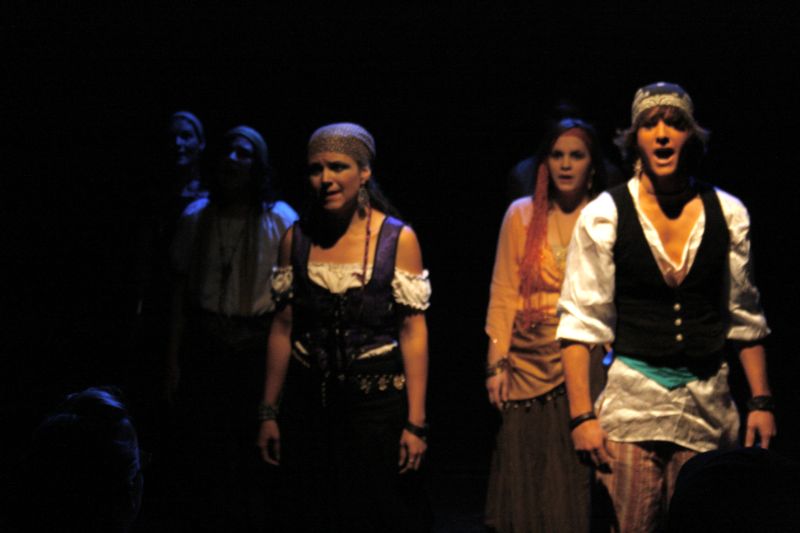
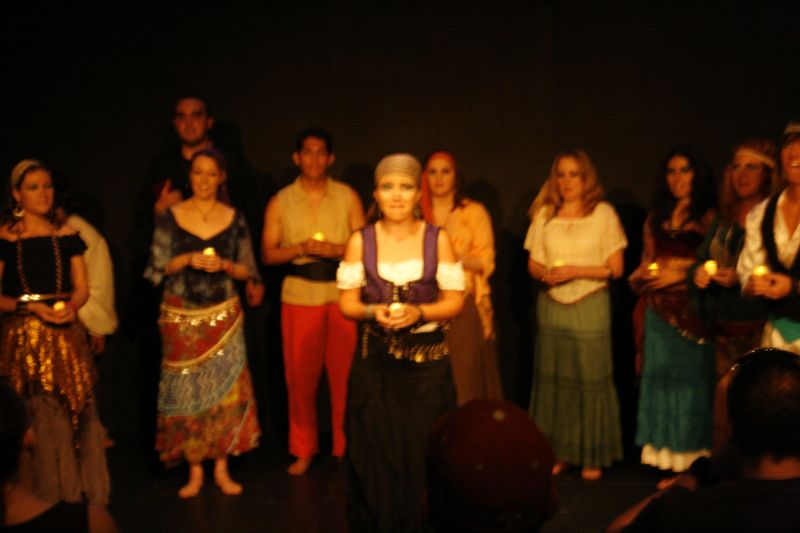
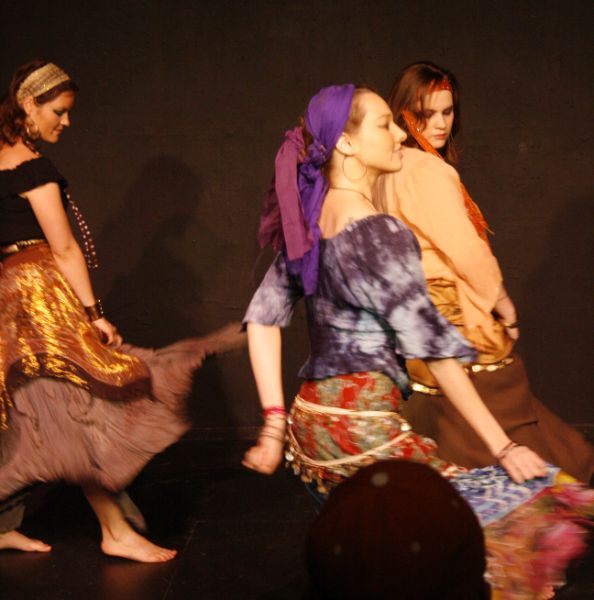
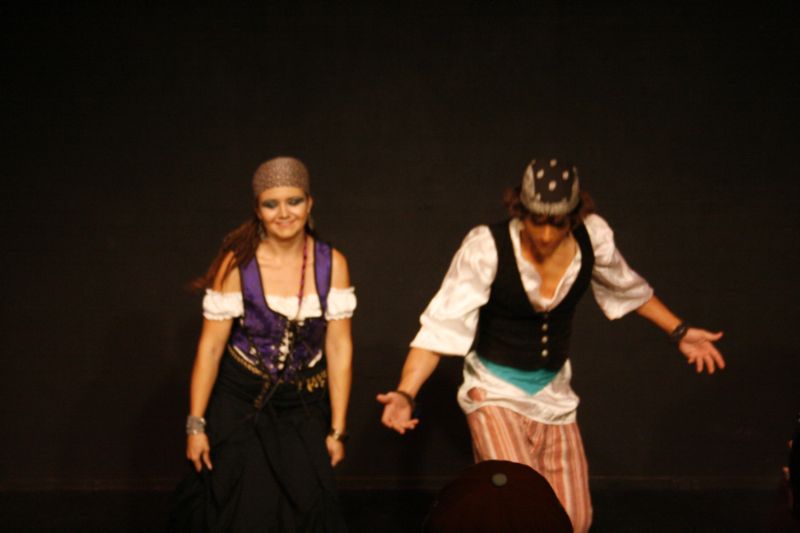
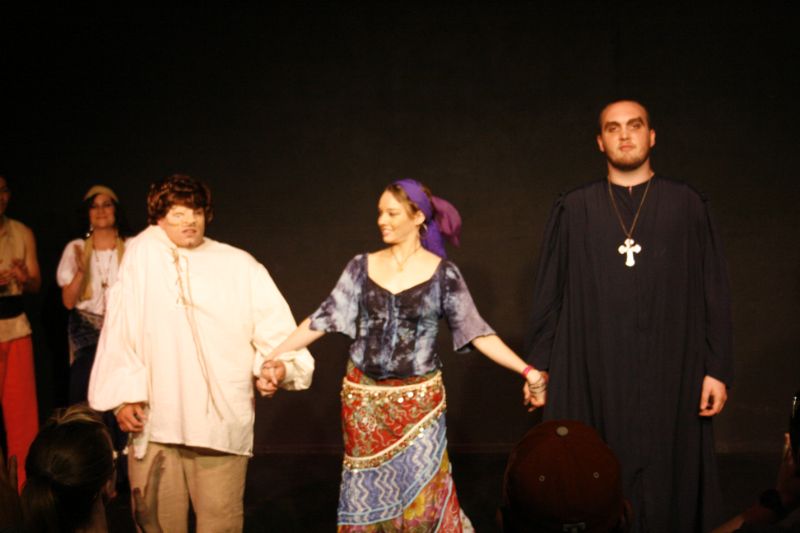
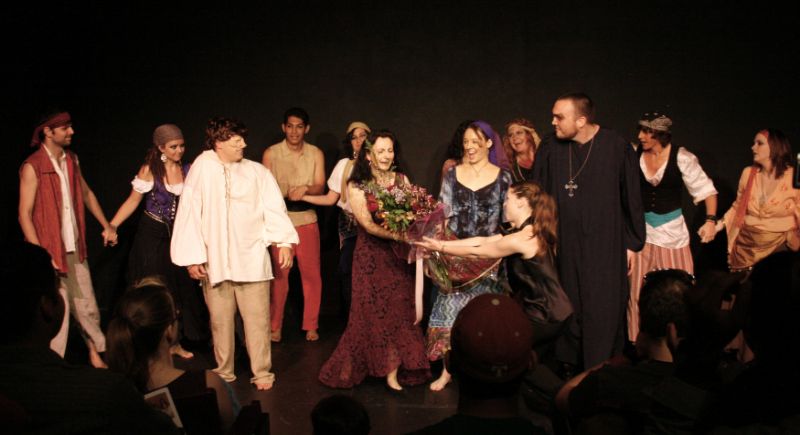
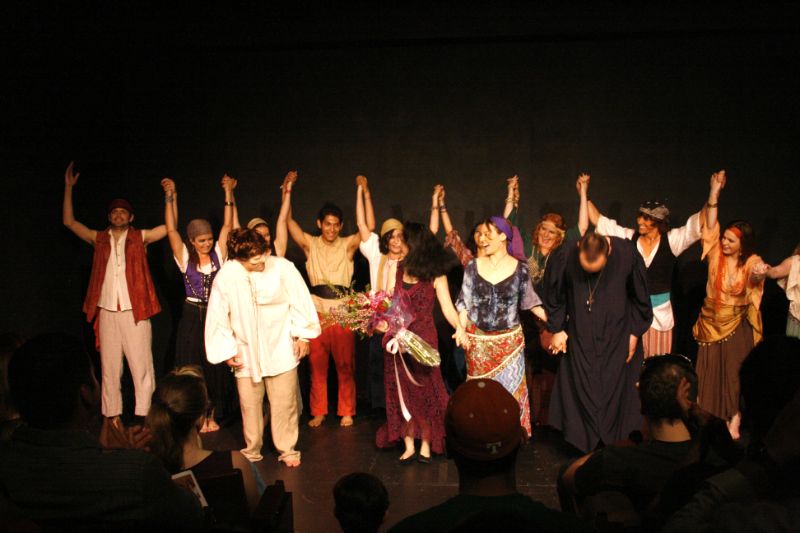
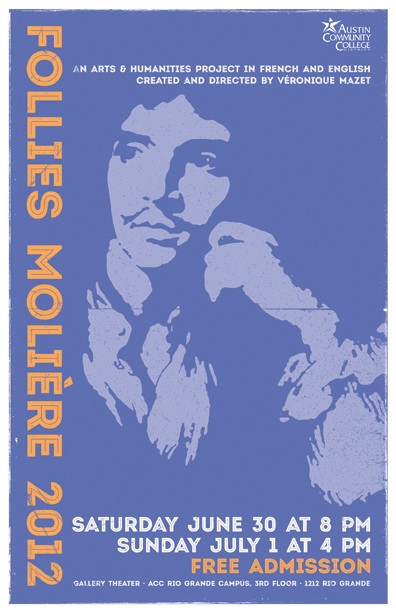
“Notre-Dame de Paris 2010” is an adaptation of Victor Hugo’s famous novel laced with songs from the 1998 Franco-Canadian musical of the same name.

“A few years ago, while visiting or, rather, rummaging about Notre-Dame, the author of this book found, in an obscure nook of one of the towers, the following word, engraved by hand upon the wall: ANArKH.

These Greek capitals, black with age, and quite deeply graven in the stone, […] as though with the purpose of revealing that it had been a hand of the Middle Ages which had inscribed them there, and especially the fatal and melancholy meaning contained in them, struck the author deeply.”

(Victor Hugo’s The Hunchback Of Notre Dame, PREFACE.)

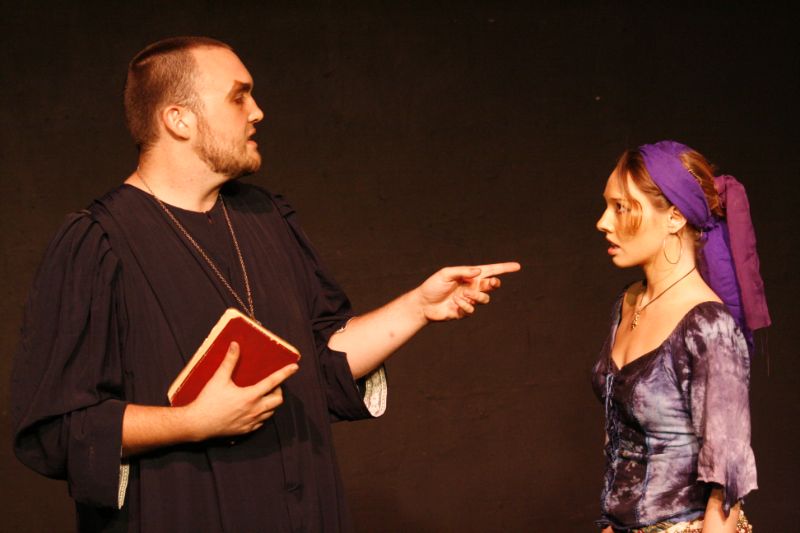
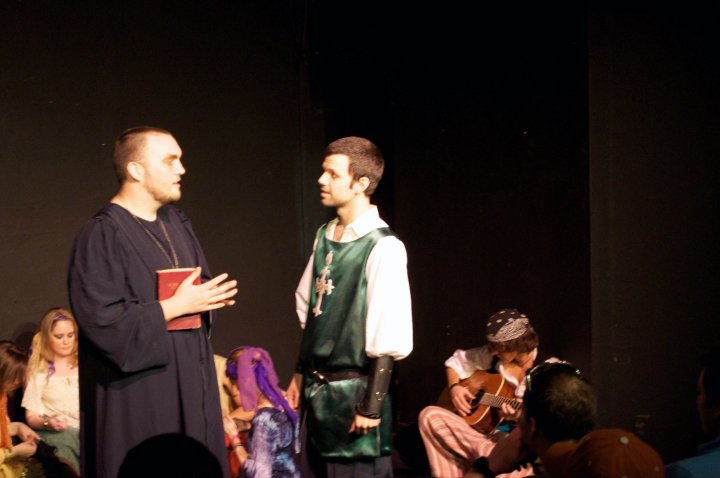
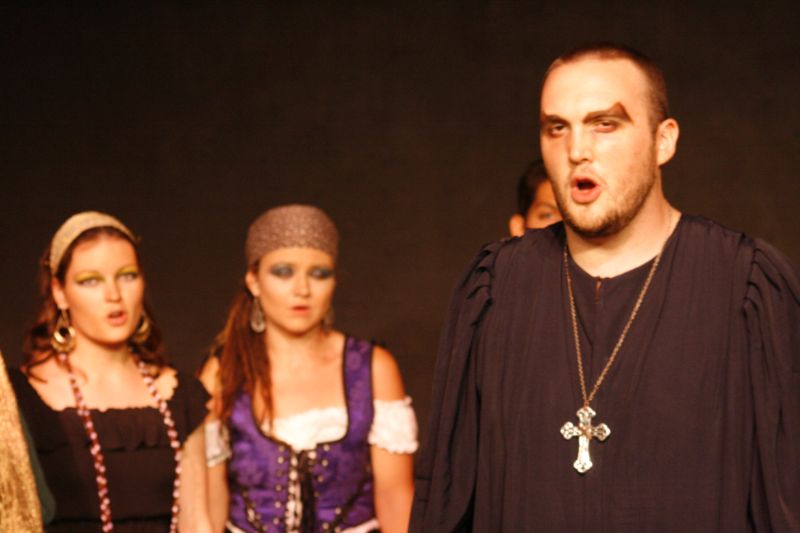
And so I chose to follow the darker thread of the novel, the “fatalité”– ANArKH (doom) aspect because I believe that is what Victor Hugo was most interested in. And the thread of doom is rich as the opening song Le Temps Des Cathédrales recounts: the power of the church supported by the towering cathedrals is being replaced by the power of the printed word (Gutenberg), and, around the corner, the Renaissance will spell the end of the Gothic Age. As for the gypsies, strangers of all kinds and of all nations, their fate is about to change for the worst. The scene between Frollo the archdeacon of Notre-Dame and Phoebus, the captain of the soldiers foreshadows the end of the sacred right of asylum for the foreigners, the minorities, as we would say today. This modern tragedy of segregation culminates in the song Cast Away, at the end, in which the guards exile the pack of gypsies and Esmeralda is hung at the gibet de Montfaucon.

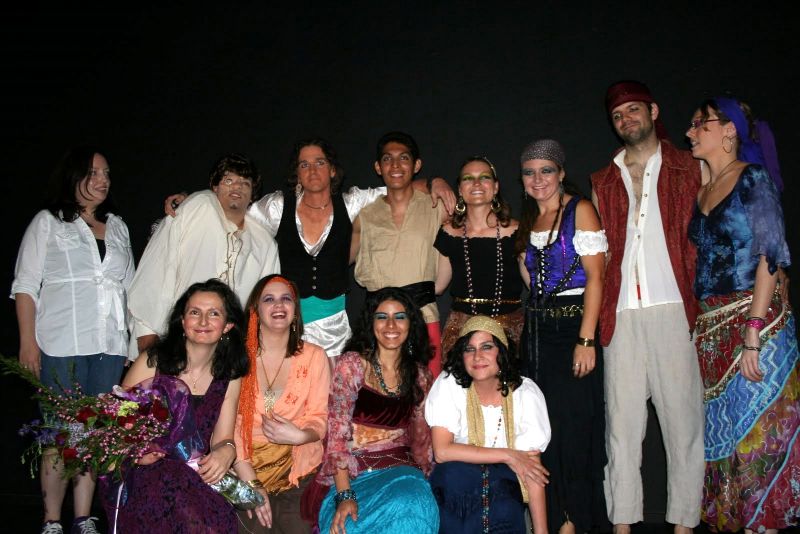
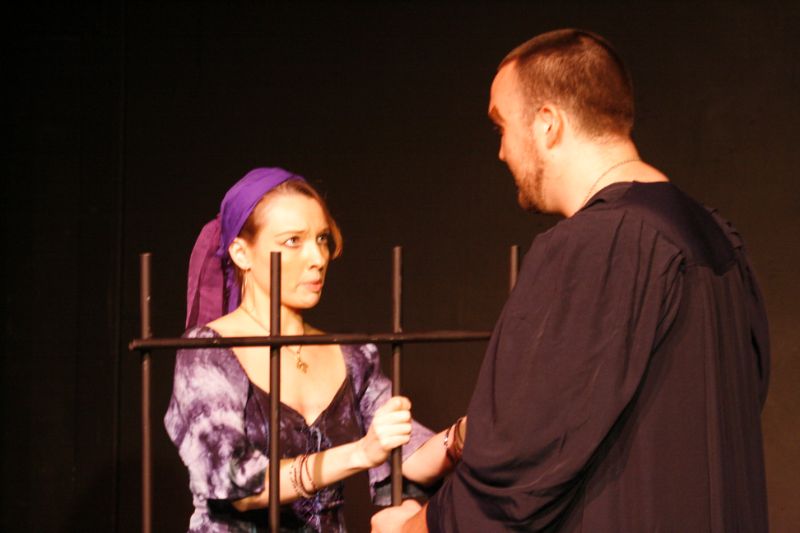
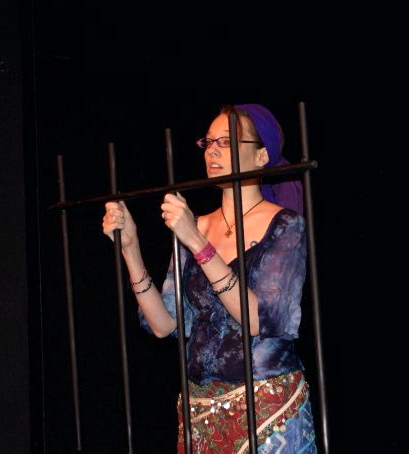
Our story begins when a band of wandering gypsies arrive in the very Catholic city of Paris. Frollo the all-powerful priest of Notre-Dame hates them and the disorder they bring into the city. At the same time, he can’t fight his attraction for the gypsy girls, those “exotic trollops”, and for one in particular, Esmeralda. Blaming his weakness on sorcery the man of God surrenders to his obsession and lets the devil take his soul (in the song Belle). He will attempt everything in his power to have Esmeralda, no matter how dark, no matter how evil. Quasimodo, the deformed bell-ringer of the cathedral also loves Esmeralda, for her beauty and her kindness. Taking advantage of Quasimodo’s naïve love, Frollo convinces him to abduct the gypsy girl and take her into Notre-Dame where she will finally be at his mercy. Everything is in place for the tragic dénouement: Frollo visits Esmeralda now held captive and proposes love in return for freedom. Horrified by such blasphemy, she refuses. Enraged with his passion, Frollo then delivers her to the hangman at the gibet the Montfaulcon, the royal gallows of Paris. No one can save her. When he understands that Frollo has duped him, Quasimodo hurls him off the top of Notre-Dame. He then asks the executioner to give him Esmeralda’s body. Left all alone in the world, he sings his despair over her body and dies with her.

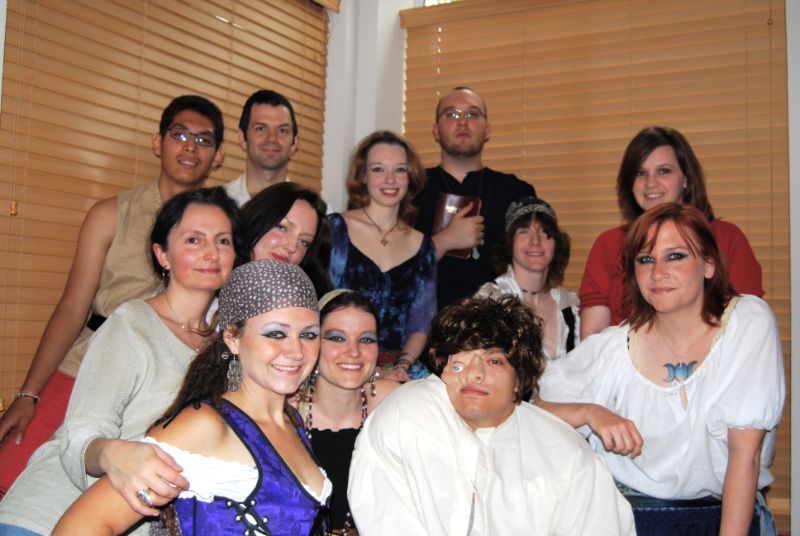
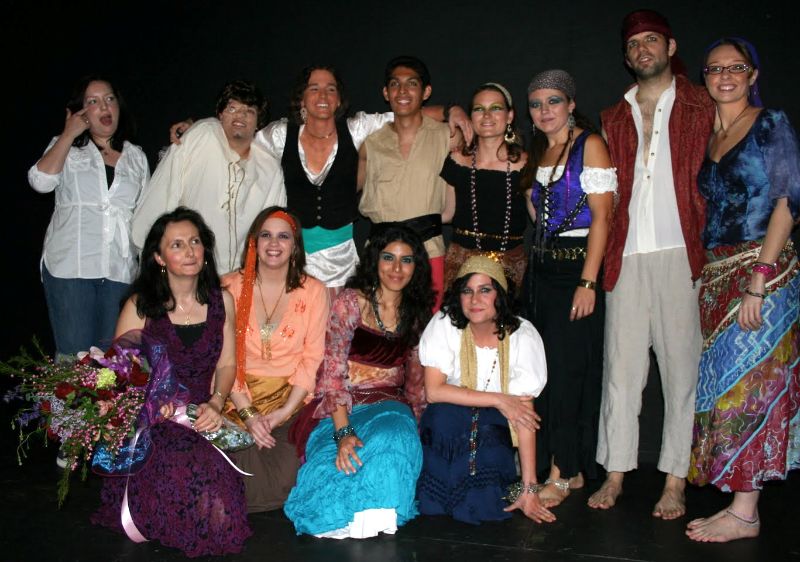
Cast

Kendall AuBuchon – Isabeau, a gypsy
Akasha Banks Villalobos – Esmeralda
Amelia Boldrick – a gypsy
Toni Cruz – a gypsy
Chris Cruz – Quasimodo the hunchback of Notre-Dame
Megan Riley – La Bérarde, the clairvoyant gypsy
Jack Mason – Frollo, the archdeacon of Notre-Dame
Verenice Mondragon – a gypsy
Shelley Sanders – a gypsy
Julie Sturm – a gypsy
Morgan Trigg – a gypsy
Brian Villalobos – a gypsy and Phoebus
Luis Villegas – a gypsy

The Crew

Molly Lynch – costumiére
Ilse Rachut – assistant
Toni Cruz – Quasimodo’s costume
Brian Villalobos – artwork on the program and poster

Created and Directed by Véronique Mazet

Students Speak

“I had a great time seeing first-hand how a play comes together behind the scenes. I thought that the costumes were lovely and very well thought out. I don’t know what we looked like to the audience yet, but it felt like we looked good 🙂 If I could have changed anything, I would just have liked to be able to rehearse on stage a bit more, but I know that was beyond anyone’s control.”
—Amelia Boldrick, a gypsy

“I was happy to participate, with my wife Akasha, in Mme. Mazet’s production of Notre Dame de Paris this past spring. Before that show, I hadn’t stepped on a stage as a performer in roughly six years — it was nice to remind myself of the experience. I am now pursuing that experience with renewed vigor. I’m currently in rehearsals for what will now be my third show since that more-than-half-decade lull, and it began with Notre Dame. Even if I never get to do another, I am thankful. I am thankful, too, to have had the opportunity to share with others, to brush up a bit on my long-dormant (and highly questionable) ‘skill’ with the lovely French tongue, and, perhaps most of all, to perform a vocal duet with my wife, which I had never done in that manner before. Finally, I am thankful to that production — and its champion, the passionate and highly resourceful Ms. Mazet — for the people I met, the good times I had, and the gift, to us all, that it was. I wish her the best. May she continue to give that gift for years to come.”
—Brian Villalobos, “Phoebus”

“Dr.Mazet, Your enthusiasm is contagious! Who wouldn’t want to be part of that energy? Even by playing a quite marginal role in the Notre Dame project, my contribution was genuine and not without its collateral benefits. In helping others rehearse, I found myself the cheerleader to their performance, and would encourage multiple hallway performances until we were exhausted and giggling. I got to know my classmates, have pride in my school, and take other classes with a renewed sense of responsibility. I don’t think that any regalia nor mascot could do what we did by our simple camaraderie of a simple play. Thank you, Madame Mazet. Avec vos projets à l’avenir-bon courage!”
—Ilse Ashbrook

“The semester of my l’illustrestage involvement was one of the most stressful I’ve had in a long while. i learned that no matter how much things suck for you personally, being a part of a group activity and having made a commitment ought to take priority. you dont want to let your cast (teammates?) down… although i cant say i was the best about practicing what i preach…. sorry = (but i didnt forget my lines on performance night!!) As a closing note, this was one of the most enjoyable things I’ve been a part of in a long time! class is class, and work is work, and its not often i allow myself the time and energy to do something strictly extracurricular. everybody involved was absolutely amazing, and i enjoyed the fact that we all had radically different outside lives but managed to come together for a common purpose, and one we werent required to be involved in. i am incredibly excited to take part in l’illustrestage‘s next project!! i LOVED meeting the new friends i made in the cast.”
—Megan

“I’m a student majoring in French, but was undecided on my major until after completing French ll and the amazing play which I performed in. Given the limited amount of time, funds, and space, we had a full audience our opening night. Unfortunately, it was our only performance with our limited resources, but, fortunately, it was amazing. Everyone that I call ‘fellow actors’ were fun to socialize and work with. With the direction from our ‘Coach’ and our mature and friendly bunch, the whole project came together pretty seamlessly. The thrill of experiencing another culture, then showing it to others and having them watch in awe was, well, awesome. Plus, the whole cast watching the performance a couple of months later to see what was great (a lot) and what could be worked on (not much) really showed me that French is something I want to work with and be a part of in my life. If there is another play, I will most certainly volunteer again in a heartbeat.”
—Morgan Trigg

“I never thought that taking a French course at ACC would land me onstage, dressed as a gypsy and singing about Notre Dame de Paris. Yet I had exactly that opportunity last spring as Dr. Mazet’s spectacle arrived and all her students, as well as anyone who wanted to participate, were given the chance to shine and share their talent. I greatly enjoyed my experience with the play. I had never done anything like it before, and yet my inexperience was embraced by my ‘coach’ and all my fellow actors. I loved that the cast was so welcoming and I learned so much about the hard work and dedication that goes into such a production. The whole experience was very inspiring and I particularly found it refreshing to be able to escape the stresses of daily life (school, job) to connect with my inner Francophile and learn about so much about theater. I am so glad I chose to be a part of the show- the experience has filled me with many unforgettable memories!”
—Julie Sturm

Audience Response

“What a delightful performance! Congratulations to the cast for a show well done! It was unfortunate that the venue couldn’t accommodate the crowd that was eager to watch this worthy musical. Even with the obviously limited budget (ie sceneless and virtually propless) the costumes were exceptionally well done and authentic. Kudos for providing all in attendance an entertaining evening.”
—Specator and mother of one of the gypsies

“Thanks, Véronique, for a well-written play and an entertaining performance! The bilingual nature of the play made it easily accessible to everyone and a rewarding experience for French language learners. The carefully thought-out details of costume, song, and dance also contributed to the enjoyment of the play.”
—Amy Cepparo, FOLA adjunct faculty

“Notre-Dame de Paris was very well done. I was impressed by the acting of the students who participated, and the musicianship of the actors. I didn’t quite know what to expect, but I walked in a an extremely packed theater and had to sit on the steps by the exit… but it was worth it! I felt for Quasimodo, my heart broke for Esmerelda, and hated the cruelty of the priest. I enjoyed it very much.”
—Jake Franklin, French 4 student

“I want to say that I enjoyed your latest theatrical event Notre-Dame. It was colorful and fun to watch. The singing was lovely, especially the duet. What a great way to end this spring 2010 semester.”
—Raquel Gavia, professor of French

“I really liked the story and I thought that the actors did a great job telling it.”
—English speaking spectator

“My wife and I really enjoyed the Notre-Dame production! It was a fun evening and it was obvious that a tremendous amount of work and preparation went before. We realize that, for the most part, the actors were not experienced drama ‘pros’ but, nevertheless, you guys put on quite a show. I thought the program was particularly helpful in explaining the story and it was very interesting to read about the backgrounds of the actors. The work that went into the preparation of the program was well worth the effort. I didn’t understand a lick of the French that was spoken during the play but that did not impede (at least I don’t think it did!) my understanding of the play. The occasional French phrase/dialogue just added to the authenticity of the production, without leaving the non-French speaking audience in the dark. Well done. Frankly, I was surprised at the professionalism of many of the actors. Esmeralda and the evil priest were particularly impressive and I think the group singing was well done. After awhile, you forgot you were watching a bunch of ACC students and just enjoyed the story. I think it’s a shame that all of that effort was for just ONE show! It deserved at least two or three runs and that would have given more people an opportunity to enjoy it, perhaps in less crowded conditions.”
—Raymond Sturm, spectator and father of one of the gypsies

“Bonsoir Mme. Mazet. Bravo on completing another performance! This is the second time I have seen and enjoyed an Illustre-stage play, again in a packed theater. I was happy to see that you had chosen The Hunchback of Notre-Dame as your source this time, as many of us are unfamiliar with the story. Akasha and Jack were impressive in their confident portrayal of Esmerelda and Frollo. The costumes were great, and the music complemented the events onstage. The French/English hybrid of the dialogue imparted a French personality, while allowing a mostly English-speaking audience to follow the plot. The program handout was also helpful to understand both the original novel and the focus of your play. As a former French student and Illustre-stage performer (Spectacle dans un Bistro, 2002), I appreciate the time involved in organizing, editing, orchestrating, and rehearsing. Thanks to you and the cast for your efforts. Looking forward to next year’s spectacle.”
—Brandon Backlund

2009 – Molière

The idea was to introduce the spirit of Molière to a non French-speaking audience. Our adaptations include some original verses, translated lines (found on the Project Gutenberg web site), and a little bit of our own. Whenever possible, we have tried to maintain the meter and flow of the language. Our spectacle is based on three of Molière’s famous comedies:

Act I: La Répétition is based on Les Femmes Savantes (1672); Comédie en cinq actes, en vers (The Learned Women), with a taste of Le Bourgeois Gentilhomme.

ACTE II: The Lost …Thing is an adaptation of L’école Des Femmes (1662); Comédie en cinq actes, en vers (School Of Wives).

ACTE III: La Galère is an adaptation of Les Fourberies de Scapin (1671); Comédie en trois actes, en prose (Scapin’s Schemings).

Why Molière?

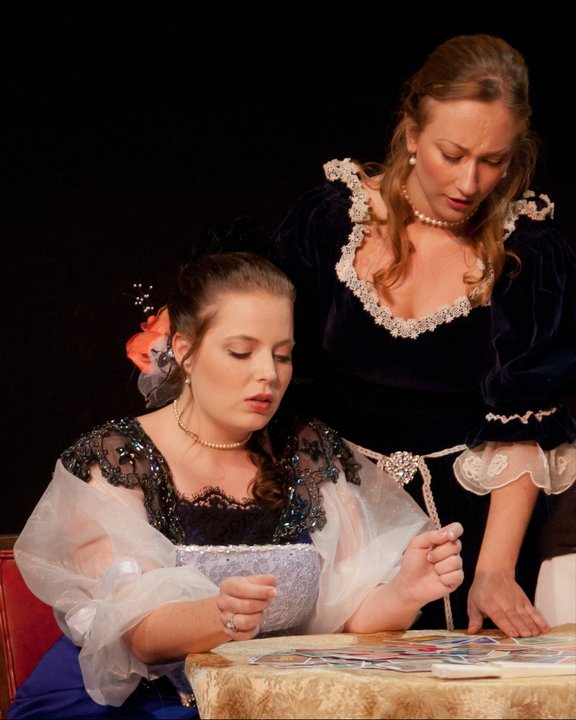
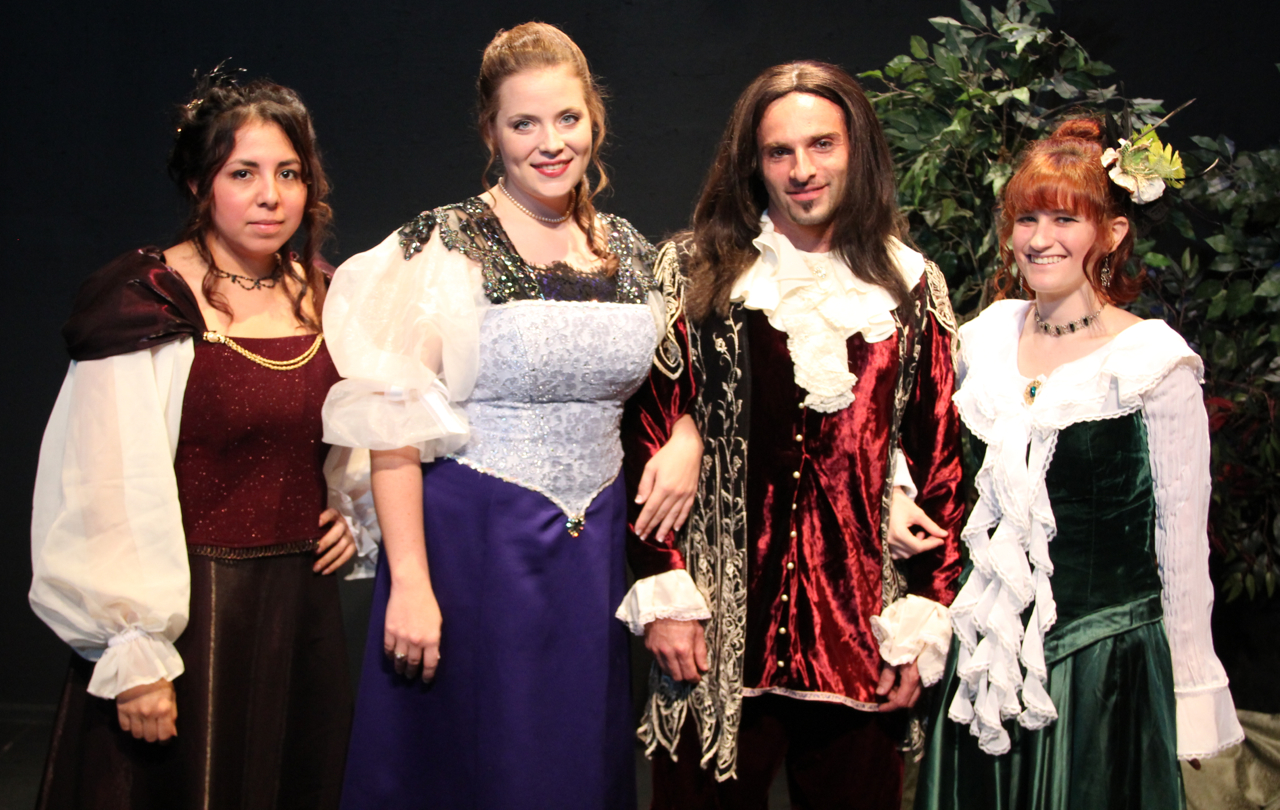
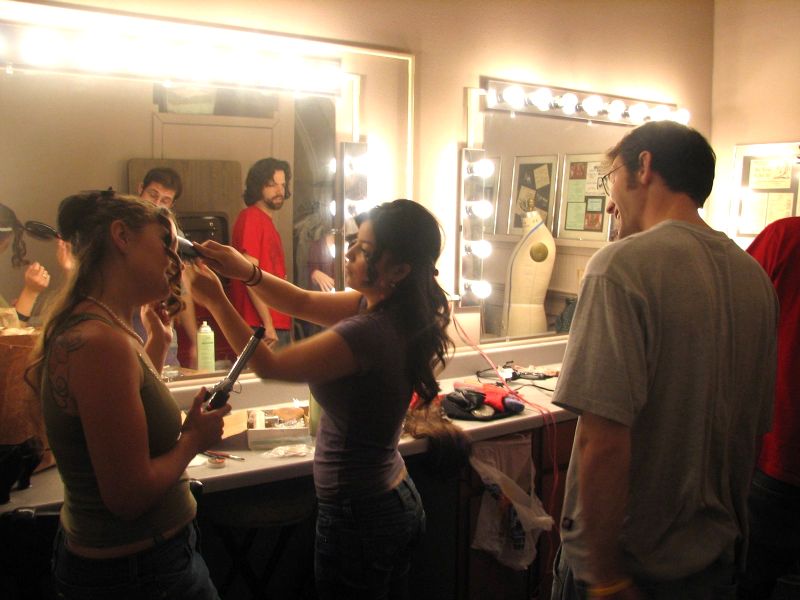
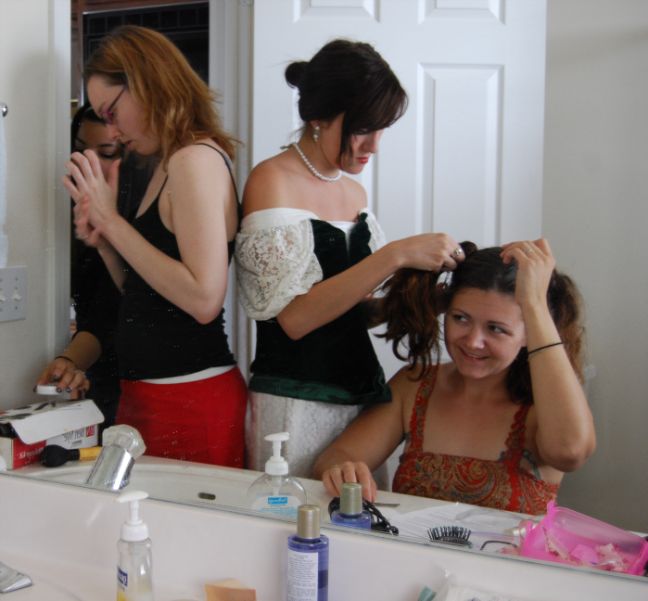
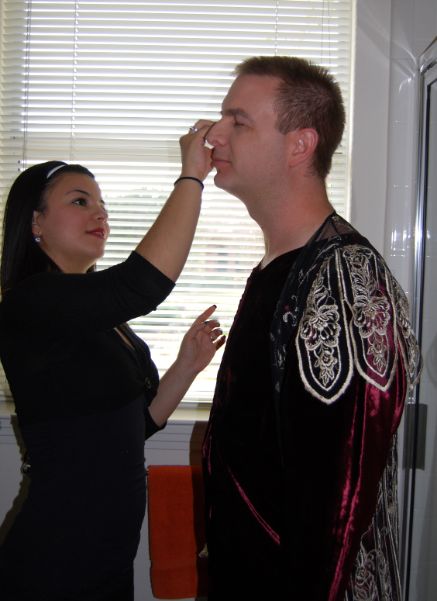
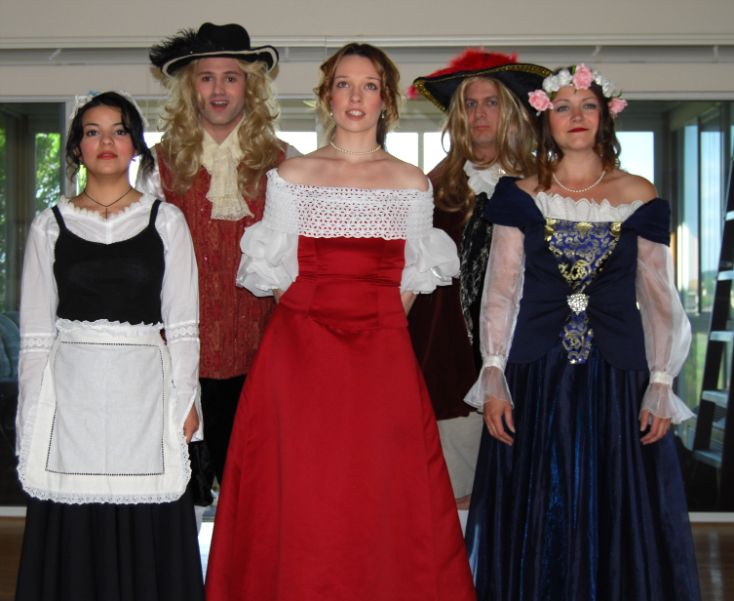
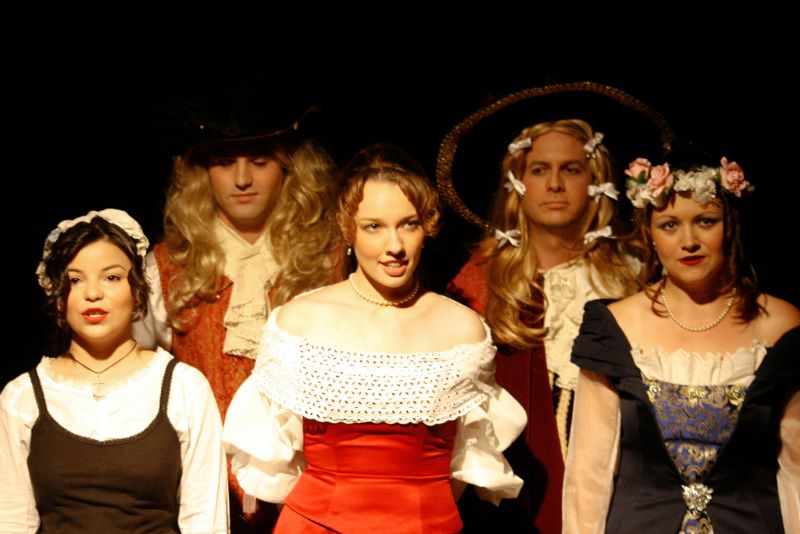
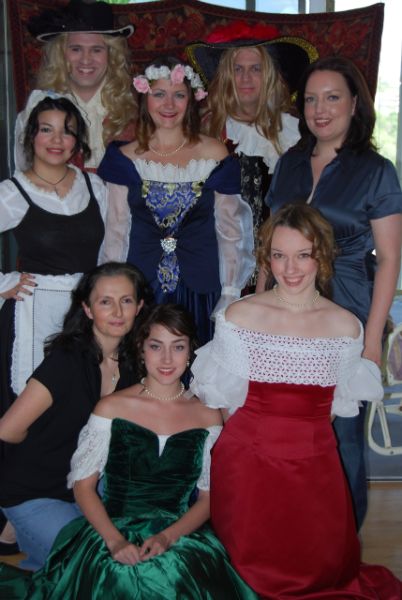
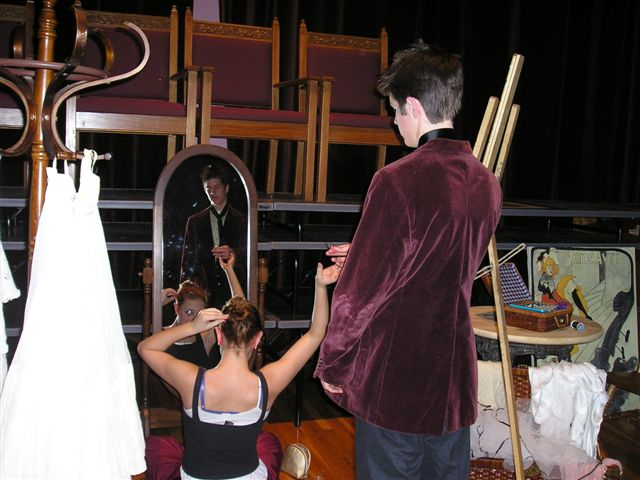
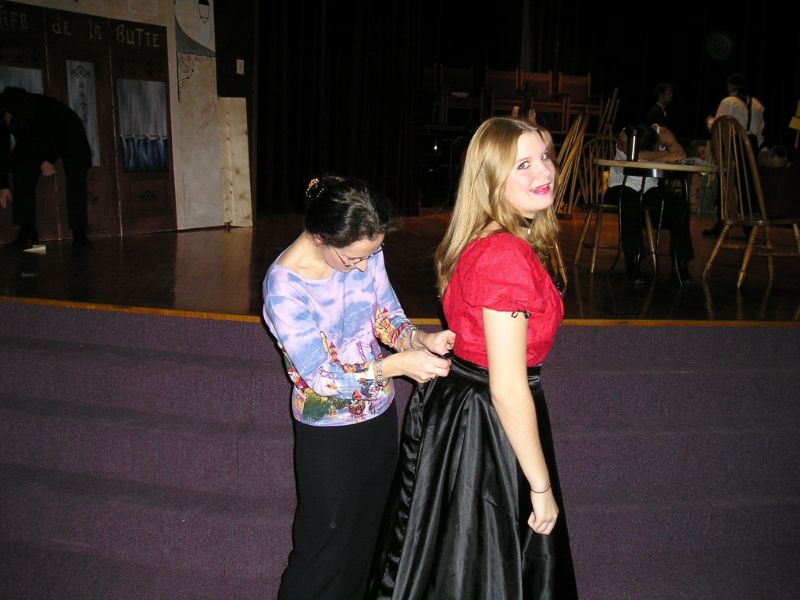
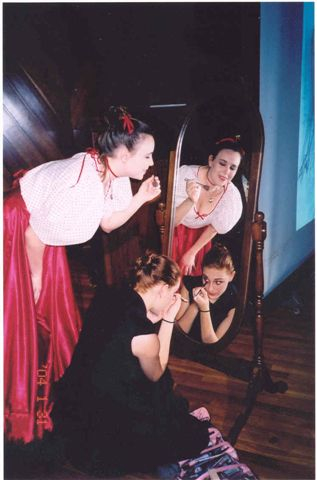
Truly I chose Molière because his plays are so current and “tasty”. His somewhat controversial subjects which, by the way often landed him in court, remain very appropriate even in our times. Nobody likes hypocrites and phonies, and we can all laugh at a good trick against unnatural behaviors of all kinds, be it a XVIIth century lusty old man, or a cell phone-obsessed bad driver, can’t we? His plays represent French theater probably better than any other playwrights’. They have the life and wit of the French esprit, and the beauty of the French language. Even after more than three hundred years, it is difficult to find a French person who doesn’t enjoy his comedies. Throughout the ages, Molière has always been a prominent part of French culture, so much so that France’s most prestigious theater company, la Comédie Française, in Paris, is also called la maison de Molière (his “house”). Every school kid knows Molière because we study it at school, and a francophile ‘s culture would be incomplete without a glimpse into Molière’s works. Another reason for this choice was its potential for extraordinary costumes. It was indeed a lot of fun to sew lace, satin and velvet, to add satin ribbons, silver brooches, and buttons… with such great results. The pictures tell it all. (See photo gallery)
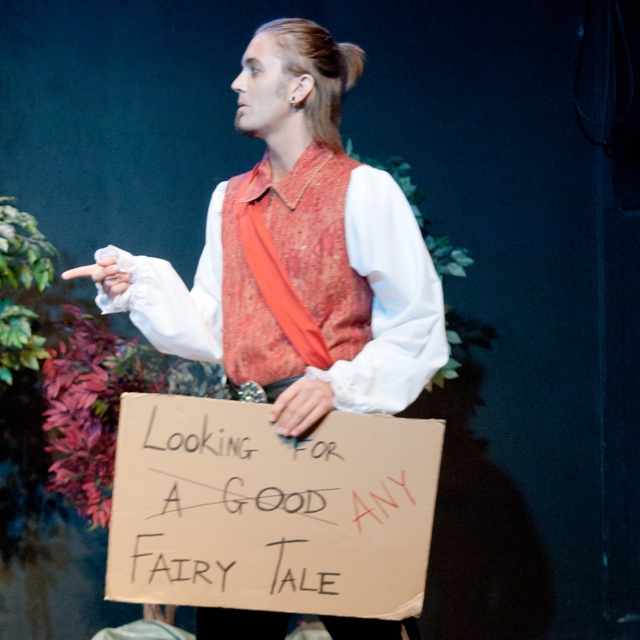
One notable incident: we “lost” one of the actresses rather late in the game. She could not learn her lines despite the efforts of her fellow actors to help her. The hardship was on all of us because when she disappeared we had only a couple of weeks left before the performance. Parts of the text had to be rewritten in order to redistribute her lines, and some members of the already small cast had to take on even more lines. Blocking too had to be relearned for some… This was the first time it happened, but it was a significant step for the other students who reacted very very well. I was impressed at how readily they took on additional work so it would all work out in the end, instead of merely folding. Thanks to them, the water closed back up very smoothly over the incident, and we gave a flawless performance.

The Cast

Kendall AuBuchon – French 1 student
Linda Caballero – French 4 student
Marcus Simpson – Former student
Hailey Tuck – French 1 student
Akasha Villalobos – Former student
Bradley Wright – French 4 student

Behind the scenes

Molly Lynch – French 3 student (costumes)
Margot Rochon – Foreign language dept. administrative assistant (filming)
Suzanne McIntosh – French 2 student (art work)
Véronique Mazet – Professor of French (creator & director)

Students Speak

“I am delighted to be appearing as Agnés as well as Bélise in La Répétition. I love musical theatre and French so this production encompasses both and I am very excited to be a part of it with so many talented people and to work under the direction of Véronique Mazet. It’s an experience I will remember forever. I am in French 1 this semester and hope to continue.”
—Kendall (Bélise & Agnés)

“It is an honor to be a part of this show as Martine and Scapin and to be able to share the experience with the rest of this team of wonderful, dedicated people. As a French IV student at ACC I am proud of what we have accomplished and I hope you enjoy watching this show as much as we enjoyed preparing for it.”
—Linda (Scapin & Martine)

“I am a former ACC French student who has no previous acting experience. I thought it would be fun to do this and increase my speaking skills. It has been a great experience and I look forward to next time.”
—Marcus (Molière & L’emplumé)

“I took French I-IV at ACC five years ago, and during that time, I participated in Madame Mazet’s other two bilingual productions (and thoroughly enjoyed them.) Since then, I’ve married and become a teacher at Garza High School, where I teach Filmmaking, Animation, Digital Graphics, and Multimedia.”
—Akasha (Henriette & stage manager)

“I have performed as Demetrius in A Midsummer Night’s Dream, Tybalt in Romeo and Juliet, Graziano in The Merchant of Venice, and Sextus Pompeius in Antony and Cleopatra. I will have my BA in English from U.T Austin in May. I am currently in French IV.”
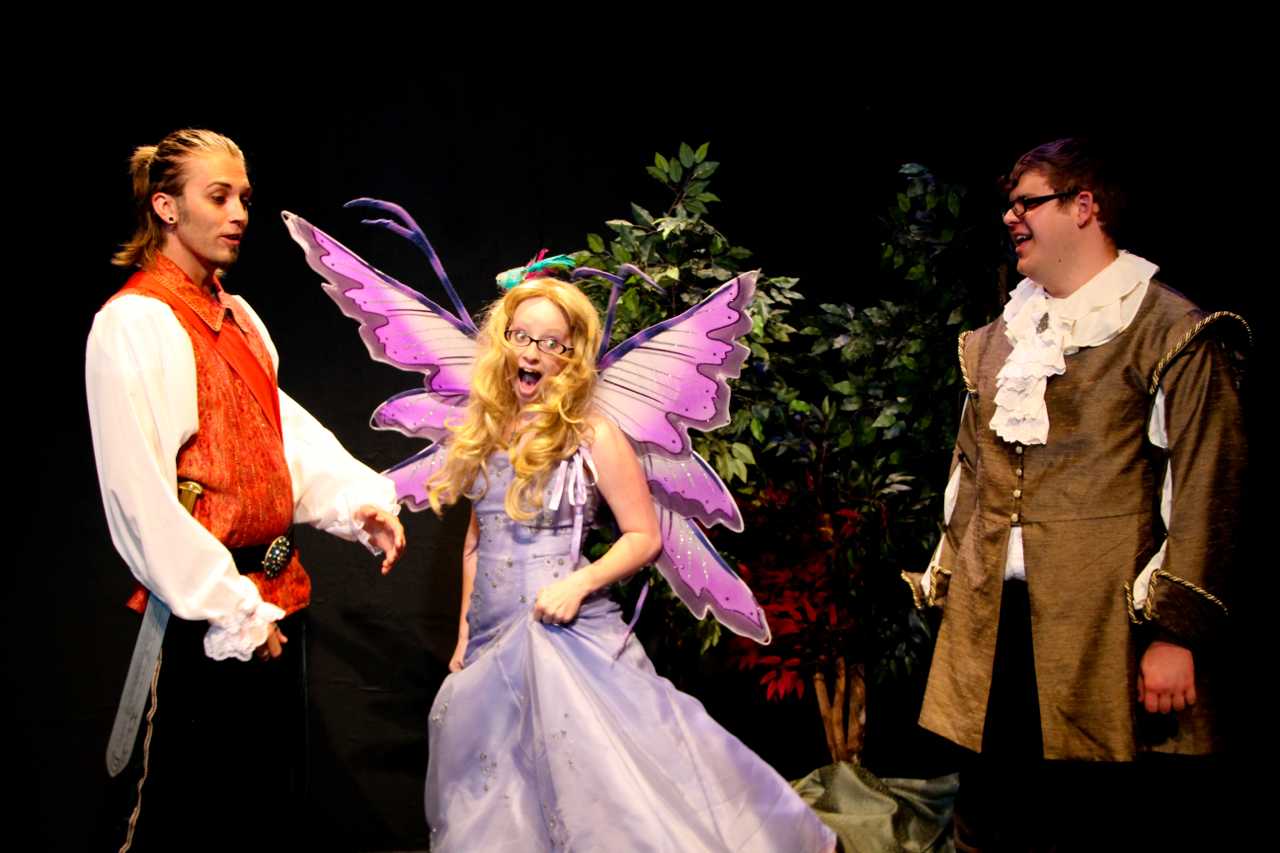
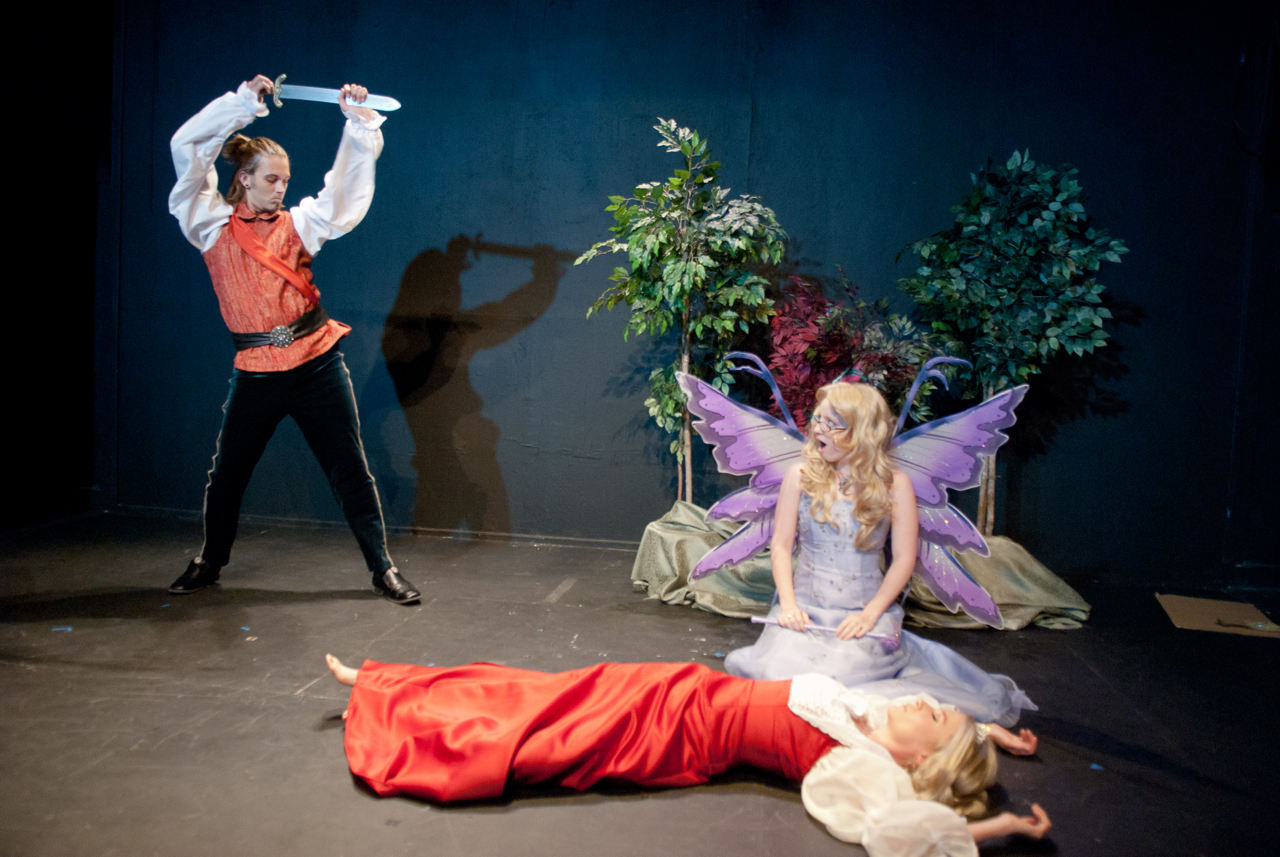
—Bradley (Géronte & Horace & Arnolphe & Clitandre)

“I am a French III student, a lifelong francophile, and have had an intense interest in theater and costume design since I can remember. I have truly enjoyed exploring the works of Molière while working with this talented and fun group of people.”
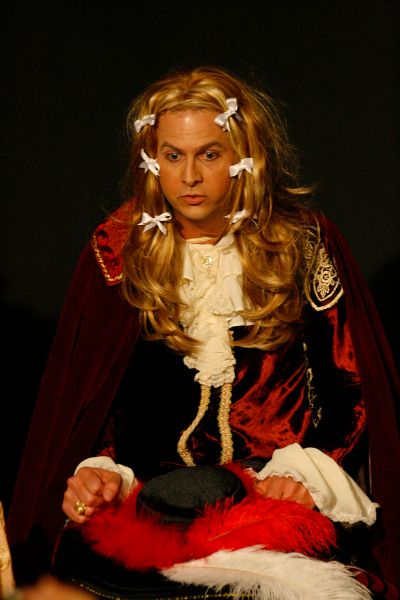
—Molly (our stage mom and costumiére)

Audience Response

“Even though I do not understand French the play was still very enjoyable. Having the actors speak bilingually really helped understanding what was going on. The use of modern music and song gave the play a fresh vibe and the specific songs fit the scenes perfectly.”
—Anna Salguero, spectator

“Véronique, I very much enjoyed the clever way you showcased the singing talents of our students by merging popular French song performances with classical play excerpts, immersing students in the language, literature, and culture of France all at one time.”
—Sidney Brammer, ACC creative writing

“I brought my two sons of 9 and 13 years old and they really loved the integration of songs like the Pink Floyd and other reminders of our today culture… A funny, entertaining way to meet Molière and his time! My son who takes a class in theater told me he wouldn’t mind acting in French. It was great Véronique and inspiring for families …MERCI pour ton travail de production en français! Bravo et encore.”
—Dr. Anne Cirella-Urrutia, French Adjunct Professor, HTC.

“I enjoyed the play so much I went there twice! The acting was great, the songs were perfect! I also admired the writing of the play to incorporate Molière and make the sequence clear to people who don’t speak French.”
—Marc Prevost, French Professor, ACC.

“Dr. Mazet, My son and I really enjoyed the Molière comedy. At first I thought my son would not be able to follow it but it being bilingual made it possible for him. My son is 12 years old and taking French in middle school; so for him it was a great opportunity to experience the French language in an environment other than the classroom and in an entertaining and fun way. After the play my son bragged about the things he understood and how well he followed the story. I was impressed. The characters were hilarious and every act was a surprise! We loved it! Thanks for inviting us!”
—Joanne Gonzalez, French 2 student

“Moliere’s genius is not widely taught in American schools, but ACC French adjunct professor Veronique Mazet’s bilingual musical ‘folly’ captures his essence and makes him come alive. Her inventive scenes, such as one with a flustered actress consulting Molière in the flesh, are hilarious and enlightening. She tucks surprising hits from musicals, such as ‘I Feel Pretty’ into bilingual scenes that further explain the appeal of Molière. Veronique herself is a genius to have written this show, and her actors and singers are perfect in their roles.”
—Mary Hopkins, spectator

“Dr. Mazet, congratulations on the lovely show last Saturday 18th of April. The play was a tasteful and charming way to refresh our memory of Molière’s masterpieces. Impressive the attention to the details, the music. the costumes, the singing and dancing, the French-English dialogue. Very entertaining the conversation between Molière and Agnés… If you allow me, “literary Follies” is a little gem in its conception and execution. what an inventive way to learn a language! Your students must have had a blast.”
—Daniella Paluselli, ACC student

“Véronique and all the cast: you were fantastic and it was beautiful!”
—Cathy Angell, Chair of the Foreign language Department

“We really enjoyed the light hearted spirit and were impressed with the students who participated. I thought it was sad that there were not more students who chose to participate! The theater was full, in fact standing room only. That was nice to see. We thought the costumes were very well done and the whole play performed very professionally. All in all an afternoon well spent.”
—Janelle Monney, French 2 student

“I have to say that I enjoyed the show. I liked the way they made it bilingual using both French and English. Throughout the show there were a few times where I did not quite understand the French, but I could still follow the story. This use of both languages made the show easier to follow. The acting was good and the singing was great. I thought the choice of music was good. I suppose this was the updating. I give the whole production two thumbs up.”
—Paul Reyes, French 1 student

“I had a great time at the play. It was really fun and funny and clever… You did a great job and a great thing for the college and our students.”
—Lyman Grant, Dean of Arts & Humanities

“While taping, I had focused mainly on issues of video composition; but later, during the editing process, as I watched the clips repeatedly, I began to take note of all the subtleties of the actors (all non-professionals) and an all together sophisticated level of presentation. I might here mention that the set was Spartan, and while the immaculate costumes did much to carry the audience back to the 17th century, it was the dynamism of the performers upon which the play’s energy rested. Aside from the fine quality of performance, it is also noteworthy that the play’s author/director, Véronique Mazet, had managed to achieve the seemingly Herculean task of creating a cohesive play by stitching together excerpts from multiple plays and infusing them with modern musical numbers. C’est magnifique, non?”
—Margot Rochon (Margot taped the performance and edited it)

ADDITIONAL RESOURCES

A Bit Of Literary History
L’école Des Femmes
Les Femmes Savantes
Les Fourberies de Scapin
The Music

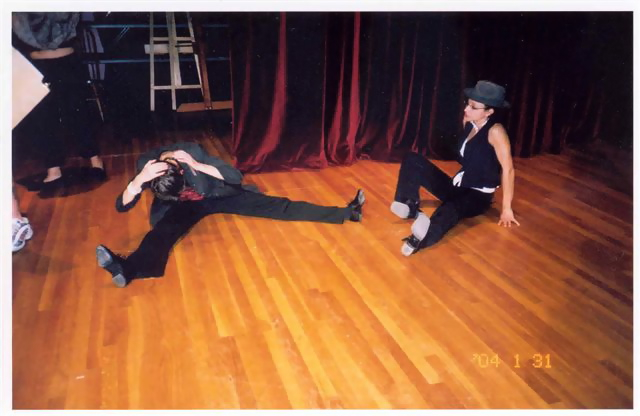
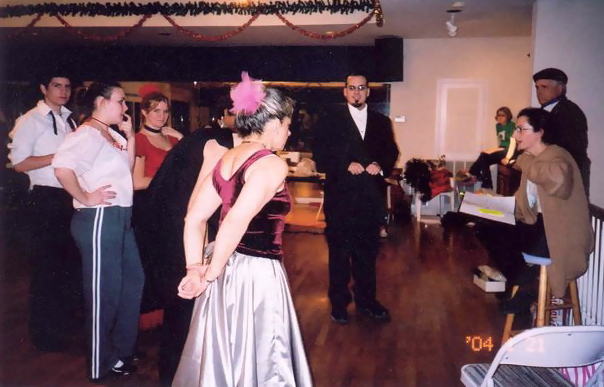
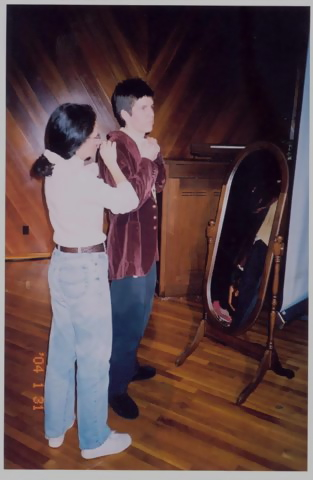
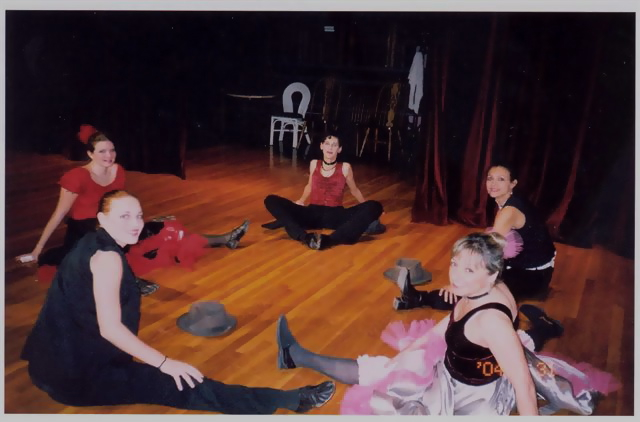
2004 – MOULIN ROUGE

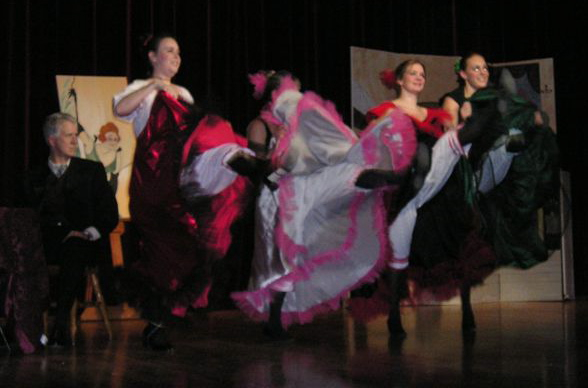
If you have seen Baz Lurhman’s “Moulin Rouge” movie, you may already be acquainted with the place and some of the characters who frequented it. But our show is everything Baz did not tell you about Moulin Rouge.

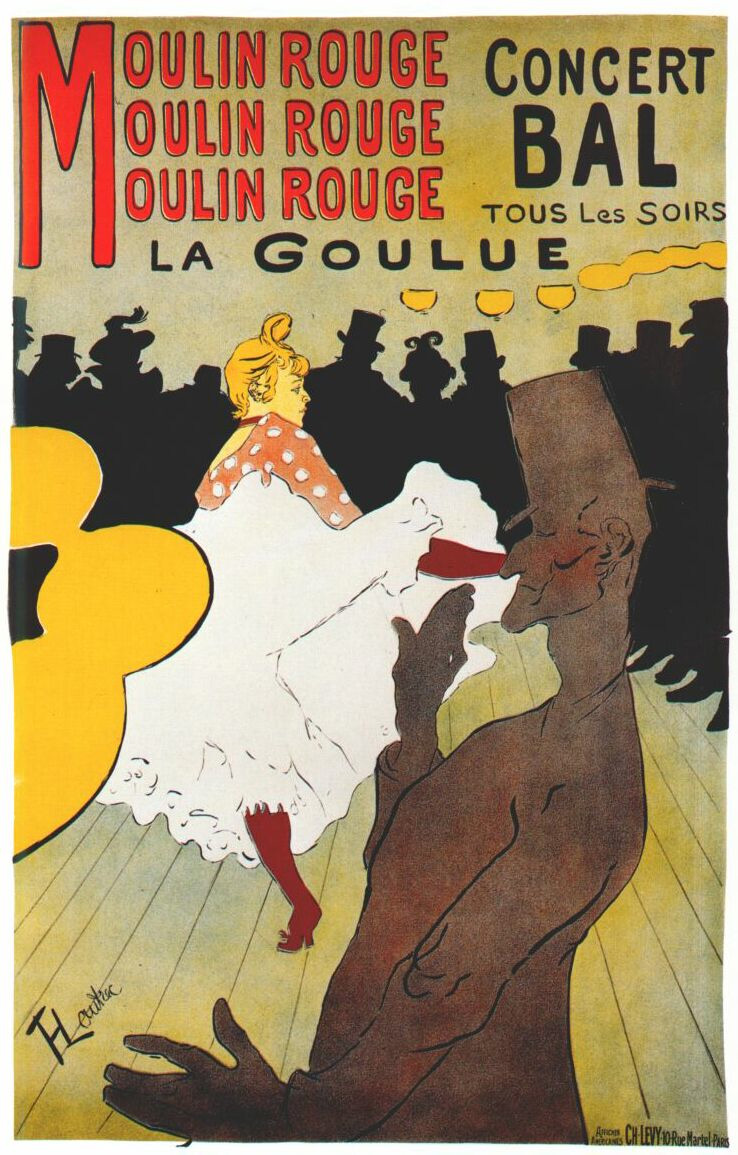
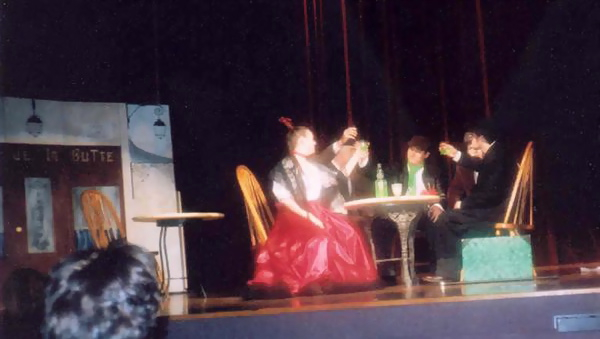
We will introduce you to the real Toulouse-Lautrec who used to frequent the Moulin Rouge and drink and watch the dancers there. We’ll show you his paintings and explain the influence of his works on the beginnings of poster art and advertising in the late 1800’s. We’ll tell you about some of these young women dancers and their life choices. Many bohemians drank to forget the squalor of their lives, and we’ll give you a taste of absinthe, the “green fairy”. (The infamous green liquor destroyed so many lives that most European governments of the time had to outlaw it). And most of all, we will dance for you the real French Cancan to Jacques Offenbach’s original music.

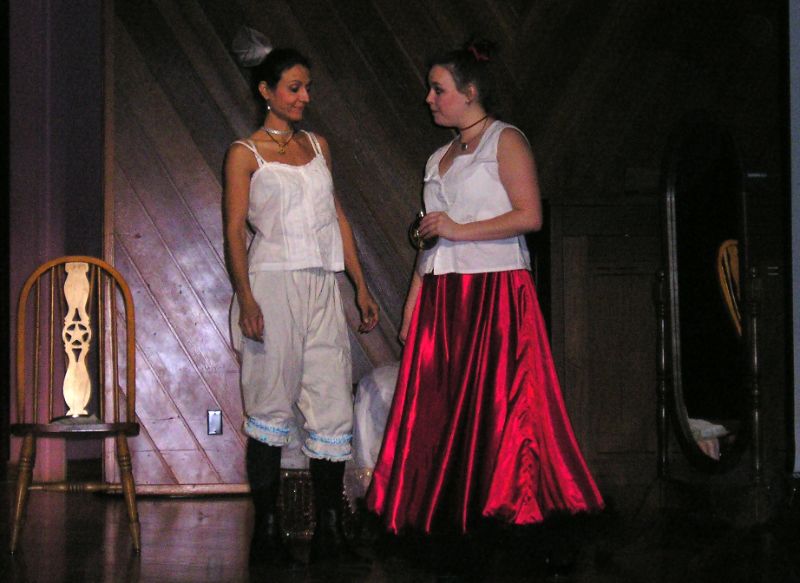
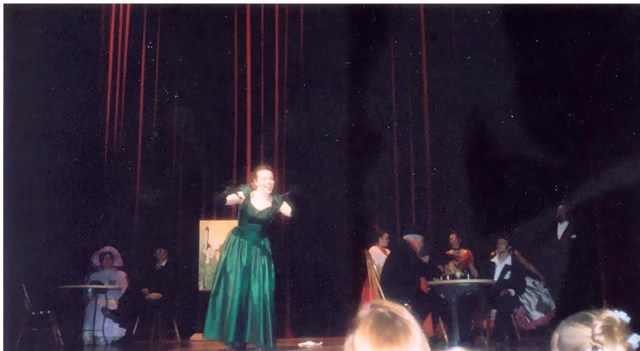
Many “cultural facts” are incorporated into this script. For instance, “la vache enragée” (the “enraged cow”) that the students toast in scene 4 is an expression referring to not eating enough because you’re poor. It is also the title of a famous satirical magazine of the Belle Epoque. In scene 7, the girls’ conversation about absinthe is modeled on descriptions made by Dumas, Oscar Wilde, and others who wrote about the “great collective binge”, as the absinthe epidemic was called. By the same token, some characters do not speak with impeccable grammar only to demonstrate their lack of education. Some characters are fictitious, only invented to give a voice to some of those themes and interact with those who did exist, namely: Toulouse-Lautrec, Zidler, Aristide Bruant, Yvette Guilbert, Jane Avril, La Goulue and a few of the dancers.

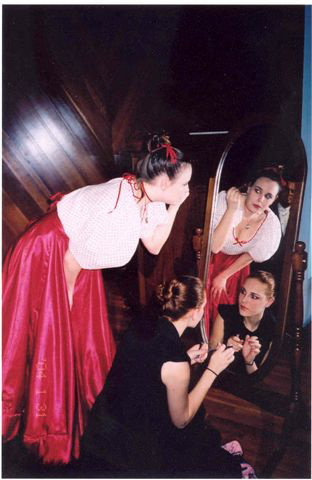
As to the paintings of Toulouse-Lautrec, they are presented in the “cultural” slide shows that dot the play. Please refer to the photo Gallery to see how we tried to replicate some of Toulouse-Lautrec’s paintings through the use of costumes and props. In the slide show, a picture of the real subject follows the picture of our actor.

Now prepare yourselves for a journey into the bohemian world of Montmartre, where the wretched and the pleasure-seekers meet.

Welcome to the Red Wind Mill. Welcome to Moulin Rouge!

CAST

The participants are not only current and former students of French at ACC, but also members of Austin’s French community (through Austin Accueil and the Alliance Française) including a UT professor of architecture, a police officer, and three high school students.

Avec par ordre alphabétique:
Francisco Arumi – Aristide Bruant
Whitney Ballou – Marie (danseuse)
Akasha Banks – Yvette Guilbert
Ashleigh Marie Barcuch – La Môme Fromage (danseuse)
Kimi Beckham – at the lights
Charlette Beillon – Madame Zoriga
Isabelle Courty-Bettler – Jane Avril (danseuse)
Shelley Doggétt – la Goulue (danseuse)
Christian Garner – Zidler
U. R. Sarah Hoque – at the computer
Christian Ljungqvist – Toulouse-Lautrec
Véronique Mazet – author & director
Stephen G. Nichols – student/stage manager/patron
Luisa Saldamando – Rigolette (danseuse)
Marie Thatcher – Nini-pattes-en -l’air (danseuse)
Philippe Verain – art student
Zac – Marcel

Students Speak

Whitney Ballou (Round Rock High School)
“I heard about the production through a friend that has a sister that goes to ACC”

Ashleigh Marie Barcuch studies French at Round Rock High School
Heard about the play through a fellow Dragonett’s sister

“I originally heard about the French productions through my French II class. I have participated every year since.” Akasha Bank

Isabelle Courty-Bettler. French. heard about it via Austin Accueil.

Luisa Saldamando studies French at the Alliance Française-level: Advance Conversation. Heard about the production through Elizabeth Joffrain from Austin Accueil.

Christian Garner is a systems engineer for Sprint. He encountered French cultural theater while taking French classes, and was first introduced to acting last Spring while playing multiple parts in “Femmes, femmes, femmes”. Since then, he has found a love for acting and aspires to do more of it in the future.

Shelley Doggett, is a journalism major at UT and in her 3rd semester of French.

Stephen G. Nichols Was conned into this production with promises that he would only run the computer. Eventually ended up with several parts — the compounding lies sounded so much sweeter in French — and has enjoyed every single day of it. Wouldn’t miss it for the world.

ADDITIONAL RESOURCES

Stars of the Moulin Rouge
The Story Behind the Poster
The Moulin Rouge And The Times
Le Cancan
Henri de Toulouse-Lautrec

2003 – FEMMES, FEMMES, FEMMES

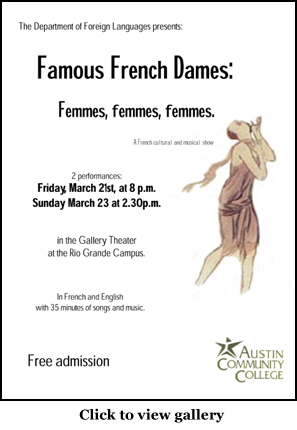
Femmes, femmes, femmes is the second illustre-stage production. It is an original show featuring five female icons of the French culture, real and fictitious. Each scene is preceded by a carefully composed musical slide show that illustrates the theme.

ACTE 1 – “Jeanne D’Arc: Rebelle et Sainte” (1412-1431)
With the music of Mozart: Le Requiem
Our act is loosely based on the 1953 play by Jean Anouilh “L’Alouette“, and includes translated pieces of Jeanne’s actual sorcery trial. You will follow Jeanne’s short voyage from her village where she first hears the voices of the angels, to Chinon where she meets the embattled and scared dauphin Charles VII. After a mysterious secret conversation with Jeanne, the future king of France, declares that he will grant her permission to ride into battle against the English, at the head of his army. The whole act is a flashback of Jeanne’s life and ends in the prison when she is taken away by guards to be burnt at the stakes.

ACTE 2 – “Edith Piaf. The show must go on.”
With the songs: Mon Dieu, Padam, La vie en rose, Hymne a l’amour, Je ne regrette rien, performed by Akasha and Meredith.
I wrote this act specifically for Akasha and Meredith. I had those two extraordinary singers on board and I wanted to highlight their talent by giving them as many songs as possible. One challenge was to create a story that would allow me to pack those songs in a rather short act, while maintaining the natural flow of the story I was going to tell. The other challenge was for the actresses who had to memorize those French songs, music, lyrics, and pronunciation. And I have to say, I was completely impressed by how professionally they rehearsed. Akasha even managed to get some of Piaf’s scene gestures by working from a videotape. The story I chose is a short moment in the life of Edith Piaf, yet one that had enormous consequences for her: While on tour in America, she lost the love of her life, the boxer Marcel Cerdan, in a plane crash. His death changed her forever. The date was October 27, 1949. This is when the curtain rises on Edith and her coach happily rehearsing…until a fateful telegram is brought in.

ACTE 3 – “Les Liaisons Dangereuses”
With the music of Bach: Concerto pour 4 clavecins en la mineur.
The famous 1782 epistolary novel by Choderlos de Laclos reveals the wicked mind games between two evil aristocrats in pre-revolutionary France. The novel presents 175 letters, and to underscore the prominence of those, the set was to be Madame de Merteuil’s writing cabinet. Sitting at her desk, quill in hand, the marquise “talks” to Valmont in French. From the shadows, Valmont reads and responds to the missives in English as she writes them.

ACTE 4 – “Notre-Dame de Paris”
With the songs from the musical of the same name: Belle, Fatalité, Danse mon Esméralda, Le temps des cathédrales and Bohémienne are performed by Akasha and Kacy.
The place is Paris, the time is 1482, the age of the cathedrals. Written by Victor Hugo in 1821, the huge novel “Notre-Dame de Paris” (“The hunchback of Notre-Dame”) tells a tragic tale of love and fate. In the shadow of the cathedral a story of betrayal, desire and death is about to unfold. Quasimodo the deformed bell ringer falls in love with Esméralda the beautiful and wild gypsy girl. Frollo the demonic priest of Notre-Dame watches her too. In the end, rejected by Esméralda Frollo delivers her to the hangman and disbands the gypsies, in spite of their sacred right of asylum. When Quasimodo discovers what has been done, he kills his master Frollo and collapses over Esmeralda’s body, to die with her.

ACTE 5 – “Coco Chanel: séance d’essayage”
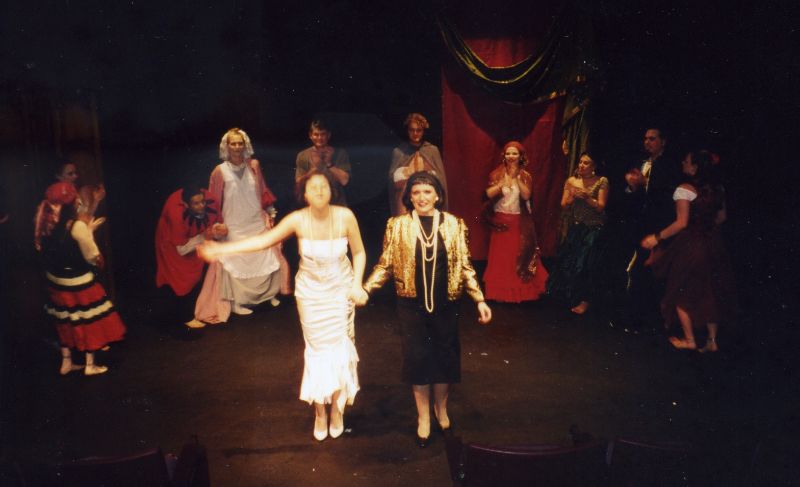
For anyone interested in fashion, Mademoiselle Chanel (1883-1971) stands for French “chic”. “La petite robe noire” (the little black dress)? That’s her. Marilyn Monroe’s “N°5”? That’s her. More than that, she changed the way women dressed and thought of clothes forever. At a time when women were adorned with long, heavy garments, she looked for inspiration in men’s wardrobe for shapes and textures. Her comfortable and loose-fitting clothes scandalized, then seduced “Tout-Paris”. The rest is History.

“With a black pullover and ten rows of pearls she revolutionized fashion” (Christian Dior on Chanel)

CAST

Students: Akasha Banks, Shelley Doggett, Ghida El Hajj Sleiman, Ilana Federman, Meredith Fraser, Christian R. Garner, Paul Mason, Wayo Ramirez, Blake Thomas
Faculty: Lori Belk, Marc Prévost
Friends: Charlette Beillon, Kacy Crowley, Joe Foy

2002 – SPECTACLE DANS UN BISTRO

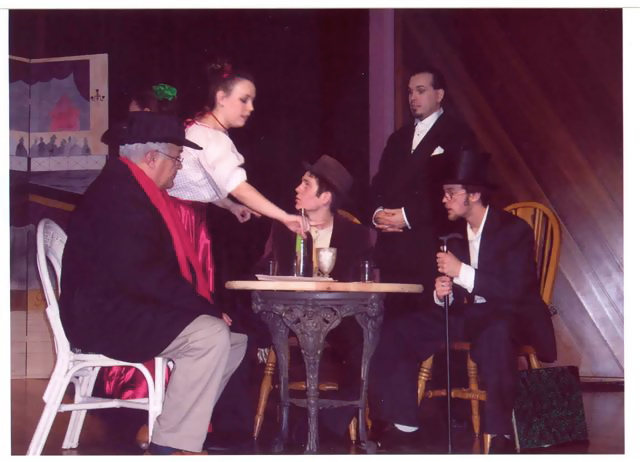
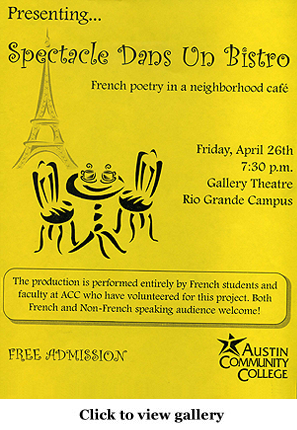
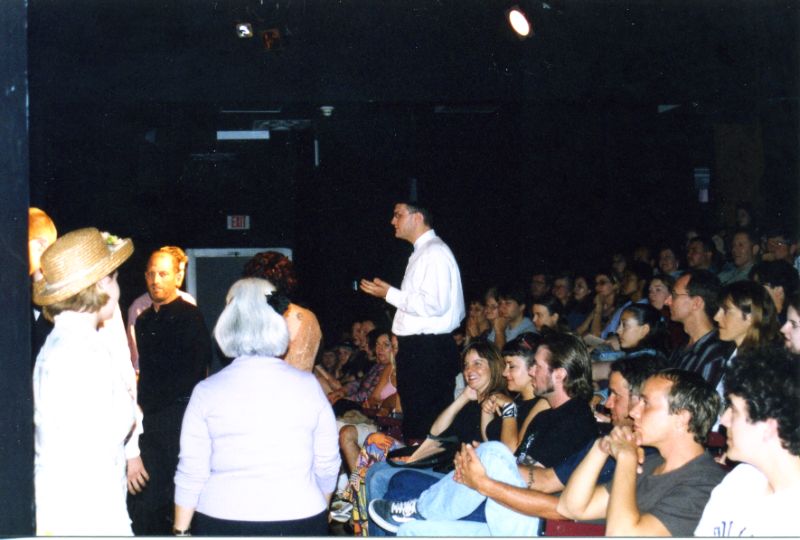
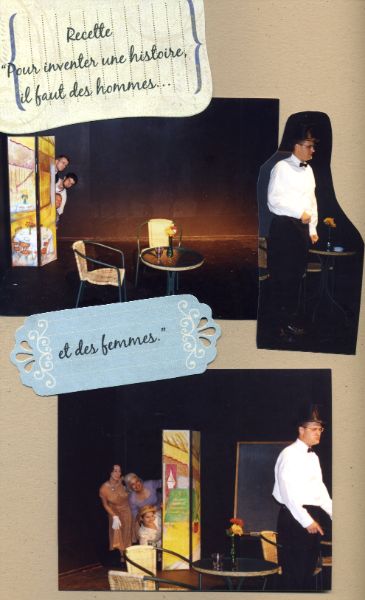
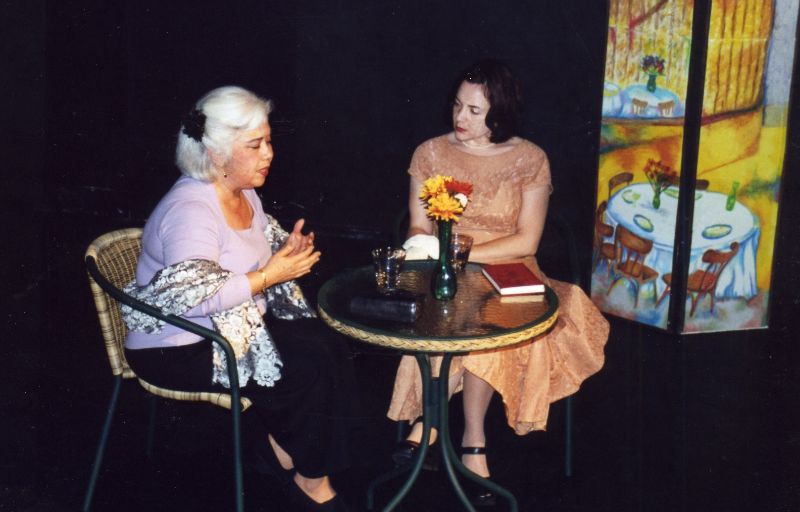
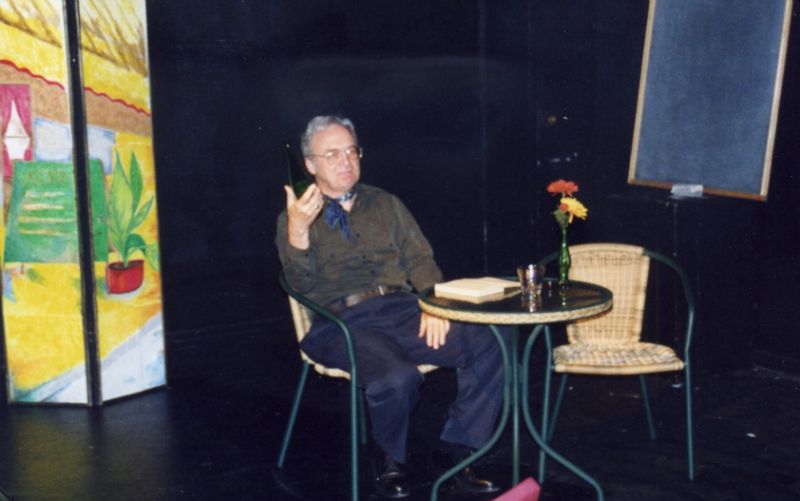
France is often associated with love, poetry, wine, and cafés. So I started out trying to weave together all those elements in an entertaining way that would not be a mere recital of poetry, and that would have some music, if possible. The choice of a bistro (familiar for “café”) for the set of this first Illustre-stage production became obvious pretty early on. Writing the narrative could have been challenging since the pieces of poetry are so different, but the theme of the bistro brought it all together nicely. From a Fernand Raynaud comedy routine (“Les croissants”), in which a customer argues with the waiter, to the rantings of a Baudelairian drunk (“Enivrez-vous”), or the sad complaint of an abandoned woman (Prévert’s “Déjeuner du matin”) and the provocative article of faith of a prostitute (Prévert’s “Je suis comme je suis”), students and professors of the French department, and a few others, came together to deliver a very lively and successful spectacle that staged French poetry in a neighborhood café.

CAST

Students: Brandon Backlund, Akasha Banks, Nathan Brown, Amber Dupuy, Amy Floca, Adam Nichols, Chelsea Thompson, Adrienne Van Tol

Faculty: Lori Belk, Raquel Gavia, Helen Guillory, Michael Hydak, Véronique Mazet, John McMinn, Todd Phillips, Marc Prévost, Charles (Carlos) Rand, Stuart Smith


STUDENTS SPEAK

Half the cast was French faculty (Gavia, Smith, Prévost, McMinn, Phillips, Hydak, Belk, Guillory, Rand) and the other half was made up of French students of French 1 through 4.

Brandon Backlund acts in French spectacles to support his career as a struggling electrical engineer.

Akasha Banks is a French 3 student and is considering a major in French with a minor in theatre. She appeared in “The seven wonders of the world plus one” at the Vortex theatre.

Lori Belk has been an Instructor at ACC since 1993. She has an undergraduate degree in French from UT, but has had so few opportunities for practice that she thought she would enjoy working in this production. And she has!

Nathan Brown is a French 1 student. He has been operating light switches for years and is pleased to move up to the big leagues.

Amber Dupuy is a former ACC student of French.

Amy Floca is a French 3 student who appreciates the language, but has no previous acting history. She hopes this will be not be too apparent in her performance this evening.

Raquel Gavia who teaches French and Spanish at ACC is pleased to be participating in this spectacle français. She thanks the cast and crew and especially Véronique for her perseverance and dedication to this project.

Helen Guillory has taught beginning French at the collegiate level in Austin since 1992.

Michael Hydak is the foreign language coordinator for the Austin Independent School District; he teaches French and Spanish for ACC.

Véronique Mazet studied theatre at the conservatoire d’art dramatique in Lyon, France. She has been teaching French at ACC since the summer of 2001. She wishes to thank all her volunteers who made this possible and in particular her volunteer students who are not getting any course credit for this.

John McMinn has taught French and Spanish at ACC since1985. He has really enjoyed participating with students and colleagues in this production, and he hopes that activities such as this will make more students want to study French and learn about Francophone culture.

Adam Nichols is in French 2.

Todd Phillips is Professor of Spanish and French at ACC. He has always been very interested in French literature and drama and is glad for this opportunity to work with both.

Marc Prévost is a professor of French at ACC. He also taught French for seven years at the University of Texas.

Charles (Carlos) Rand is a current Instructor of Spanish at ACC. He has appeared in local productions of several plays.

Stuart Smith teaches French at the NRG campus. She has been a member of the ACC French faculty since 1981.

Chelsea Thompson is in French 4.

Adrienne Van Tol is a junior in the UT High School Diploma Program, and a French 2 student at ACC.