

By Mueed Badarpura
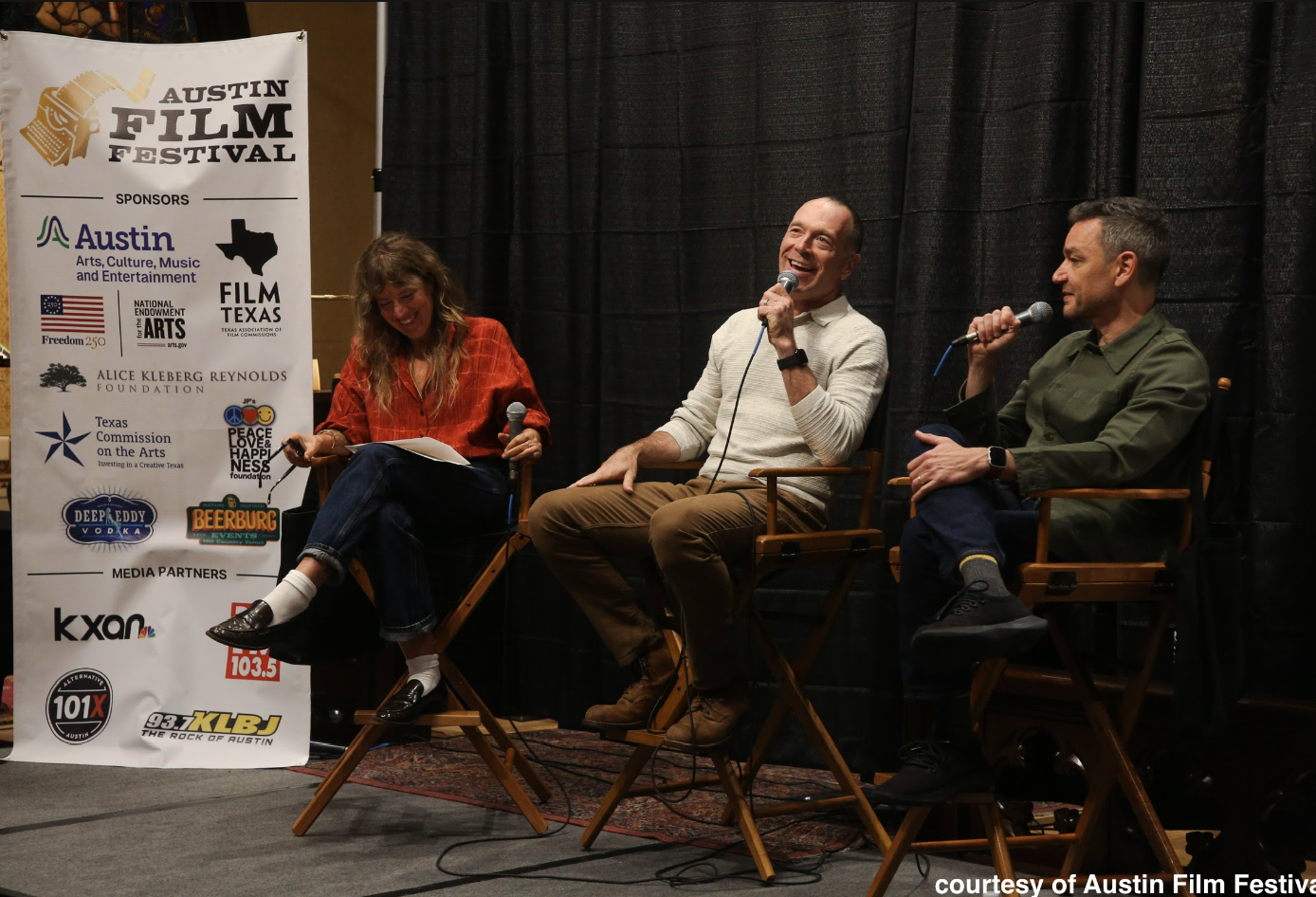
On Oct. 29th, Pixar writer Mike Jones and head of story Jason Katz discussed the making of “Toy Story 5” during a panel at the 33rd annual Austin Film Festival, sharing insights into the studio’s collaborative filmmaking process, character development and the importance of rewriting stories.
Moderated by Megan Alderson, the discussion gave attendees a behind-the-scenes look at how Pixar develops its animated films, from early scripts and storyboards to the final stages of production.
Jones explained that Pixar divided the script into about 25 to 30 sequences. Story artists then turn those sequences into drawings, which are edited together with temporary dialogue to create an early version of the film. The filmmakers watch these versions to identify problems with the story, characters and pacing. Scenes are then rewritten and storyboarded again, sometimes undergoing several changes before reaching their final form.
“We can make a movie over and over and over again,” Jones said, describing how the process allows filmmakers to continuously improve their work.
Katz discussed his responsibilities as head of story, which included overseeing story artists and helping maintain communication between the director, writers and production team. Story artists do more than illustrate a script. They can introduce visual humor, suggest changes to scenes and find ways to communicate emotions through a character’s actions rather than dialogue.
The panelists also explored the development of Jessie in “Toy Story 5.” Katz said her more impulsive personality offered a different take on leadership and responsibility. The filmmakers also considered Jessie’s past and her relationship with Bullseye as they developed her story.
Not every sequence required the same amount of work. Katz explained how some scenes remained largely unchanged from their earliest storyboards, while others underwent significant revisions as filmmakers worked to strengthen the story.
Jones also reflected on writing Pixar’s “Soul,” sharing how his father’s final moments influenced an emotional sequence in the film.
Jones was in San Antonio with his father, who was struggling with dementia, when he began thinking about the small moments people can take for granted. That experience helped shape a scene where the film’s main character, Joe Gardner, begins to appreciate the details of everyday life.
“I think the sequence is about all these wonderful, small moments that maybe we’re taking for granted,” Jones said.
Beyond discussing their work at Pixar, both panelists offered advice to aspiring writers and filmmakers. Jones encouraged writers to remain open to changing their stories, while Katz emphasized the importance of understanding a film’s overall structure. He described how they had a massive whiteboard in their studio space where the team could lay our storyboards, add images and experiment with jokes that might work in particular scenes. Seeing the story arranged visually helped the filmmakers understand its pacing and how much weight each scene carried.
“You can see the weight of the film. You can see that pace of this film,” Katz said.
Throughout the panel, Jones and Katz highlighted how collaboration shapes Pixar’s films. Their experiences showed that bringing an animated story to the screen requires creativity, patience, teamwork and a willingness to keep improving the work.