
By Yvania Frausto
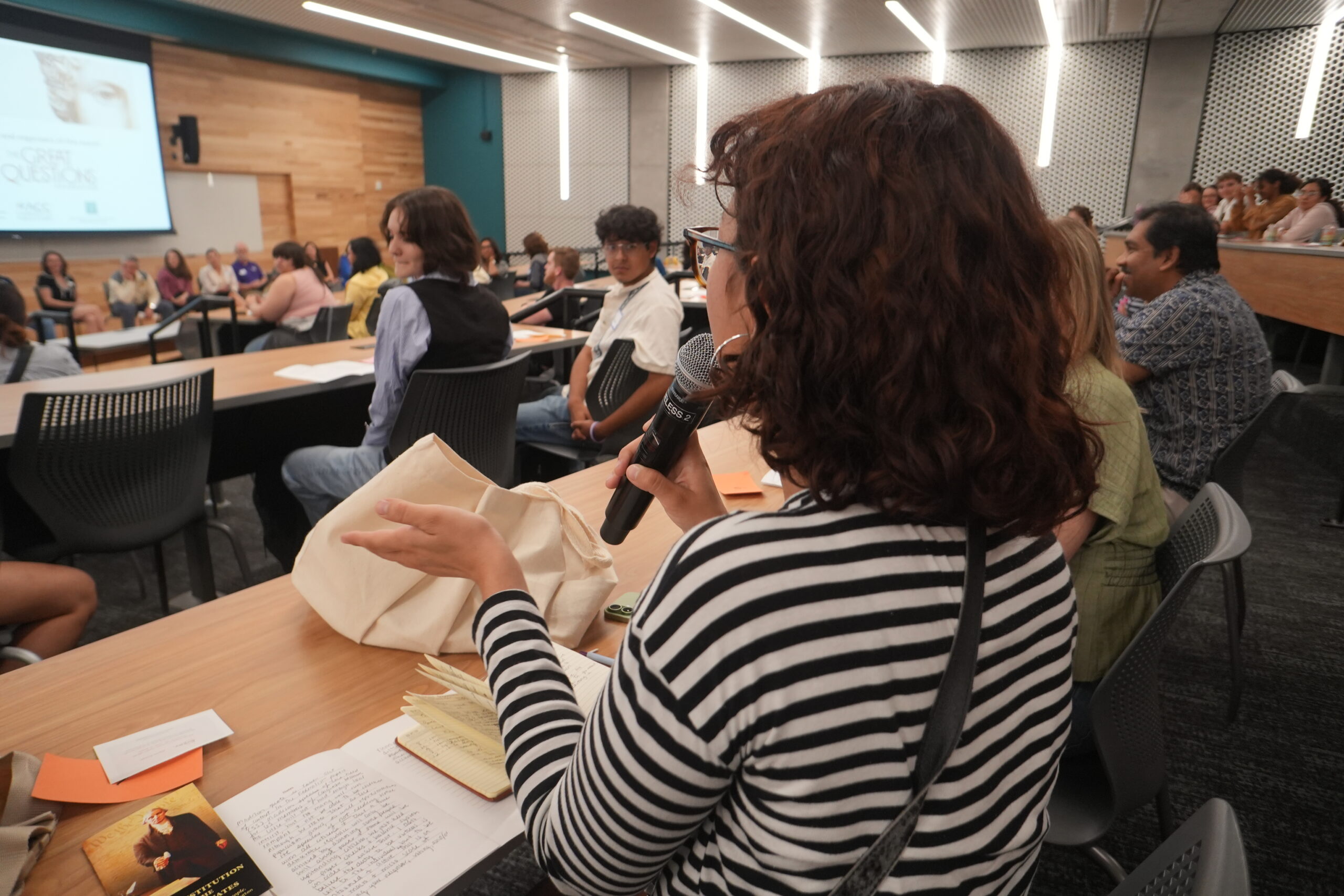
On Tuesday, September 15, the second annual Great Questions Community Seminar took place at ACC’s Highland campus in honor of Constitution Day. Students gathered to connect with community organizations, and exploration of the question What Are My Responsibilities To My Community? Guided by group discussion and local elected officials. This event was organized by the Great Questions Foundation whom aim to transform the community college education experience and have worked with community colleges nationwide on teaching liberal education through core text and discussion-based learning.
The night started strong, with tables of peers, community members, professors, and hungry minds gathering at shared tables to eat tacos and chips provided by the Great Questions Foundation. (The salsa verde paired with the pollo tacos was fantastic!). With full bellies and after talking to our neighbors and relaxing in the common ground of spending our Tuesday night at a completely optional community event, attendees were urged to walk around to one of the dozen community organizations who were informing participants on how to take action in their community. We could join Mia Hodges with MOVE TEXAS, a new organization on campus that provided in-person opportunities to register to vote or sign up for a night of knitting with Lily Jameyson at NICU Knits who has brought people from around the community together to knit and crotchet in order donate safe and handmade blankets to NICU patients in America. At 6:30 we were ushered into the lecture hall to start our seminar.
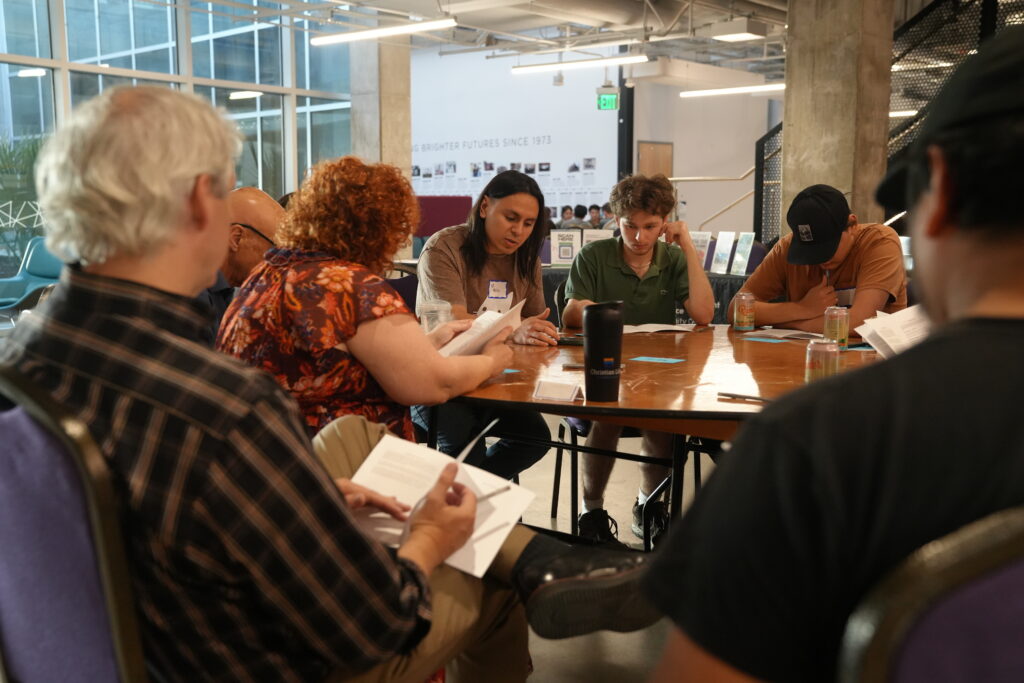
The organizers split us all into groups of about 10 to scatter around the campus at round tables and discuss quotes about civic duty and virtue from many political figures, including James Madison, Molly Ivans, and George W. Bush. Each table had at least one local elected official and a discussion leader to help the group stay on track. The group leader, Diego, an ACC student himself, began with 2 ground rules:
- Everyone participates
- Everyone stays cool
So, all of the participants introduced themselves before being given 6 minutes to contemplate our documents and write a response to one of the 3 discussion questions. At my table alone, we had Leander City Councilman Andrew Naudin, high school students who are in the ACC dual credit program here for extra credit, professors, and retired individuals looking to make a difference in their community. Although political and personal disagreements are notorious for friction, giving the public the explicit opportunity to discuss politics proved that once in the same room and face to face with those of differing opinions individuals seemed to share the explicit common ground of why one cares in the first place.
Before we went through the group and heard everyone’s response one by one, we were asked to withhold comments until every member of the group was able to speak. There was no time limit, no pressure, and no preconceived notion of difference as we sat facing each other, chairs pushed together so everyone could fit at the round table. One of the discussion questions is as following:
Even though most of us are not politicians or community leaders, Molly Ivins writes that we are all “involved, whether you like the picture or not. And if you don’t like it, you really have an obligation to change it.” What makes you feel most powerless to change that picture, and what, if any, opportunities are here today that might help you get involved in something that could help?
The key word that seemed to stick to everyone’s responses here was powerless. Though we all came from extremely diverse backgrounds everyone was able to relate to the overwhelming fear that we are powerless in today’s world. A local community member spoke on his overwhelming fear of finite energy and how there are too many outside sources consuming his limited amount of energy. The group nodded in universal understanding of the privilege of energy. A professor spoke of the sheer magnitude of today’s issues like AI or mega corporations and the ineptitude of the individual to face those outside factors. As we went around, the shared knowledge of struggle and rise in empathy of the group gained momentum.
Sitting down with teenagers, professors, and city officials, we were equals. Able to meet and speak face-to-face, we were confronted with the reality of our issues. Disconnected from the push of daily hate-hype we were able to confront the question What Are My Responsibilities To My Community?
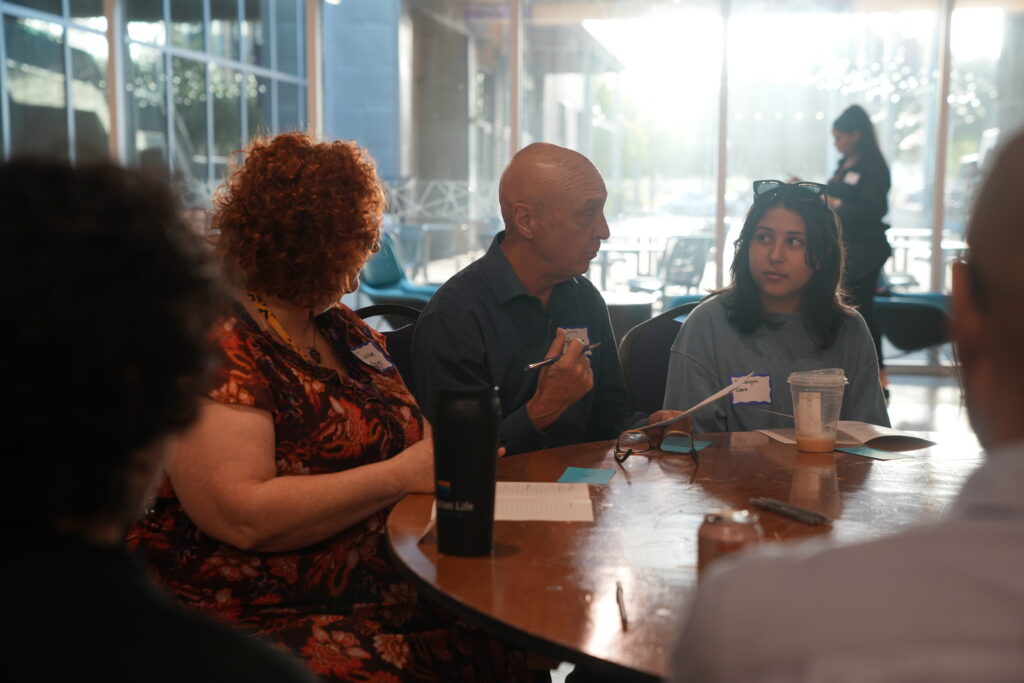
From expressing dissatisfaction with macro issues in our government and way of life we were able to focus on the microcosm that effects the larger issues and make plans to act. Discussion on voting, helping your neighbor, exercising empathy, and confronting differing opinions with curiosity regained a sense of autonomy in every individual in my group. This discussion gave us back the power we were originally questioning and were forced to accept after also accepting that the responsibility to our community lies within us all.
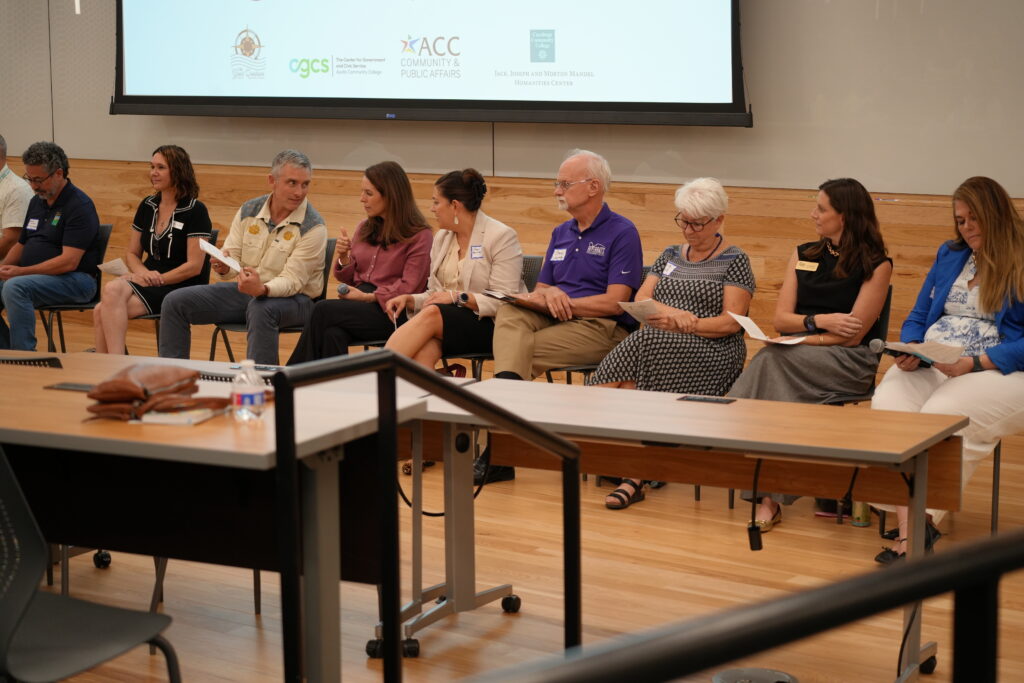
Following this discussion, we were reassembled in the main lecture hall where the elected officials spoke of what they learned that night in a panel that was open for Q&A. Many spoke of the organization of action and a regained trust in this country and our future. Discussions enclosed the idea of realigning our goals by remembering our goals are aligned, and it is our course of action that differs.
“We must all hang together, or assuredly we shall all hang separately”, a quote from Benjamin Franklin included in our literature to draw from this event, rings truer today than before this opportunity for discussion. This seminar gave many their pride and sense of community back in the form of a united front towards inaction.
Grounding, refreshing, and insightful, this seminar is an event I hope to return to in the coming years.