
By Myles Lopez-Cepero
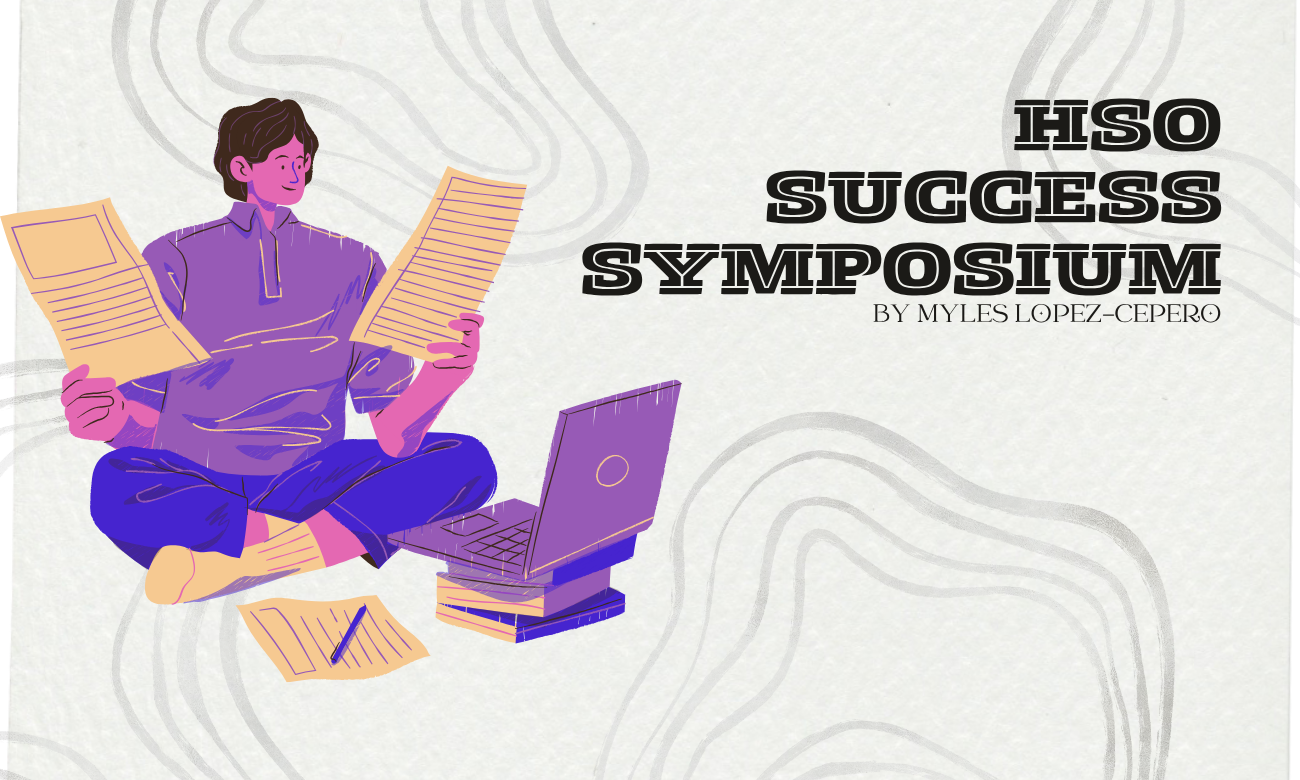
On Tuesday, Sept. 25, the Honors Student Organization held its first symposium of the year. The event was hosted by the organization’s advisor, Jana McCarthy, and attended by both long-time honors students and newcomers alike.
Students were guided through a rediscovery of what it actually means to be successful. McCarthy challenged students to expand their understanding of success beyond their titles and transcripts and into a deeper purpose of self.
“It’s an opportunity for… high achieving students to really take a step back… and say ‘Okay, what am I really doing all this for?’” McCarthy says.
After a brief introduction, McCarthy turned the audience’s attention to their own definitions of success. She said that the key to success is to balance all components of our life. People feel more successful when they are happy and achieve balance between their classes, extracurriculars, family, hobbies, and social lives.
“Success isn’t just about being a good student or a good organization officer, it’s about being a good partner, a good friend, about being a good party member of your DND group,” one student reflected.
“The very first time I did this symposium, it was primarily student leaders that showed up,” McCarthy said. “I had a couple of those students come to me and say ‘I didn’t even think about the fact that I also wanna be a good partner. That’s also part of my success. I also wanna be a good dad once I’m a dad.’”
This reflection points at a hard truth about student achievement; students often overwhelm themselves with their efforts towards achievement. Consequently, it can be easy to neglect our relationships, health, hobbies, and lives outside of our achievements.
McCarthy, an Honors graduate of Lonestar College and the University of Houston, has made a career out of mentoring and coaching high-achieving students. She knows firsthand how quickly such students can often overwhelm themselves with opportunities. It is often assumed that Honors students require less support than their peers because of their achievements and high grades. However, McCarthy and many higher education professionals think otherwise.
“That is a false impression.” “The research shows that [Honors students] tend to be really good at managing and juggling a lot of things, but that doesn’t mean that they are okay.”
The Honors Success Symposium was interactive as much as it was informative. McCarthy rotated between letting students workshop their personal definitions of success and sharing insights from a survey she had collected from high achieving students in her network.
Every time McCarthy shared questions and results, the students were given an opportunity to workshop their definitions of success. Over the course of 90 minutes, students wrote, talked, and kept hammering away until they came away with the most helpful and personal definition of success they could engineer.
The symposium ended with a list of ACC student success resources, with a particular emphasis on academic coaching.
“Academic coaching is the core of success for high achieving students.” she says. “We have to get rid of the stigma of somebody saying ‘If you’re struggling, you need to come here’ and instead say ‘If you come here, you will be successful.’”
Before the symposium ended, one student asked McCarthy “What is your biggest piece of advice to students at ACC?”
She replied, “This is your time. Find something that connects you to the school. Make it meaningful.”