by Christopher Rzigalinski, Community Correspondent, in conversation with Sonya Rendon-Rangel, Campus Coordinator, Elgin Campus
Every Austin Community College campus has a special purpose. Sonya Rendon-Rangel, the Coordinator of Elgin Campus, is not only the campus’ biggest advocate, she also embodies its unique approach to purpose and belonging. Sonya lives and breathes collaboration, love, and community.
My original intent was to write a history of Elgin, including both the town and the ACC campus. This piece was to be the latest in a series of campus profiles, complementing those I wrote in previous issues of A Collaborative Culture about Riverside and Northridge. However, my Zoom conversation with Sonya on September 17th outshined any wordsmithing I could have accomplished. In fact, my conversation with Sonya was so profound that I decided editing it in any way would be a disservice to her, the trusting relationship we built, and the beloved community of Elgin she serves.
CHRIS: Okay, the recording is in progress. Let’s begin with your name and title.
SONYA: I am Sonya Rendon-Rangel, Campus Coordinator of Austin Community College’s Elgin Campus. But I think we all have a lot of roles at ACC, right?
CHRIS: And sometimes, unless we’re intimately acquainted with what those roles do on a daily basis, maybe we don’t fully understand them. So what does campus coordinator really mean on a day to day basis within the context of not only ACC, but specifically at Elgin?
SONYA: Strategically, we are in charge of the facilities’ well-being. That’s the way I like to think about it. We get to know our buildings on a very personal basis so that we know when something is automatically wrong. I know that sounds strange, but you get to know your buildings. I have known this building since it first opened [in 2013]. We’ve had a relationship for 12-13 years. You experience growing pains together, the building gets older with you.
You walk in Building 1000 and you want to provide a safe place for the students. You want to make sure they’re comfortable at all times. You want to make sure there’s nothing that’s going to hurt anyone or make anybody uncomfortable. You want it to look clean and bright and welcoming at all times. You walk into your building[s] in the morning and you’re able to automatically gauge: “Wait a minute, the temperature feels different. There must be something going on with our chillers, our boilers or something like that.” My building is 13 years old and now it’s going through some really big growing pains. We started off with 196 students in 2013. Now we’re close to almost 850 students that are here on a daily basis.
Monday through Thursday they’re not going in and out, the majority stay here for 5-6 hours or more. They’re spending time with us all day in shifts. So that takes a lot of energy, that takes a lot of electricity. It takes a lot of wear and tear on the building.
Also, you just get really familiar as a campus coordinator, a campus manager, with not just the building but the inhabitants, the special people that are in the building. There are so few people that have been here since 2013. But as they come, you grow new relationships with them, right? They are part of your building, your community. They inhabit your offices. They make themselves comfortable here. They make themselves at home. You want them to have a beautiful home so you work in collaboration with all departments in Facilities Management to maintain that home.
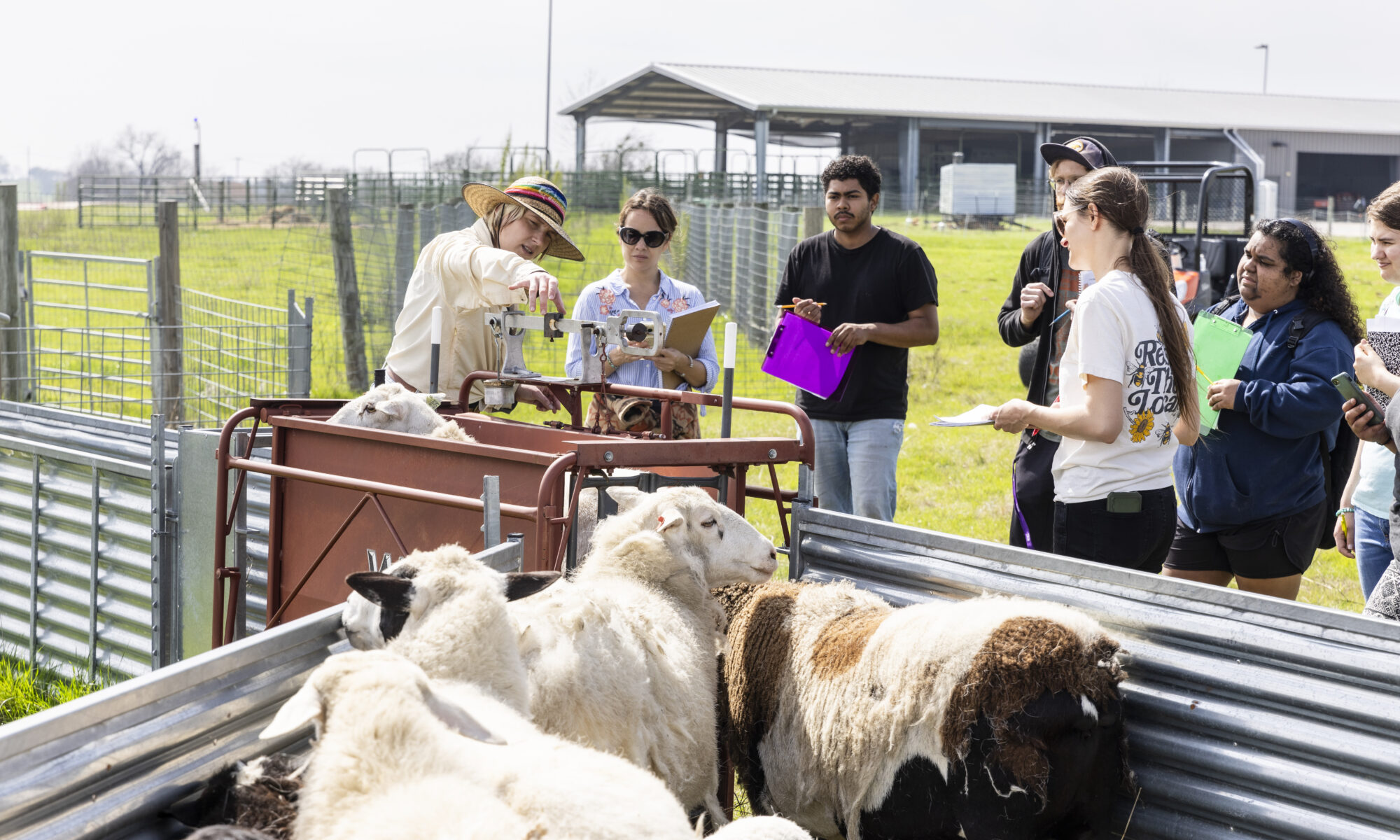
That also includes the grounds surrounding the campus buildings; we have a campus garden that has been sustained through Covid and departmental changes that included almost every campus discontinuing their campus gardens. Hunter Eichman, faculty member in Agricultural Sciences, decided he was going to sustain the garden for his class and it’s so beautiful. It’s just something you walk by every day.
Another part of our unique atmosphere is our Veterinary Technology students walking the dogs on our campus. Our semester Welcome Packet even has instructions for dogs each Semester. We love having adjunct faculty here and you’re going to see dogs walking around. So we ask that anyone not approach the dogs unless the handler says it’s okay. Because we see dogs outside our window walking by and you automatically say “I have to have one.” There are so many dogs! It’s ridiculous. Right? You can adopt the dogs but you have to be reasonable, you want to adopt them all but you can’t. There are also cats. Everyone wants to visit the animals.
I mean, there’s just so many unique things about being a campus coordinator or manager here at Elgin, but it’s basically safety, facilities, maintenance and upkeep, new projects, events, and just supporting everybody and everyone in the building, students, faculty and staff. That’s the short of it.
Animals Available for Adoption During the Spring 2026 Semester through the Vet Tech Program (Learn more here)


CHRIS: So 2013, that is when Elgin Campus opened to the public?
SONYA: Right. I was hired as an Administrative Assistant to the Campus Manager here who was [Elizabeth] Betsy Erwin.
CHRIS: And so what are your memories of the announcement that the campus would be opening? I’m very fascinated with this because when I was researching the history of Riverside, for example, the idea of having a campus in that space was very powerful for the Montopolis community.
And then Northridge comes about at a time where Austin is rapidly expanding north and the definitions of what community meant were rapidly changing. Our Asian American community members moved into that area and the demographic rapidly changed. So when you reflect now on Elgin Campus’ opening, what really stands out to you?
SONYA: I think that it was alien in some parts, like what was it going to be? The excitement was there! I’ve been here for 21 years. My husband is a native of Elgin. So, let me describe the area. People mistake Elgin for only what’s on highway 290, where we have our big box businesses like HEB and Wal-Mart.
That’s not all of it, Elgin is a Main Street town. It’s beautiful. It has a main street with little mom and pop shops, restaurants. We have unique festivals. We have Hogeye. A huge festival with a pig for a mascot. We’ve got Western Days. We are known for our barbeque, we are the home of Southside Barbeque and Myers Barbeque. We have a very close knit community. I just attended, in July, a celebration with my husband that was called the Jubilee, where all the graduated high school classes, from forever ago, all joined and reunited. And it was amazing, Chris. I mean, all these people who they knew from as far back as 1940 were there!
I got to know people really quickly here even if I was a transplant. I was raised in San Antonio, lived in Montana, moved to Austin and then from Austin to Elgin. I had a job with a corporation for about 12 years in Austin and I was going to transfer back to San Antonio, but I did not and I decided to stay in this area and buy a house. People from California were coming in hot and all the rents were going up in my area. I couldn’t find a reasonably priced house in Round Rock, Pflugerville, or Georgetown, so the realtor showed me places in Kyle, and then we went to Manor and lastly Elgin. I didn’t want to be in Manor, it was too close to Austin. I wanted something different.
So, I went towards Main Street in Elgin and there was a Catholic church, right over on Central Avenue. It was a really old building. It was beautiful, and then I went on Main Street and there were these majestic older homes. The small town vibe hit me hard and there were all these old buildings downtown, and I sat there on the steps and I was like, “oh my goodness, I feel this place, this is where I want to be.” I moved into my new home in August. I met my future husband in January. I thought I was determined to stay single but we dated for two years and got married and settled here.
I absolutely adore my husband. I was never able to have a child, because of a health issue. We had the opportunity to foster a child that I recognized immediately as my son because my heart literally connected to him when I met him. His name is Lyndon. He came into our home when he was five years old and adopted him on my birthday when he was seven years old. We thought we were going to be that older couple that found each other later in life and that we’d go to Colorado or go to New Mexico on vacations and just be that couple. But then we had a five year old in our life.
So, I had to make adjustments in my work schedule, since my prior job had me traveling all over the place. I applied and got a job at the City of Elgin and got to know all the people that run the city. The movers and shakers. It was amazing.
Then this talk comes in about ACC coming and the excitement follows. We don’t even have anything but one story buildings that were actually utilized in the city of Elgin. So it’s like we’re actually getting a college campus here, in the city of Elgin! ACC! They had the registration trucks here, Elginites were registering for classes. I remember voting on it, seeing the building progress from the highway. The excitement was just crazy.
I’ve always been in the Finance and HR fields. I was employed in the Finance and HR department at the City of Elgin and I heard about the Administrative Assistant III job here at ACC Elgin.
Somebody said, “Well, if you’re interested, I know you probably aren’t, but there’s an admin job out there.” I applied for it because the holidays you get here are great and now I’ve got this child so we can match our holidays and spend quality time together. So four years into the city of Elgin, I told my boss I was going to apply for the ACC job, and I applied in January.
I heard nothing for a while. I thought, “okay, well, that was a try.” Then in May, I got a call from Austin Community College asking me if I wanted to interview. The first week of May, they offered me the job, the second week of May, I was here. So it was like it happened literally almost overnight. I was here for the Open House/Resource Fair for Building 1000 and the Grand Openings of both buildings. I remember all the excitement. During the Open House, it was so exciting to see my neighbors and friends at ACC. I even invited my parents and they took the trip from San Antonio. They spent the whole time touring the campus with my son and husband. I remember being exhausted after that day, and I went to HEB for something. I was so surprised to see the HEB employees all wearing ACC shirts. It was so overwhelming and I was just so happy to be part of ACC!
We just got so much feedback and support from the community. David Glass [Bastrop County Commissioner of Precinct 4 and ACC Elgin Advisory Board President], Doc Graham [Elgin Veterinary Hospital and Southwest Stallion Station ACC Elgin Advisory Board] bless his heart and may he rest in peace, were on the advisory committee that came over here to add to the campus. Just all the people in the community that really are important people, not because of their titles or what they do but because of who they are and the love that they pour into the community and right here on this campus.
I spoke with Byron [Mitchell, Elgin ISD School Board President] the other day. Hwas the Elgin I.S.D. School Board President when we opened. I said to him,“You’re still the school board president, part of our population; 200+ students are here every day from Elgin High School, get over here! Do some kind of retreat with your school board so that you can see the results of all your hard work!”
There are some things that we had to work through, like how all of a sudden our population turned into predominantly early college high school. But for the most part, I will tell you, they just love having this three story campus building in the city of Elgin.

All of a sudden our population turned into predominantly early college high school.
CHRIS: That’s amazing. You know, it’s theirs. It belongs to them. When you mentioned the advisory board specifically, what were some of the key elements that the community was arguing for when thinking about the identity of this campus within Elgin? What were the things the advisory board wanted to see ACC contribute to the city of Elgin?
SONYA: Veterinary technology, because, you know, Doc Graham owns the stallion place or he owned the stallion place out here. His family owns it now. So, we definitely had to have Veterinary Technology. Then, Agricultural Science, that was another push. If you were born into a farming family, then you’re going to know how to farm, right? But this new generation that was leaving home and doing this other business would now have the opportunity to grow their family’s business by staying right here in town. So ACC wanted to give them that chance by getting an education here in Agricultural Sciences.
During and after Covid the population just boomed here, especially considering the gentrification in East Austin. Everybody wanted to have an acre and start growing their own fruits and vegetables. It was a time of regrowth for people. They were changing jobs. It was so fascinating that so many people came from all these urban settings and because of the pandemic, they were like,” I’m going to make my own bread. I need eggs to make the bread so now I’m going to, you know, get chickens to lay eggs. I’m going to learn how to maintain a garden, sustain gardens. Now I’m going to make a living doing it, chickens or crops or whatever.”, And it stuck. Farmer’s markets boomed. So, yes the main and logical pushes for programs here were Veterinary Technology and Sustainable Agriculture. They also wanted a place where students could take all their academic core classes. At that time, Early College High School wasn’t yet a glimmer. That came later.
They also wanted and still want evening classes, Adult Ed, and academic core classes for people that couldn’t go to college during the day. So, the first four years, we had a very robust evening program, then Early College High School students came in and they were a pretty small group, maybe 200 or 300 the first years. Then they started growing the next semester and we’re at 500. Then the next year we’re at 600, and then Covid happens and everything goes down and then it explodes back. I think Early College High School got so big here that it got too big without explanation to the local part of the population here in the city of Elgin. So people that were coming in from our community were saying, “I don’t want to go to that school. It’s just got kids in it. They walk in here and they’re like, “Oh, no. I’d rather not.” Until we started explaining how the program became so much of who we are, how it’s not just Elgin I.S.D. How it’s three districts, how the program is run, the benefits, what it brings to the community, how it helps our community grow by allowing students to learn here and work here, how we are fulfilling the promise of giving them the college experience.
When I became Campus Coordinator in 2021, and because I had seen the population of traditional students in the past, I wanted to grow the traditional student population within our capacity without affecting or losing any of our early college high school participants. We were at 2% in 2021, and with the help of our academic advising team, we are at 36% right now. So you’re going with those stats, you’re going to have at least one participant that’s traditional out of a few. And it gives a different air in the classroom for the ECHS students, they want to impress those traditional students.
And I’ve noticed that traditional students embrace the high school students by reaching out to them. So, we’re seeing that we’re close to 900 in enrollment now. We’ve been teeter-tottering and getting lower and higher, but our capacity is 1,200. And I think that pretty soon we’re going to run out of classroom space completely. So, now we’re concentrating on a third thing that we promised the community when this campus came into being. They wanted a welding program.
This new building that’s coming up and probably won’t break ground until 2026 or 2027—that is going to be the continuing education and welding building. The fourth thing the community asked for, which we haven’t managed to get together yet, is the automotive program.
CHRIS: Like what we have at Riverside and Round Rock?
SONYA: Yes.
CHRIS: The overview that you just gave is also really powerful because in a lot of ways it gives us the story of Elgin’s history. I know you’re still focusing on traditional students and agricultural sciences. But this transition into the new generation of early college high school students and their unique needs, where did that come from? Why do you think there was an astronomical rise out of nowhere?
SONYA: Well, it changed quickly because the opportunity was given to us ten years ago. We didn’t know what this program really was. We didn’t know anything about how early college high school would affect the students. I remember Shasta [Buchanan, ACC Vice Chancellor of Student Affairs] coming in here and fighting for early college high school. Elgin Campus was the pioneer of that initiative. Our goal is treating them like traditional students. I think that the Elgin Campus is very unique in the fact that our students aren’t isolated.
They’re not assigned a floor to themselves. They are literally just part of everything here. You walk in and they’re just students everywhere! They’re in the Commons. They’re on the second floor. They’re on the sofas. Wherever. I think the opportunity to bring other communities into the ACC District is made more desirable with the prospect of the Early College High School program.
We just had Elgin high school students at first. Then it was Bastrop and Manor. Logistics were the main conversation. What’s more beneficial for those students? Is it more beneficial for them to go down to Highway 290 to the Highland Campus, or can we welcome them right here in Elgin? Manor chose Elgin. CRCA Bastrop did the same. ACC reached out to these high schools in the area, and it seemed like overnight we watched this campus grow. They just filled our building up and that was it, you know? Literally, from one semester to the next.
CHRIS: It’s interesting to look at Elgin as a microcosm, not only for the area and its change over time, but also in terms of the Greater Austin Area as a whole.
SONYA: Elgin Campus is this whole area. You see Pflugerville and Round Rock and you see Austin from here. Everything is melding into the city of Austin. Pflugerville is not too far from here, and it’s getting closer the more they build out the highways. I call the space between Manor and Elgin, “Melgin.” We’re just sort of melting all into each other. There’s a lot of growth, literally the housing growth has exploded within the last eight years. That’s going to bring more questions, like about how we are going to extend this highway. 290 absolutely has to grow.
There’s other questions with transportation, too, that we talk about every day here. We have to support growth in a reasonable way as citizens, bringing more transportation and what we can for the students of the Elgin Campus. I live in Elgin, and I literally have seen students walk from Manor to our campus in Elgin because there is no viable transportation out here. I’ve seen this as recently as three months ago. The students that live out here are in a demographic where they can’t always afford cars. Both parents are working or they’re single moms or single dads and they’re trying to raise a family. They’re using that car for transportation to and from work. And they’re just trying to make it.
If you’re part of the community that’s providing for the college, then you’re forever tied to supporting initiatives that will bring students relief so that they can get that education. It’s not just here in these walls. It’s outside in the community advocating for things constantly so that your students are supported. Because whether they live in Elgin, Manor, or Bastrop, they’re the same here in this community. They need to get here, they need to get out of here safely each day and they need to have that sense of relief that it’s going to be provided for them. So it’s a never-ending fight. It doesn’t end at 5:00pm. It just keeps going.
CHRIS: You said something that really stuck with me. You mentioned the connection to citizenship and this idea of active participation in the kind of overall citizenry, including the way we show up for each other and for our students. How do you feel the rest of us in the community can specifically show up for Elgin and its students to help with these very issues that you’re talking about?
SONYA: Well, even if you’re not a person that lives in any of these communities, there’s going to be civic meetings held about extensions to the toll road. You ask yourself: Is that a good idea for our students? Coming all the way from home on a toll road? Have you ever been caught in Manor traffic? It’s horrible. Let’s talk about that. Let’s talk more about shuttles for Austin Community College students and employees at town halls. Let’s talk about the rural communities that better transportation is going to benefit. At city council meetings, board meetings, let’s get those topics on the agenda.
Another issue here is we need more food places around campus. This is something I’ve been advocating. If you come to our campus, all the food places are further down the highway. It would be great to have food trucks come up here. We got a basic permit to have food trucks during Welcome Week, but that was a special occasion. Why not all the time? I have 832 students. They’re here from 8:30am to 4:00pm. They have no place to eat. We have a great food pantry. Ms. Geneva [EGN Student Life Coordinator] is great at getting food donations for our student life lounge. But what if students want to buy something different? They can’t get a hot meal anywhere. So, the community needs to come together and collaborate on solutions.
I’m currently meeting with city officials and local vendors. We’re going to work with the city closely. In our next meeting, I’m hoping to provide some kind of continuity plan to make hot meals available for students. Opponents step in and say, “You can just go to the Chick-Fil-A across the street.” Well, we don’t have that. Don’t put us in that bubble because we’re different out here. We love that we’re unique in that we have this opportunity. That’s how everyone can help. Just realize that every campus has unique needs.
CHRIS: You’re so right that oftentimes we tend to think of our campuses at this sort of homogenized entity. We don’t always take that step back to ask what each campus needs in the larger narrative of ACC. I’ve been thinking of this exact concept in the context of Service-Learning and the projects we do on particular campuses. They might look similar but they’re always going to be different based on the unique needs of the communities in each of those campus areas, faculty interests, student success measures, etc. That balance becomes leaning into those specificities, while at the same time having something that feels cohesive around you. And I admire you so much because, from a leadership perspective, you saw a need, you went for it and you made it happen. Where does that commitment come from inside of your soul?
SONYA: In answering that, I have to start with a story…
PART TWO
CHRIS: The overview that you just gave is also powerful because I think, in a lot of ways, it gives us the story of Elgin’s history. I know you’re still focusing on traditional students and agricultural sciences. But where did this transition into the new generation of early college high school students and their unique needs come from? Why do you think there was an astronomical rise out of nowhere?
SONYA: Well, it changed quickly because the opportunity was given ten years ago. We didn’t know what this program really was. We didn’t know how early college high school would affect students. I remember Shasta [Buchanan, ACC Vice Chancellor of Student Affairs] coming in here and fighting for early college high school. Elgin Campus was the pioneer of that initiative, making them feel like traditional students. I think that the Elgin Campus is unique in the fact that our students aren’t in barracks, dorms, or portable buildings. They’re not assigned a floor to themselves. They are literally just part of everything here. You walk in, and they’re just students everywhere; in the Commons, on the second floor, on the sofas. Wherever. I think the opportunity to bring other areas into the Greater ACC District, like Bastrop, for example, was made possible by Elgin’s early college high school project.
We just had Elgin High School students at first. Then it was like, “Okay, let’s reach out to the surrounding communities like Manor. What’s more beneficial for them? Is it more beneficial for them to go down to 290 to the Highland Campus, or can we welcome them right here to Elgin?”
The community chose Elgin. Then Bastrop did the same. ACC reached out to all these high schools in the area, and it seemed like, overnight, we watched this campus grow. They just filled our building up. And that was it, overnight, literally, one semester to the next.
CHRIS: It’s interesting to look at Elgin as a microcosm, not only of the whole area and its changes over time, but also of the Greater Austin Area.
SONYA: Elgin Campus is this whole area. You see Pflugerville and Round Rock, and you see Austin. It’s just Austin turning. Everything is melding into the city of Austin. Pflugerville is not too far from here, and it’s getting closer the more they build out the highways. I call the space between Manor and Elgin “Melgin.” I mean, it’s like we’re just sort of melting into each other. There are a lot of things, such as housing that has exploded within the last eight years, that are going to bring more questions about how we are going to work this freeway. Highway 290 absolutely has to grow.
There are other questions with transportation, too, that we talk about every day here. We have to support growth in a reasonable way as citizens, bringing more transportation and what we can for the students of Elgin. You see what I’m saying? I live in Elgin, and I have literally seen students walk from Manor to our campus because there is no viable transportation out here. And the students who live out here are in a demographic where they can’t always afford cars. Both parents are working, or they’re single moms or single dads, and they’re trying to raise a family. They’re using that car for transportation to and from work. And they’re just trying to make it.
If you’re part of the community that’s providing the college, then you’re forever tied to supporting initiatives that will bring students relief so that they can get that education. It’s not just here in these walls. It’s outside in the community, advocating for things constantly, so that your students are supported. Because whether they live in Elgin, Manor, or Bastrop, they’re the same here in this community. They need to get here and get out of here safely each day. And they need to have that sense of relief that it’s going to be provided for them. So, it’s a never-ending fight. It doesn’t end at 5:00 pm. It just keeps going.
CHRIS: You said something that really stuck with me. You mentioned the connection to citizenship and the idea of active participation in the overall citizenry, including the way we show up for each other and specifically for our students. How do you feel the rest of us in the community can show up for Elgin and its students to help with these very issues that you’re talking about?
SONYA: Well, even if you’re not a person that lives in any of these communities, there’s going to be some meetings held in our communities about extensions to the toll road. Is that a good idea for our students? Coming all the way from home. Have you ever been caught in Manor traffic? It’s horrible. Let’s talk about that. Let’s talk more about shuttles for Austin Community College students and employees at town talks. Let’s talk about the rural communities that are going to benefit from the city council meetings in Round Rock and Austin. Let’s get this topic on the agendas.
Another issue is more food places around campus. This is something I’ve been advocating. If you come to our campus, all the food places are further down the highway. It would be great to have food trucks come up here. We got a basic permit to have food trucks during Welcome Week, but that was a special occasion. Why not all the time? I have 832 students. They’re here from 8:30 am to 4:00 pm. They have no place to eat. I have a great food pantry. Ms. Geneva is great at getting food donations for our student life lounge. But what if students want to buy something different? They can’t get a hot meal anywhere. So, the community needs to come together and collaborate on solutions.
I’m currently meeting with city officials. We’re going to work closely with the city. In our next meeting, I’m hoping to provide some kind of continuity plan to make hot meals available for students. Opponents step in and say, “You can just go to the Chick-Fil-A across the street.” Well, we don’t have that. Don’t put us in that bubble because we’re different out here. We love that we’re unique in that we have this opportunity. That’s how everyone can help. Just realize that every campus is unique and that we have unique needs.
CHRIS: You’re so right that oftentimes we think of our campuses as this sort of homogenized entity. We don’t always take that step back to ask what each campus needs in the larger narrative of ACC. I’ve been thinking of this exact concept in the context of Service-Learning and the projects we do on particular campuses. They might look similar, but they’re always going to be different based on the unique needs of the communities in each of those campus areas, faculty interests, student success measures, etc. That balance becomes leaning into those specificities, while at the same time having something that feels cohesive around you. And I admire you so much because, from a leadership perspective, you saw a need, you went for it, and you made it happen. Where does that come from for you?
SONYA: In answering that, I have to start with a story. My parents are very strong leaders. My mom is a strong Latina woman. And my dad is a double retiree from the U.S. Air Force and the SAPD [San Antonio Police Department]. So, there were no excuses for sticking our necks out and helping others. That’s just the way I was raised. I always wanted to do jobs that helped people and made a difference. As a whole, I love getting out there and making a difference. The more you do that, the easier it becomes – the humility that comes from knowing life can change at any given moment propels you to do good things. My mom is the type that will jump out of a plane to skydive without ever thinking twice. For most of my career, that’s how I’ve operated, especially when it comes to the opportunity to watch my students bloom.
CHRIS: So, it sounds like, from the very beginning of your work at ACC, you saw yourself and your office as woven into the student experience.
SONYA: It’s a privilege to see the students rise to completion, you know? It’s like, “Wow, I’m so excited that my office can be part of that experience.” They allowed us onto their pathway of success. That humbles me, the idea that students welcome me into their lives.
CHRIS: There’s a mindfulness in being able to see that privilege. We move so fast in life that we don’t take the time to see the circumstances of our privileges, but you and your team are pouring out so much love by being mindful and helping your students grow that it becomes a defining aspect of the Elgin community experience.
SONYA: And it’s our entire team at this campus. Our librarians, our dean of students, Ms. Geneva in Student Life, our early college high school program team – it’s a collaboration every single day.
CHRIS: You’re reminding me of yoga philosophy, specifically the idea that we are all equal parts in a cosmic machine. Every part is equal in value, and every part depends on the others so that the universe runs smoothly.
SONYA: It’s true. When someone is missing, we check up on each other to make sure everyone is okay. There’s always communication.
CHRIS: It sounds like you and your team are also very keen to protect one another.
SONYA: We try to communicate before information becomes widely available. It’s like, “Hey, you’re going to hear this or that, but here’s the story. Don’t be concerned, just come over to my office, and we can talk. We’re here for you.”
CHRIS: How does that culture of caring translate into everyday practice?
SONYA: Earlier, I mentioned how Ms. Geneva does such great work in getting us donations for the food pantry. But it’s hard work. Ms. Geneva started going out to local businesses to ask if we could share the leftover food with the students. The first thing my team asked was, “How can we help Geneva? What works in helping local businesses see the value in donating? What foods will the students like? What is it that Geneva needs to be successful?” That illustrates how no one is alone when working on projects at the Elgin Campus.
CHRIS: I’m curious how that character you’re describing translates to the campus farm. What I mean is, in these trying times when we hear about food insecurity, tariffs, environmental crisis, and a host of issues impacting the future of farming, how does that culture of caring translate to the Agricultural Sciences program, which is such a huge part of Elgin?
SONYA: It’s a complicated topic. It starts with being welcoming. Our high school students have very strict schedules, for example. But we encourage them to walk around the farm during their breaks. We also encourage them to think about taking agricultural science classes. Matt [Olson], our farm manager, and Savannah [Rugg], our Agricultural Sciences Department Chair, do such a great job of welcoming everyone with an interest in the farm.
CHRIS: Have you seen development?
SONYA: One student in particular – a student with no farming experience and no initial interest in farming – decided to come here after their high school experience to study agriculture. I truly believe it’s because we planted those seeds with them. Matt sets up the farmer’s market every Tuesday, so students get to see what the farm produces. It’s exciting for them to stand in line, ask questions, and have the chance to buy fresh produce. Once, I even heard a student on the phone with their mom giving her a list of items they could bring home for dinner.
CHRIS: It all begins with an open heart and a conversation.
SONYA: Exactly. It’s similar to our Veterinary Technology program. Early college high school students see our Vet Tech faculty and students walking around in scrubs, then start asking questions. “Who are you? What do you do?”
CHRIS: How can the rest of ACC do a better job of helping spread the word about volunteering at the farm and about the animal adoption opportunities here at Elgin?
SONYA: First, by reaching out further to our community members off campus. Every Thursday evening from 4 to 7 pm, the city of Elgin holds a farmers’ market at Veterans’ Memorial Park. This one is much bigger than the market we hold here on campus that only showcases produce from our farm. Matt goes to the citywide market to represent Elgin Campus, but it’s in the context of making our campus an important part of the city as a whole. If faculty and staff live in the surrounding areas, they can spread the word about the Elgin Farmers’ Market, which also supports the campus. The campus and the city are one and the same. And word of mouth is huge.
CHRIS: It’s one of our only reliable ways of connecting as technology continues to transform the way we relate at such a rapid pace.
SONYA: Right. And we have to think about personal connection as we move into the future. But I don’t mean we should push technology away. Let’s look at TikTok and see what’s attracting younger generations of students. See what potentially harmful trends there are, but also see what potentially exciting trends there are.
CHRIS: Exactly. This is a dated example. Think of Wikipedia, though. When I first started teaching, I remember faculty members still saying never to use Wikipedia in the classroom. Prohibit it right away. It quickly became obvious that it was never going to work. The more strategic and educational approach was to think about how to use Wikipedia constructively and engage with it critically. We’re at a similar moment right now with social media and artificial intelligence.
SONYA: And those technologies can make us more human if we use them right. Life is life. You can never control how kids are. So why not try to meet teenagers in their space? See what attracts them and embrace it in strategic ways.
CHRIS: That’s a great segue into my final question. When you think about the future of Elgin Campus and Austin Community College as a whole, what advice will you give to the person who succeeds you?
SONYA: I’ve trained everyone I work with across the board. Each member of my team knows the procedures, the culture, and the community. My goal is that, whenever I leave, it’s a seamless transition. You can call any of my people. They’ll know the exact same information in collaboration with each other. No matter who comes into my job after me, I want them to be set up for success. That means having a secure support team. But the one piece of advice I would offer is to come in with the love that Elgin Campus deserves. Maintain that love through the good, the bad, and the ugly.
CHRIS: Sonya, thank you so much for your vulnerability and honesty. It’s been a privilege to share this time with you. I’m thrilled to share your story and passion with our community.
SONYA: Well, it’s not hard. Elgin Campus changed my life.