By Kaila Hamilton and Franklin Vinnerlid
On Sept. 17, ACC hosted its annual Constitution Day event. The event, hosted by the Great Questions Foundation, brought together ACC students, faculty, and various elected officials to discuss the impact the United States Constitution has on our daily lives.
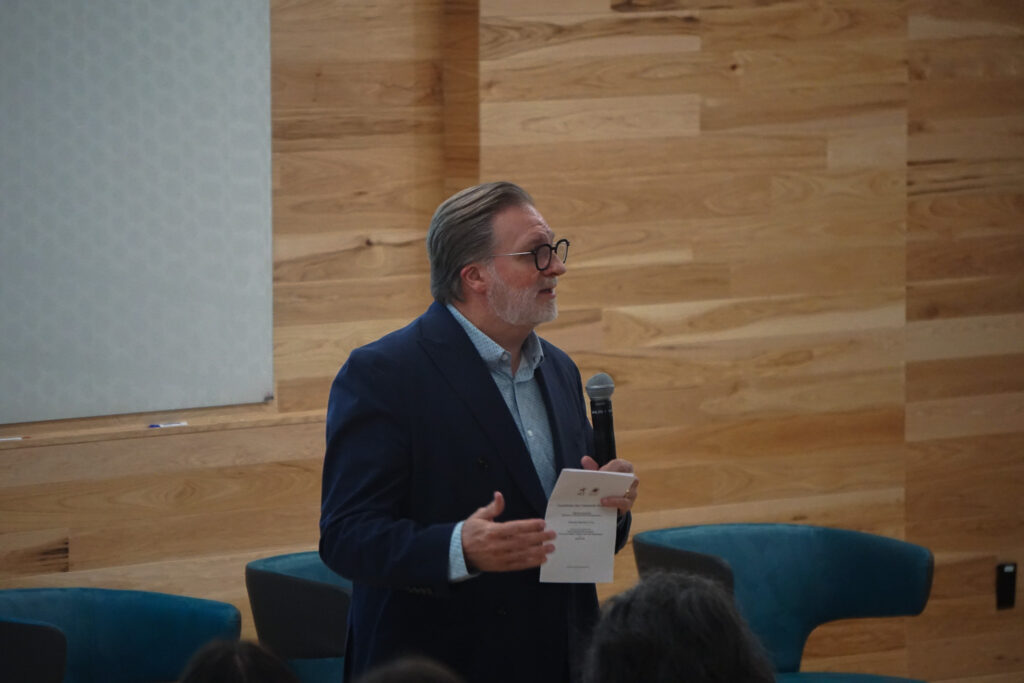
Ted Hadzi-Antich Jr., a professor of government at ACC and the founder of the Great Questions Foundation, explained: “It [Great Questions] is really a discussion-based course focused on reading transformative texts about life. Right now we are focused on discussing what it means to be an American.”
The aim of these events is to get individuals talking with others about what these documents mean and how they affect us. When asked about the importance of the Constitution, Hadzi-Antich said: “The Constitution is the document that holds everything together. Each generation has a responsibility to uphold and understand the Constitution and what it means.”
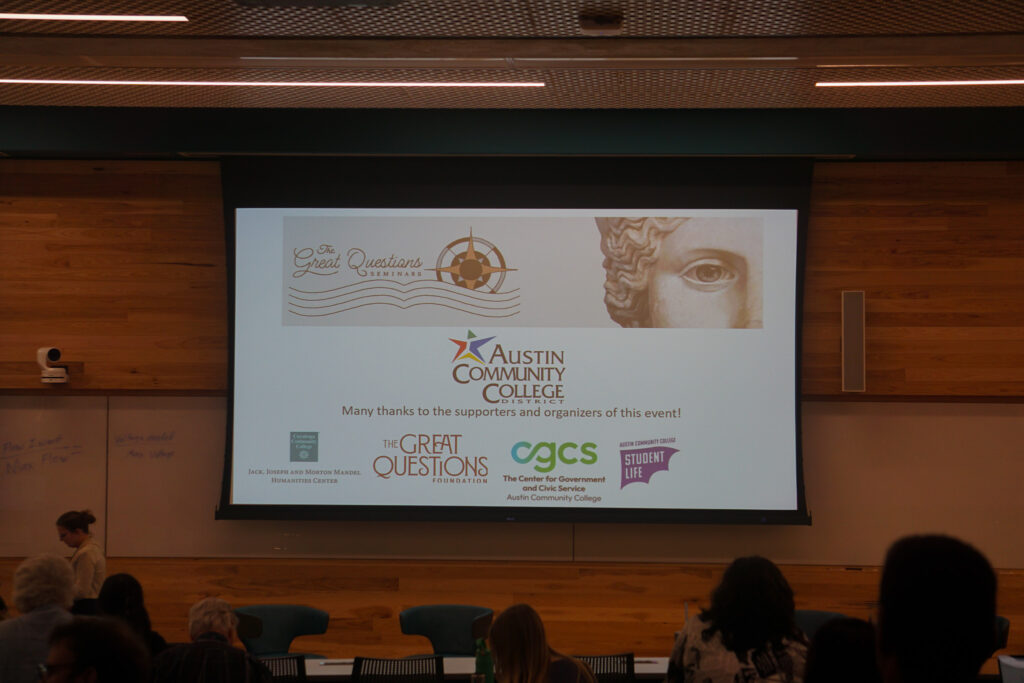
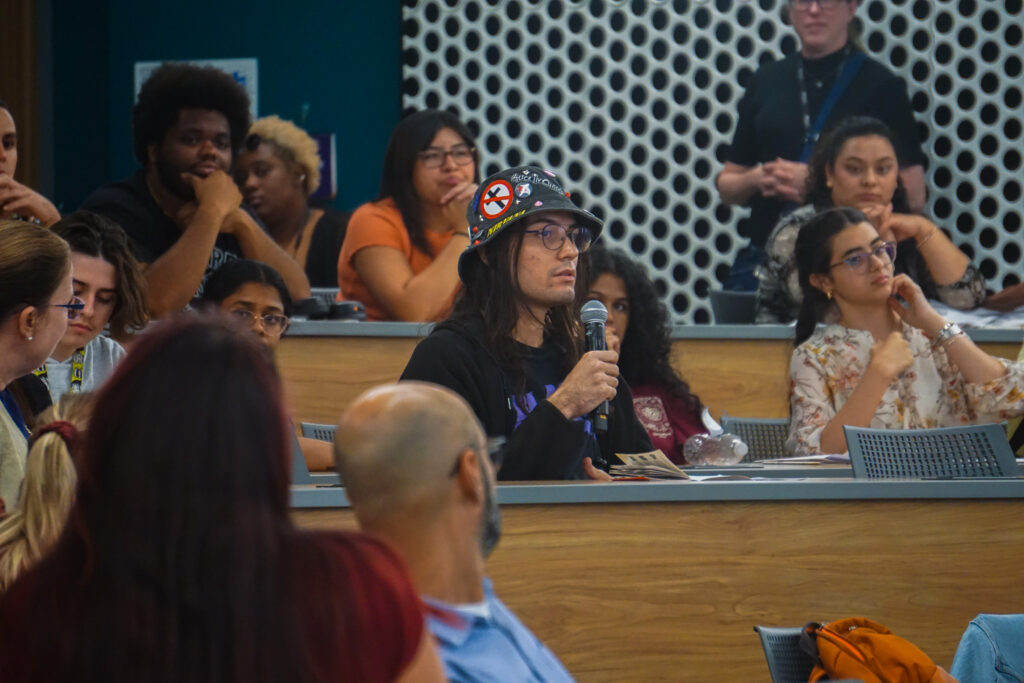
Entering the bustling Presentation Hall located in Building 1000, attendees were handed pocket constitutions and colored slips along with a pamphlet containing various quotes from important figures in American life. It was a nearly full house, with a sea of people occupying the chairs facing the designated speakers. Most students were there at the behest of their instructors.
“…the faculty told me to come for extra credit,” said Dipesh, a student from Nepal. “I hope to learn how it [the Constitution] works.”
Standing on the Presentation Hall stage, Hadzi-Antich talked first about the importance of the event and the importance of discussing the Constitution with others, to bustling applause. After this introduction, groups were formed based on the color of the slip attendees received when entering the building. The previously full hall emptied into the surrounding area for small group discussions.
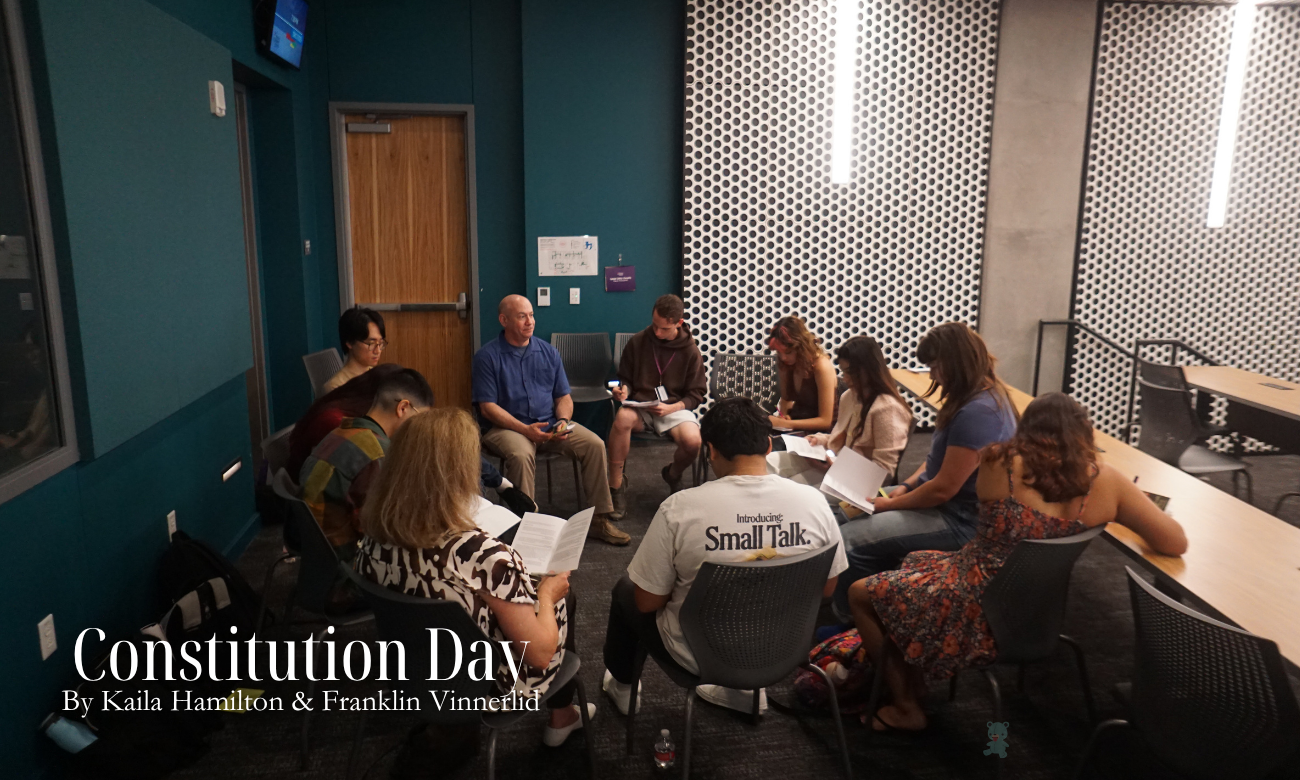
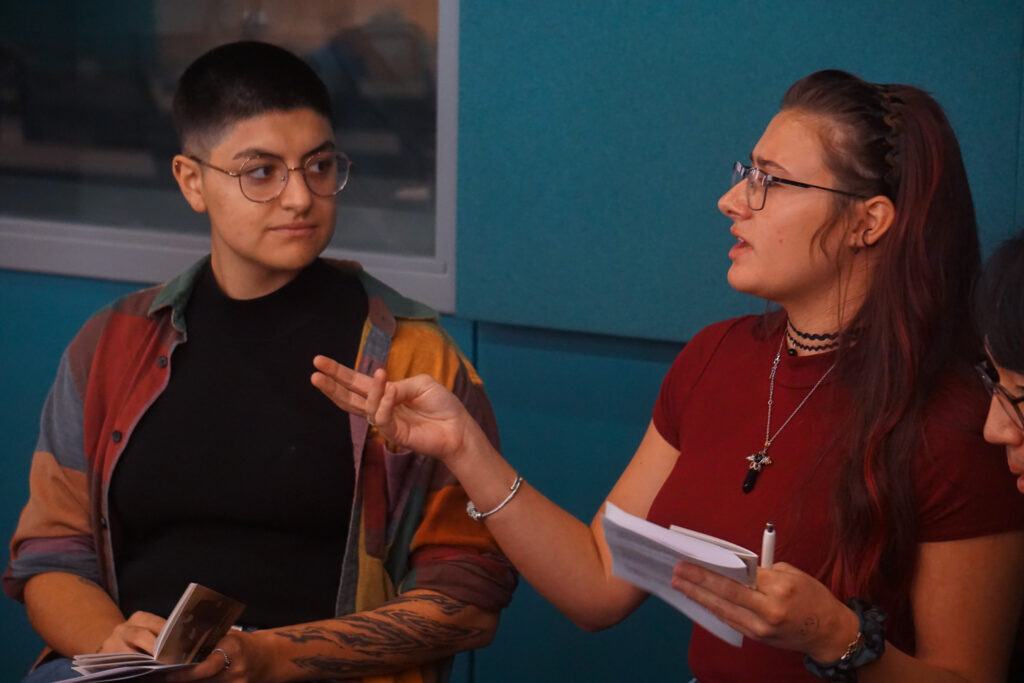
The evening came to life during these peer-led group conversations. This was the time for sharing thoughts on current events, new and old bills, and the true meaning of the self-evident truths written by Thomas Jefferson in the Declaration of Independence. Inspired by speeches and ideologies of historic figures like Barbara Jordan, George W. Bush, and Frederick Douglass, these conversations were guided by questions that made each participant take a deep dive into their own perspectives and share those thoughts with others.
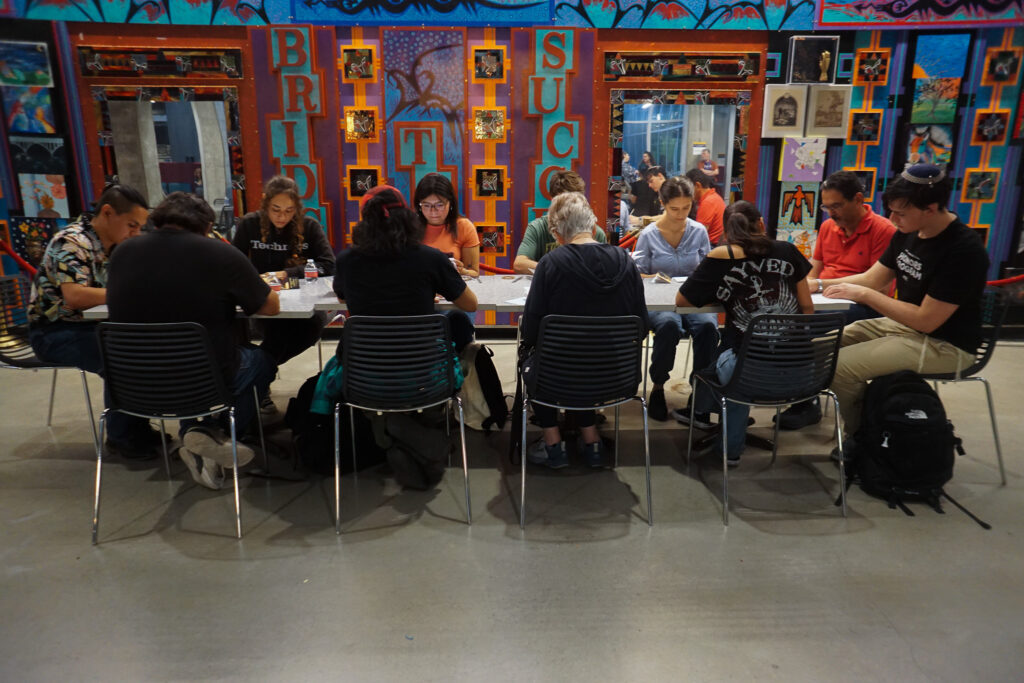
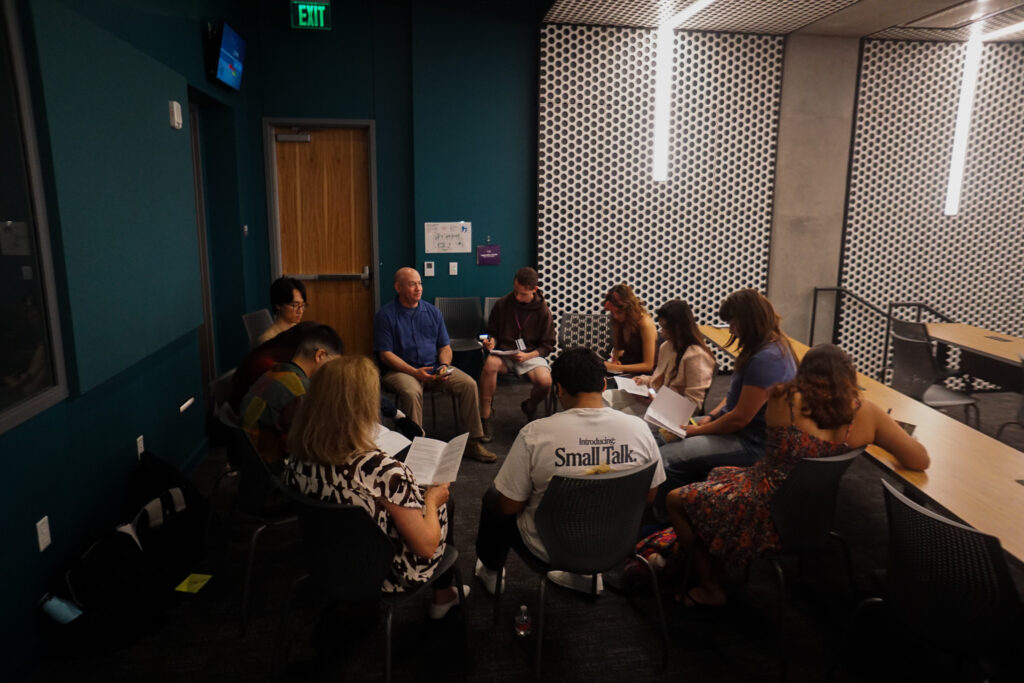
One group—the orange group—was diverse in age, nationality, and opinion. The conversation between the 11 members brought value to each voice while remaining respectful and curious about opposing perspectives. The conversation opened with group facilitator Austin Wells, an ACC philosophy major, reciting a quote from George W. Bush’s first inaugural address about Americans, immigrants included, being united by embracing the ideals that founded this country. He then asked, “What does it mean to be self-evident in relation to the Constitution?”
Deniz Erseven, a mechanical engineering student at ACC, described his idea of being self-evident as identifying that we, as citizens, are given these rights—be it by a spiritual figure, naturally, or in another way that is self-identified. Keeping the answers flowing, ACC dual credit student Nadeen Nasereddin said, “When I think of ‘self-evident,’ I think about the idea of what your rights are as a person. Self-evidence should be natural for all of us.”
Saul Gamez, a technology and advocacy systems specialist, posed two powerful questions. He asked the group, “Is the America today the one that we stand close by? And in the historical concept, did the Confederacy really die? … I think the majority of people in America are not against the idea of self-evidence, but there are people who would like to take over the American system, and that paints another picture.”
It was clear that self-evidence held deeply personal meanings for each group member. A slight shift occurred when Austin pointed out biases that often come from the media with the stories and people they choose to depict, often dividing communities.
Things got passionate when the discussion turned to community, identity, and the importance of culture in this country. America has long been known as the “melting pot” of the world, and many agreed that there is so much diversity that should be acknowledged and celebrated. But the recent passing of Senate Bill 12—a law banning diversity, equity and inclusion efforts in schools and placing heavy restrictions on student clubs in grades K-12—has left many students feeling like the concept of self-evidence is slowly being stripped from our schools, where many people form their self-identity and find their community.
But not everyone has the luxury of easily fitting into a particular community. History major Tatiana Perez said that finding a community was often difficult or downright impossible. Raised as a homeschooled student in a multiethnic household, she said, “I had no community. So… things like school clubs should exist because if we have access to these things, it helps us broaden our minds.”
Several members of the group noted that they feel the media often plays a role in how we see not only our communities, but others’ as well.
“It’s almost to the point where the media is trying to defer from community,” Austin said. “The media often interjects and even divides communities in this country. What does anyone think it would take to change—or start to change—this?”
“I think people need to put themselves in different groups. People need to see themselves in these scenarios where they actually engage in diverse conversations,” Saul replied.
When the small groups had used up their allotted time, everyone returned to the main Presentation Hall for a Q&A with various elected officials from the Austin area. Among those in attendance were Travis County Judge Bianca Garcia and State Sen. Sarah Eckhardt of Senate District 14, which spans most of Travis County. Most of the questions were from earnest ACC students worried about the current state of politics and governance in the country.
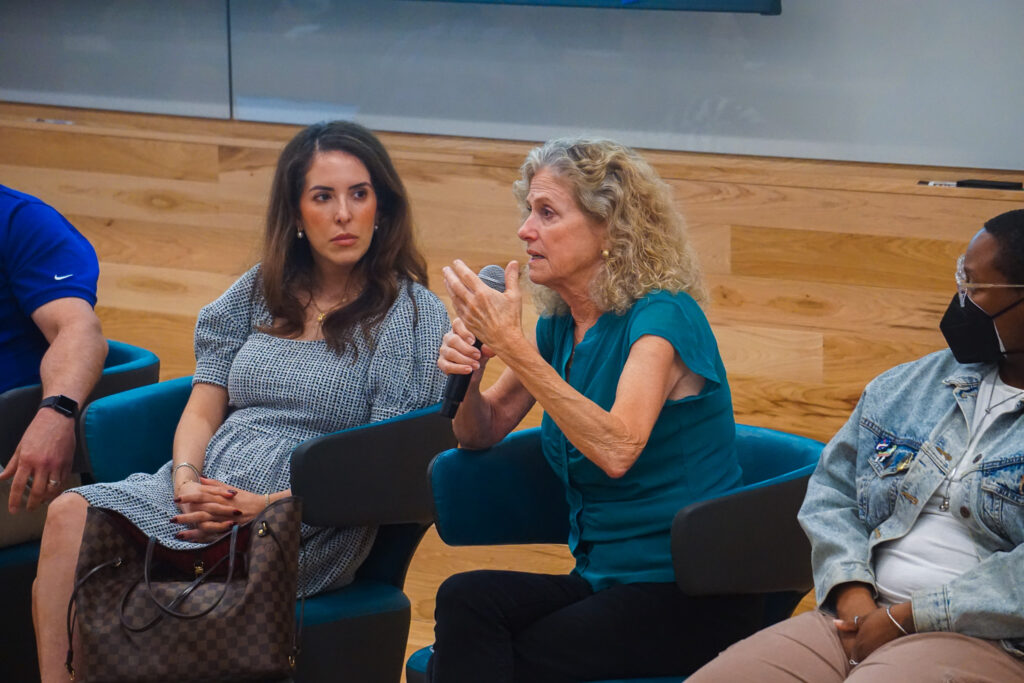
One student asked a poignant question early on: “What is it that we are chasing and striving toward if the system is rigged against us?” Upon hearing the question, Cedar Park Mayor Jim Penniman-Morin asked for a show of hands from those who believed the system was rigged against them. Nearly every hand raised.
“Who thinks Thomas Jefferson felt that about the world he lived in at the time? That was the whole point of the Declaration of Independence…” Mayor Penniman-Morin had addressed this topic earlier in the seminar as well: “In the Declaration of Independence Jefferson says we have a duty to either alter or abolish government if it is not working for us … the Declaration of Independence is our eternal mandate for change.”
This moment seemed to strike a chord with those in attendance. Being able to take the documents our nation was founded upon and not only apply them to our lives but understand how they have affected us was the central premise of the event—and for many, it seemed to really click after Mayor Penniman-Morin’s statement. The Declaration of Independence was now conceptualized not as an old piece of parchment, but as a living document with wisdom still relevant today.
The following questions and responses from the speakers, while still carrying a hint of angst and worry, generally focused on what students could do to make a difference in their community rather than simply lamenting the direction our nation is heading.
Meeting with Travis County Judge Bianca Garcia after the event, the question was raised about how ACC students could get involved in the political and governmental arena.
“Getting involved with a board or commission or any volunteer opportunities with your elected representative … I think staying engaged and staying involved in a way that helps the community and also helps the student,” Garcia said.
Back in the seminar, when asked about how we will manage in 10 years given the current divisions and the changing media and technological landscape, one speaker responded by emphasizing the importance of these types of events in managing political discourse: “To be able to be in a space like this—the Great Questions seminar—we can begin to foster a change.”
Many of the speakers praised the value of engaging in civil discourse, including Sen. Eckhardt earlier in the seminar: “A big part of the resilience of our democracy is when people challenge their own views … it makes us stronger.”
While the speakers promoted a message of open-minded discussion and personal growth as a means for societal change, many students continued to worry about the country’s direction. ACC student Phoebe expressed disappointment in the lack of actionable solutions.
“One of the speakers said that our rights are being taken away but proceeded to talk about the mindset we should have,” she said. “It was a complete nothing-burger.”
Catching up with Sen. Eckhardt after the event, those concerns were specifically addressed.
“My concrete advice is to wake up every day and decide what you are going to put your attention toward, and then stick to it … at the end of the day, check in with yourself and see if you put your attention where you intended,” she said. “Consider it like a diet. Did I consume information that helped me and helped others feel powerful in my democracy, or did I consume information that made me feel [worse]?”
The event did give some hope. Speaking with Lanie, an ACC student, after the event, she remarked: “I saw hope in our generation today. We can improve things.”
Indeed, the event was characterized not so much by the faculty and elected officials leading the discussion, but by strong-willed students making their concerns and voices heard.
While emotions ran high at times and disagreements emerged, ACC students stayed respectful and considerate of others. The event centered on two main questions: “What does it mean to be an American?” and “What can we learn from the Constitution and other foundational documents today?”
When asked about this, Judge Garcia said: “It’s [the Constitution] a contradiction. It’s a beautiful contradiction. It wanted equality for all but left out many … the way it has been able to evolve and expand is a beautiful example of how the ideals of our country can be actualized.”
There’s no doubt these ideals can—and will—be actualized by the students at ACC. And it is our hope that readers take from this a newfound inspiration for public involvement and a deeper appreciation for the foundations of our democracy.